10 Best 15 Gauge Finishing Nailers
From leading brands and best sellers available on the web.By clicking on a link to a third party's website, log data is shared with that third party.
Related Products
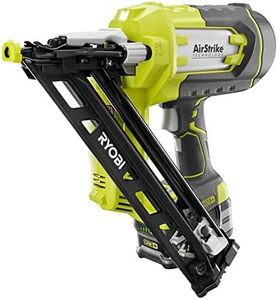
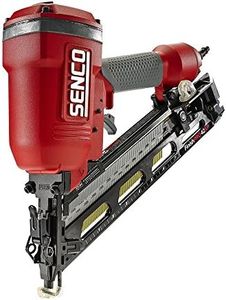
Buying Guide for the Best 15 Gauge Finishing Nailers
Choosing the right 15-gauge finishing nailer can make your woodworking or renovation projects smoother, faster, and result in a more professional finish. A 15-gauge nailer strikes a balance between strength and subtlety, making it great for installing trim, baseboards, or door and window casings. When picking the ideal model, it's important to understand the core features so you get a tool that matches your needs and is comfortable to use.Power SourceThe power source refers to how the nailer operates: air-powered (pneumatic), battery-powered (cordless), or sometimes fuel cartridge. Pneumatic models are powerful and reliable for long sessions but require an air compressor and hose, which can limit portability. Cordless battery models offer more mobility and freedom, ideal for quick tasks or job sites without access to wall power or compressors, but you have to watch battery life. For home use or smaller tasks, cordless is often easier; for bigger, ongoing jobs, pneumatic may be better.
Nail Length CapacityThis specification tells you the shortest and longest nails the nailer can handle. 15-gauge finish nailers typically use 1-1/4 inch to 2-1/2 inch nails, but this range can vary. A wider range gives you more versatility—for example, shorter nails for thin trim and longer nails for thick baseboards. Think about the variety of projects you plan to tackle: if you expect to do only basic trim, the mid-size range may be fine, but for diverse tasks, look for flexibility.
Magazine Capacity and Loading StyleThe magazine holds your supply of nails, and its capacity affects how often you'll need to reload. Larger magazines are helpful for big projects, reducing interruptions. Straight magazines are easy to reload and generally more compact, while angled magazines can fit into tighter spaces. Consider the kind of spaces you'll be working in and your tolerance for frequent reloading when evaluating this spec.
Weight and ErgonomicsWeight describes how heavy the tool feels during use, while ergonomics covers how comfortable and balanced it is in your hand. Lighter, well-balanced nailers are less tiring over long jobs and easier to control precisely—especially important for overhead or vertical work. If you'll use your nailer for extended periods or in awkward angles, prioritize lower weight and good grip design.
Depth AdjustmentDepth adjustment lets you control how deeply the nail is driven into the material. Precise control is crucial for working with different wood types and thicknesses, and avoids damaging your work. Nailers with tool-free depth adjustment are easiest and fastest to tweak on the fly. If you work with a range of materials or want professional-looking results, make sure this adjustment is easy to access.
Jam Clearing MechanismJams occasionally happen, so check how easily you can clear a blocked nail. Some models have tool-free jam release features, letting you fix things quickly and get back to work. If you don’t want a project interrupted for long, look for easy jam clearing as a convenience that saves frustration.
Exhaust DirectionThe exhaust direction refers to where air is expelled during operation. Adjustable exhaust is handy because it lets you avoid blowing dust in your face or at your work. If working in clean or sensitive areas, being able to control exhaust helps keep things tidy and comfortable.