9 Best 16 Gauge Finishing Nailers
From leading brands and best sellers available on the web.By clicking on a link to a third party's website, log data is shared with that third party.
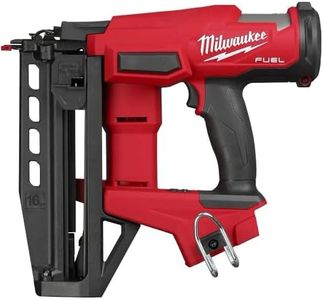
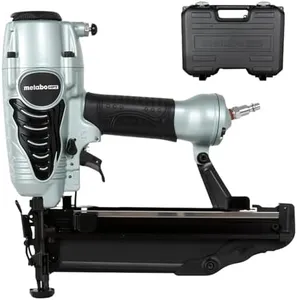
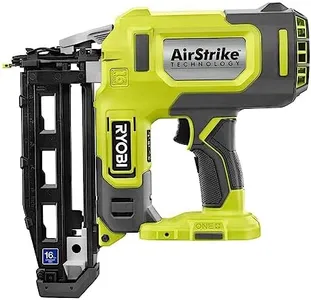
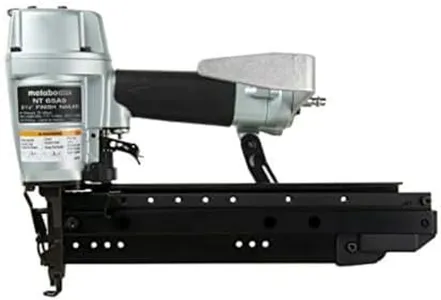
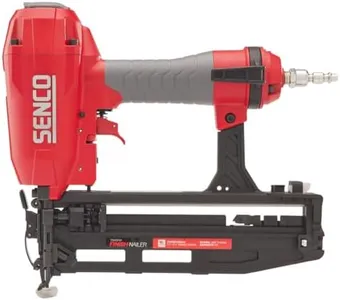
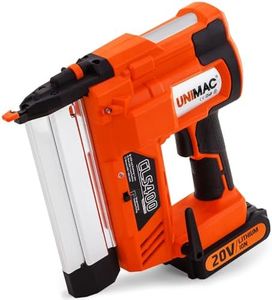
Buying Guide for the Best 16 Gauge Finishing Nailers
Choosing the right 16-gauge finishing nailer can make your woodworking, trim, or cabinetry projects not only easier but also give a more professional finish. When picking a finishing nailer, it's important to think about the kinds of tasks you will be tackling, the comfort of use, and the features that help get the job done smoothly and safely. Before you buy, learning about the most important specs will help you decide which tool will best fit your projects and working style.Power SourceThis refers to what powers the nailer, commonly either pneumatic (air-powered) or battery-powered (cordless). Pneumatic nailers require an air compressor and hose, which means more setup but often lighter tool weight. Cordless models run on rechargeable batteries, providing greater portability but sometimes being heavier. If you work mainly in a workshop with access to an air compressor, pneumatic might suit you better. If you need to move around or work in various locations, cordless can be more convenient.
Nail Length CapacityNail length capacity tells you the smallest and largest nails the tool can use, typically ranging from 1 to 2.5 inches for 16-gauge nailers. Longer nails are better for thicker or denser trim, while shorter nails work well for delicate edging. To choose the right range, think about the types of projects you do most—if you're installing thick casings or large moldings, a longer nail capacity is helpful; for light trim, shorter lengths may be enough.
Magazine CapacityMagazine capacity is how many nails the tool holds before needing a reload. Higher capacity means less stopping to reload, which is handy for larger tasks. Small capacity may be fine for quick, infrequent jobs, but if you plan to do longer stretches of work, look for a nailer with higher magazine capacity to save time.
Weight and BalanceThis is how heavy the tool feels in your hand and how well it is balanced during use. Lighter and well-balanced nailers are easier to control and reduce hand fatigue, especially during long periods of use. If you aren't used to working with power tools for extended hours, or need to reach overhead or into tight spaces, a lighter model can make your work more comfortable and accurate.
Depth AdjustmentDepth adjustment lets you control how deep the nail goes into the wood. This is key for getting a perfect finish, especially with different materials. Some nailers let you adjust depth tool-free, while others need a wrench. If you'll work with different woods or want precision, easy-to-use depth adjustment is important for a quality result.
Jam Clearing MechanismNo nailer is immune to jams, so a good jam clearing system makes getting back to work quick and frustration-free. Some models offer tool-free jam release, while others may require tools. If you value smooth workflow and want to avoid lengthy interruptions, opt for a nailer that makes jam clearing easy.
Trigger TypeTrigger type affects how nails are fired—sequential fire triggers need you to depress the nose and then pull the trigger, promoting precision and safety, while contact/bump fire lets you fire nails rapidly by bumping the nose. If accuracy and safety are your focus, sequential fire is best. If speed is more important for your project, bump fire is useful, but make sure you're comfortable with its faster pace.
Exhaust DirectionThis controls where the expelled air goes. Adjustable exhaust lets you direct air away from your face or work area, which keeps things cleaner and more comfortable. If you'll be working in confined spots or around dust, an adjustable exhaust can help keep things more pleasant.