10 Best 4 Channel Amplifiers For Car Audio
From leading brands and best sellers available on the web.By clicking on a link to a third party's website, log data is shared with that third party.
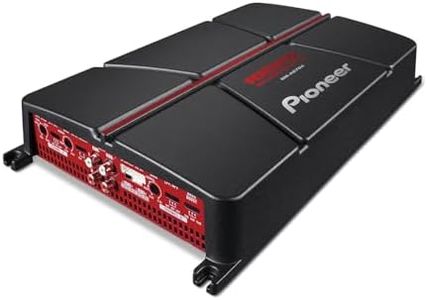
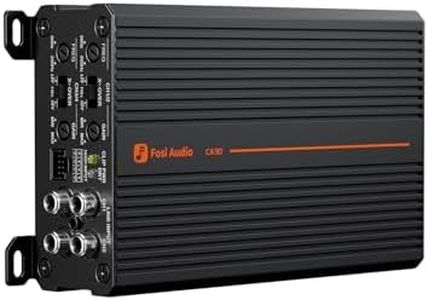
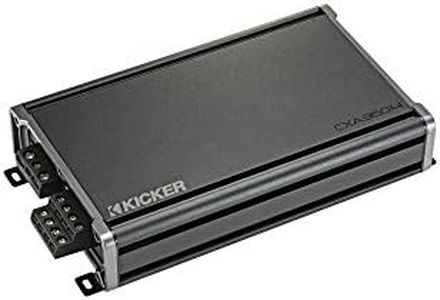
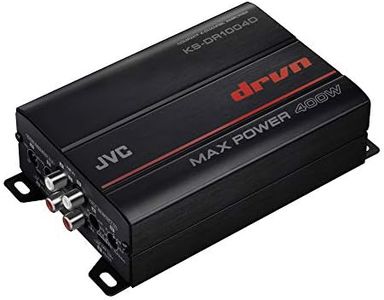
Related Products
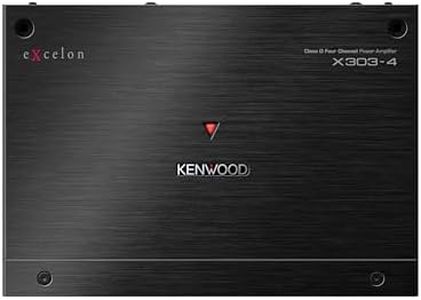
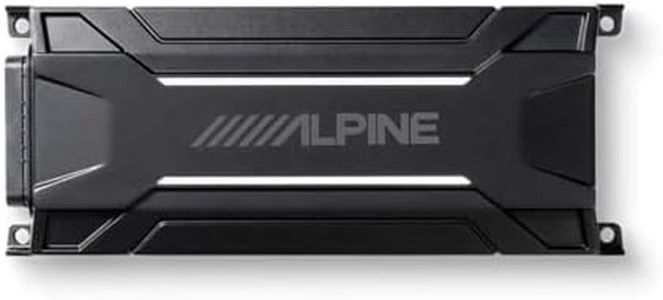
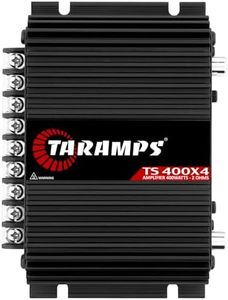
Buying Guide for the Best 4 Channel Amplifiers For Car Audio
When you're choosing a 4-channel amplifier for your car audio system, it's all about finding a balance between power, sound quality, and how you plan to use your car's audio. A 4-channel amp can drive either four speakers, or two speakers and a subwoofer if you bridge the channels. This gives you flexibility to upgrade your system over time and gives you more control over your vehicle's sound experience. The right amplifier will let you get the most out of your speakers without distortion and help your music sound clear even at higher volumes.Power Output (Watts RMS per Channel)Power output (measured in Watts RMS per channel) describes how much continuous power is supplied to each speaker. This is important because it determines how loud and clear your speakers can play without distortion. Lower-powered amps (20-50W RMS per channel) may be suitable for basic factory speakers or low to moderate listening, while mid-range (50-100W RMS per channel) is better for most aftermarket speakers, giving better clarity and punch. Higher power (100W+ RMS per channel) suits high-performance speakers and those who love their music loud. Always match the amplifier's output with the speaker’s RMS handling—the amplifier should supply power close to what the speakers can handle continuously without damage.
Number of ChannelsA 4-channel amplifier simply means you have four separate outputs, most commonly used for four door speakers or bridging channels to power a subwoofer. This is important for system design—it offers flexibility if you want to upgrade or change the setup later. If you want to improve just speakers, use all four channels for them. If you plan to add a subwoofer, know that many 4-channel amps can be bridged to deliver more power to a sub by using two channels together. Your setup plans will determine how you use the channels.
Signal-to-Noise Ratio (SNR)Signal-to-Noise Ratio (SNR) tells you how much unwanted background noise there is compared to the audio signal. Higher SNR values (like 90dB or more) mean cleaner, clearer sound. A low SNR can make your music sound fuzzy or full of hiss. If you’re looking for crisp, clean sound, especially at higher volumes or in a quieter car, look for amplifiers with higher SNR numbers.
Crossover and Filter OptionsCrossovers and filters in an amplifier let you direct the right frequencies to the right speakers. A built-in high-pass filter allows you to send only the higher frequencies to your smaller speakers, protecting them from bass distortion, while a low-pass filter sends bass to your subwoofer. Selectable crossovers and adjustable filter points give you more control over tuning. If you plan on running a subwoofer or want to fine-tune the frequencies sent to each speaker, make sure your amplifier has adjustable crossover options.
Amp Class (A/B, D, etc.)Amplifier class refers to how the amp processes signals and power, affecting both sound quality and efficiency. Class A/B amplifiers are known for good sound quality but are less efficient, often larger, and may run hotter. Class D amplifiers are compact, more efficient (use less battery power, less heat), and are popular for car use, though sound quality can vary. If you want something smaller and more energy-efficient (especially for limited car space), Class D is usually better. If ultimate sound quality is most important and you have space, consider Class A/B.
Input Options (High-level and Low-level Inputs)Input options tell you what type of audio sources your amplifier can connect to. Low-level (RCA) inputs are standard for aftermarket head units, while high-level (speaker-level) inputs are helpful if you’re keeping your factory radio, letting you hook up to existing speaker wires. If you’re upgrading a factory system, having high-level input options can make installation easier without extra adapters. Consider your car’s current audio sources to choose the right input types.
Size and Installation FlexibilityThe size of the amplifier determines where you can mount it in your car—under the seat, in the trunk, or another spot. Smaller amplifiers are easier to hide and install, while larger ones may have more features or power but require more space. Look at your vehicle to check available mounting locations before choosing—you’ll want an amp that fits securely and can be installed without blocking ventilation.