5 Best 6 X 9 Marine Speakers
From leading brands and best sellers available on the web.By clicking on a link to a third party's website, log data is shared with that third party.
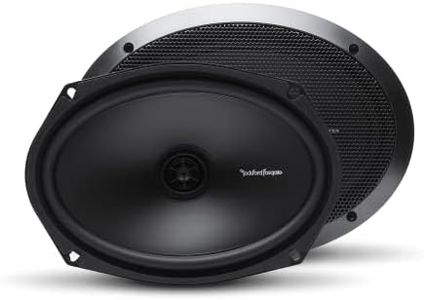
Buying Guide for the Best 6 X 9 Marine Speakers
Choosing the right 6x9 marine speakers is essential for enjoying clear and powerful sound while out on the water. Unlike regular car speakers, marine speakers are built to handle harsh environments with moisture, salt, and sunlight. When picking the right speakers, consider how you'll use your boat—whether for relaxing, water sports, or entertaining guests—and the size of your boat's available speaker locations. Carefully reviewing key features will help ensure you make a choice that fits both your environment and your listening preferences.Waterproof and Weather Resistance RatingThis spec tells you how well the speakers are protected against water, salt, and UV rays. It's important because marine environments can quickly damage standard speakers. Waterproof ratings like IPX5, IPX6, or 'marine grade' labels indicate varying degrees of protection, with higher numbers offering better resistance. If your speakers are fully exposed to elements, prioritize higher ratings; if there's some shielding, basic marine resistance may suffice. Choose based on how open your installation site is and how rough your boating conditions tend to be.
Power Handling (Watts RMS and Peak)Power handling describes how much continuous (RMS) and maximum (peak) power a speaker can receive from an amplifier without damage or distortion. It's important because using speakers that can't handle your system's power can lead to poor sound or even speaker failure. Lower RMS values, such as 30–50 watts, suit small boats or low-volume listening, while higher ranges, like 75–150 watts RMS, are best for louder environments or if you plan to add external amplifiers. Match power handling to your boat size, how loud you want your audio, and your amplifier’s output.
SensitivitySensitivity measures how efficiently a speaker converts power into sound, indicated in decibels (dB). Higher sensitivity speakers produce more volume from the same wattage, which is important if you won’t use an external amplifier. Sensitivity in the low 80s dB suits quiet environments or powerful amps, while mid to high 80s and above are better for getting more sound from less power, such as when running off a radio or lower-powered setup. Consider this if you want loud sound without high-powered equipment.
Cone MaterialThe material of the speaker cone impacts durability and sound quality. Marine speakers often use polypropylene, treated fabrics, or composites to resist corrosion and warping. More rugged materials last longer but may sound different. Light, rigid materials typically handle sharp notes and detailed sounds better; thicker, tougher materials may be more durable but less crisp. Choose based on whether you prioritize long-term durability (if your speakers are always exposed) or top-notch sound clarity (if they’re partially sheltered or you're an audiophile).
Mounting Depth and SizeMounting depth and size refer to how much space the speaker needs for installation and whether it fits the intended location. This is crucial because boats often have limited space in panels or enclosures. Shallow-mount options are available for tight spots, while standard-depth models offer potentially bigger sound but need more room. Always measure your intended space before selecting, and choose the size that allows proper installation without modifications whenever possible.
Grille and Hardware QualityThe grille and mounting hardware protect the speaker from bumps, debris, and water. In marine speakers, these parts are usually made of stainless steel or corrosion-resistant plastics. Good quality grilles prevent rust and damage, keeping your speakers looking good and working well over time. Look for robust, UV-resistant, and rustproof hardware, especially if your speakers are exposed or near saltwater. Choose based on expected exposure and how much you value lasting appearance and protection.