7 Best Above Ground Pool Filters
From leading brands and best sellers available on the web.By clicking on a link to a third party's website, log data is shared with that third party.
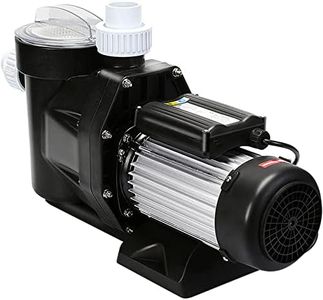
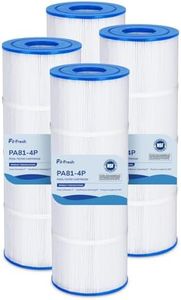
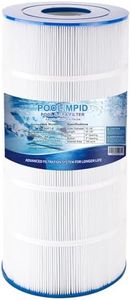
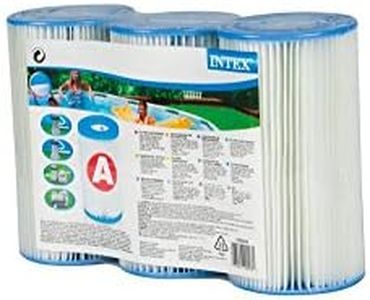
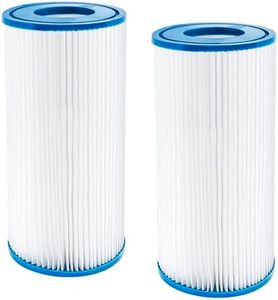
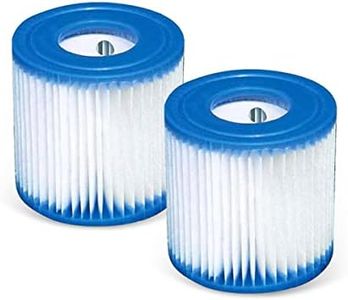
Buying Guide for the Best Above Ground Pool Filters
Selecting the right pool filter for your above-ground pool is essential to keep your water clean, clear, and enjoyable all season long. The right filter not only removes debris and particles but also affects how much effort you spend on pool maintenance and how efficiently your pool runs. When you're choosing a pool filter, it's important to understand the key features so you can match them to your pool size, how often you use the pool, and how much time you want to spend on upkeep.Filter TypeAbove-ground pool filters come mainly in three types: sand, cartridge, and diatomaceous earth (DE). Each has its own cleaning method and maintenance needs. Sand filters are simple and reliable, requiring little maintenance, but they might not filter as finely as others. Cartridge filters capture smaller particles, need more frequent cleaning, but are easy to work with. DE filters capture the finest particles, offer the best water clarity, but require the most upkeep. Think about how much effort you want to spend cleaning and maintaining your filter when choosing.
Filtration Capacity (Micron Rating)The micron rating tells you the size of the particles the filter can remove from your water. The lower the micron rating, the smaller the particles it traps—DE filters can filter down to 2-5 microns, cartridge filters around 10-20 microns, and sand filters around 20-40 microns. If you want exceptionally clear water and want to trap very fine particles, choose a filter with a lower micron rating. For general everyday use, a higher micron rating may be sufficient.
Flow Rate (GPH or GPM)Flow rate is usually measured in gallons per hour (GPH) or gallons per minute (GPM) and refers to how much water the filter can process in a given time. A higher flow rate means faster filtration but you need to match it to your pool’s pump and pool size. If your filter’s flow rate is too low, your pool may not stay as clean; if it’s too high for your pump, it can damage the equipment. Check your pool’s volume and pump output, and select a filter with a compatible flow rate.
Pool Size CompatibilityEvery filter is designed to handle a certain pool size, usually listed as a maximum number of gallons. If your filter is too small for your pool, it will struggle to maintain clean water and may wear out quickly. On the other hand, an oversized filter may be unnecessary but is generally less of a problem. Always check your pool’s total water volume and ensure the filter you choose is rated for at least that capacity.
Maintenance RequirementsDifferent filters require different amounts of care: sand filters need backwashing, cartridge filters need periodic rinsing and occasional replacement, and DE filters need both cleaning and fresh DE powder added after each cleaning. Consider how much time you’re willing to spend and your comfort with maintenance tasks. If you want the lowest-maintenance option, sand or cartridge filters are typically the easiest to look after.