9 Best Acrylic Concrete Sealers
From leading brands and best sellers available on the web.By clicking on a link to a third party's website, log data is shared with that third party.
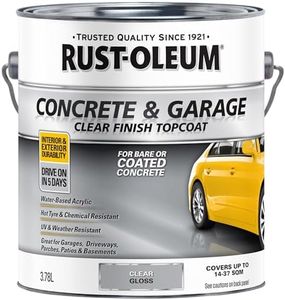
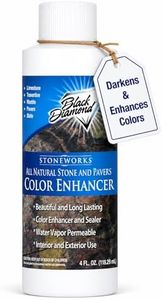
Buying Guide for the Best Acrylic Concrete Sealers
Choosing the right acrylic concrete sealer is a key step in protecting and enhancing your concrete surfaces. Whether you're working on a driveway, patio, garage floor, or an indoor area, an acrylic sealer can provide a barrier against water, stains, UV rays, and wear. To make the best choice, you'll want to carefully consider several important specifications. Understanding what each one means and how it affects performance will help you select the ideal product for your needs.Sealer Base Type (Water-Based vs. Solvent-Based)The base type refers to what the sealer uses as its main carrier—either water or a solvent. Water-based acrylic sealers are lower in odor and safer to use indoors or in places with limited ventilation, and they tend to leave a matte or satin finish with a milder odor. Solvent-based sealers penetrate more deeply and usually leave a glossier, more pronounced 'wet look,' but they can have a strong smell and require better ventilation during application. To choose between them, think about where you’ll be applying the sealer, your environmental sensitivities, and the type of finish you want on the concrete.
Finish (Gloss Level)Gloss level describes how shiny or reflective the sealed surface appears after application. Options usually range from matte (no shine), satin (low sheen), to high-gloss (very shiny). A matte finish gives a more natural look, while a glossy finish highlights colors and texture but may become a bit slippery when wet. Choose your gloss level based on your aesthetic preference and whether safety or appearance is your priority—flat finishes for more subtlety and grip, gloss for a vibrant, eye-catching look.
Intended Use (Interior vs. Exterior)Acrylic concrete sealers can be formulated specifically for indoor or outdoor use. Exterior sealers are designed to resist UV light, temperature changes, and water exposure, which is necessary for patios, driveways, and walkways. Interior sealers focus more on abrasion and stain resistance. Always choose a sealer that matches the environment where it will be applied—the wrong type won’t last as long or protect as well.
Coverage RateThis describes how much area a certain amount of sealer can cover, usually measured in square feet per gallon. Higher coverage means you’ll need less product to do the job. Factors like concrete porosity and surface texture affect coverage—rougher, more absorbent surfaces will use more sealer. Estimate your total project area and select a sealer that efficiently meets your needs without excess waste.
Protection Level (Water, Stain, and UV Resistance)Acrylic sealers provide different levels of protection against water penetration, oil and chemical stains, and UV fading. Some sealers offer enhanced resistance to one or all of these threats. If your concrete will be exposed to a lot of water or sunlight, prioritize strong water and UV protection. For garages or kitchens, where spills are common, look for a higher stain resistance rating.
Reapplication Frequency (Durability/Longevity)This refers to how often you need to reapply the sealer to keep your surface protected, which ranges from months to several years depending on the product and conditions. Longer-lasting sealers reduce maintenance, but for high-traffic areas or places with frequent cleaning, a product that’s easier to reapply might be more practical. Choose based on how much time you’re willing to invest in upkeep and the wear conditions of your concrete.
Slip ResistanceSome acrylic sealers can make surfaces slippery, especially when wet. To address this, some products have additives for extra grip, or you can mix in slip-resistant materials during application. If the area will frequently get wet or is a walkway, consider prioritizing a sealer or additive that provides traction to reduce the risk of slips.