10 Best Agm Deep Cycle Batteries
From leading brands and best sellers available on the web.By clicking on a link to a third party's website, log data is shared with that third party.

Related Products
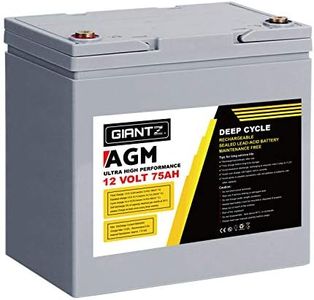
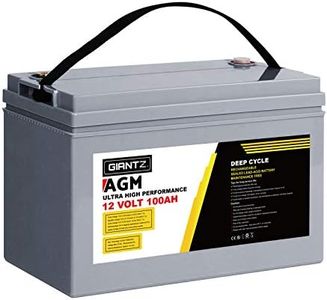

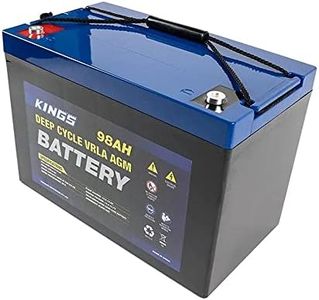
Buying Guide for the Best Agm Deep Cycle Batteries
When choosing an AGM deep cycle battery, it’s important to understand that these batteries are designed to steadily provide power over long periods, making them perfect for applications like solar systems, RVs, boats, or backup power systems. Picking the right battery isn’t just about grabbing the biggest or most powerful one – it’s about matching the battery to your energy needs and the device or system you’re powering. Knowing what each specification means and how it affects performance will help you make a confident and suitable choice.Capacity (Ampere-hours, Ah)Battery capacity, measured in ampere-hours (Ah), tells you how much charge a battery can deliver before it needs recharging. Think of it like the size of your fuel tank: higher Ah means the battery will power your equipment for longer before running out. Batteries are generally grouped into low (<50Ah), medium (50-100Ah), and high (>100Ah) capacity. Match the capacity to your usage; low-capacity batteries are fine for small electronics, while high-capacity ones support energy-hungry systems like RVs or solar banks. Choose based on how long and how much power your devices or systems draw between charges.
Voltage (V)The voltage of a battery, most commonly 6V or 12V in AGM deep cycle batteries, signifies the electrical potential. Most home or RV setups use 12V batteries, but some off-grid or specific systems are designed for 6V. Pick the voltage that matches your system’s requirements – using the wrong voltage can damage your equipment or not power it at all.
Cycle LifeCycle life is the number of complete charge and discharge cycles a battery can handle before its capacity drops significantly. Typically, you’ll see ratings from a few hundred to over a thousand cycles. If you plan to use your battery often (daily, for example in solar power setups), opt for a higher cycle life. For occasional use, such as emergency backup, cycle life is less critical.
Depth of Discharge (DoD)Depth of Discharge tells you how much of the battery’s capacity can be used before it should be recharged. A higher DoD (like 80%) means you can use more of the battery’s charge safely. Look for batteries with a DoD that fits your usage pattern; deeper discharges are fine if you need to use more energy between recharges, while lighter, more frequent recharging is better for batteries with a lower DoD.
Physical Size and WeightSize and weight matter when space or portability is a concern, such as in RVs or portable power setups. AGM batteries come in a range of physical sizes and weights. Consider your available space and whether you’ll need to move the battery around. Larger and heavier batteries usually offer more capacity, but may not fit all installations.
Maintenance and Mounting FlexibilityAGM deep cycle batteries are valued for being maintenance-free and spill-proof, but make sure they actually meet these claims. AGM batteries can also be mounted in different orientations, which is beneficial for tight, unconventional spaces. If your installation area is hard to access or you need to install the battery on its side, confirm that the battery supports this flexibility.
Temperature ToleranceTemperature tolerance is all about how well the battery performs in hot or cold conditions. If you’ll use the battery in an extreme climate (freezing winters or hot summers), look for specs indicating a wide operating temperature range. Batteries used in mild, indoor environments need less stringent temperature requirements.
Self-Discharge RateSelf-discharge is the rate at which a battery loses charge while not in use. AGM batteries usually have low self-discharge rates, but this can still affect you if the battery will sit unused for long periods. If standby performance is vital (like for backup or seasonal applications), look for a model with a low self-discharge rate so it’s ready when needed.