We Use CookiesWe use cookies to enhance the security, performance,
functionality and for analytical and promotional activities. By continuing to browse this site you
are agreeing to our privacy policy
10 Best At Home Treadmill
From leading brands and best sellers available on the web.By clicking on a link to a third party's website, log data is shared with that third party.

Related Products
Up to 21% off

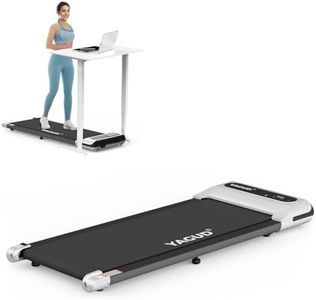


Buying Guide for the Best At Home Treadmill
Buying an at-home treadmill should start with an honest review of how you plan to use it. Consider whether you're a casual walker, an enthusiastic runner, someone focused on rehabilitation, or providing for multiple users in your home. Think about your available space, your comfort preferences, and your desired features like built-in programs or connectivity. Choosing the right treadmill will help you enjoy your workouts and commit to your fitness goals, so picking features that match your intended use and personal needs is key.Motor Power (Horsepower/Continuous Duty Horsepower)Motor power tells you how strong the treadmill’s engine is, often measured in either Horsepower (HP) or Continuous Duty Horsepower (CHP). This spec matters because a stronger motor supports smoother performance and can handle heavier use without overheating. Lower motor power (around 1.5–2.0 CHP) is suitable for walking, while moderate (2.0–2.5 CHP) works for jogging. Higher power (2.5 CHP or more) is best for running or when multiple people will use the treadmill regularly. Choose the motor power based on how intense and frequent your workouts will be.
Running Surface SizeThe running surface is the area you’ll be moving on, and its size determines your comfort and safety. If it’s too short or narrow, it can feel cramped, especially during running. Compact treadmills may have surfaces around 45 inches long and 16 inches wide, suited mainly for walking. A length of 50–55 inches and width of about 18–20 inches gives more room for jogging. Runners or tall users may need a surface of 55 inches or more in length. Consider your stride and the type of exercise you plan; longer and wider surfaces are more comfortable for higher speeds and taller users.
Cushioning SystemCushioning refers to how much shock absorption the treadmill deck provides. Good cushioning reduces impact on your joints, making workouts more comfortable and reducing injury risk. Basic models may have little cushioning (feeling similar to running on pavement); mid-level cushioning offers a softer feel, and advanced systems provide substantial joint protection. If you have joint concerns, plan on running, or want a softer exercise experience, prioritize treadmills with better cushioning.
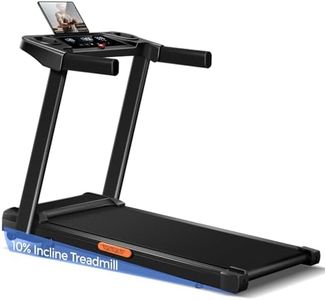
Incline OptionsIncline features allow you to tilt the treadmill, simulating hills and varying workout intensity. Some treadmills have manual incline (require you to get off and adjust), while many have motorized incline, letting you adjust with the push of a button. Incline range usually varies from flat (0%) up to about 10–15%. Walkers and rehab users may not need a high incline, while runners or those wanting to burn more calories and build leg strength should look for greater incline range and easy adjustment.
Console Features & ConnectivityThe treadmill’s console houses controls and displays, sometimes offering extras like heart rate monitors, built-in workout programs, device holders, or Bluetooth connectivity. Basic consoles keep things simple with time, speed, distance, and calories. Advanced ones have touchscreens, app compatibility, speakers, and can track performance over time. If you like entertainment or structured workouts, favor consoles with more features; otherwise, a basic console suffices for simple routines.
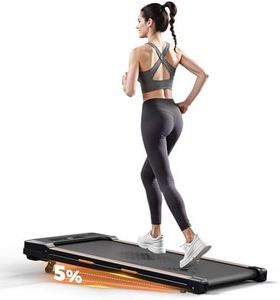
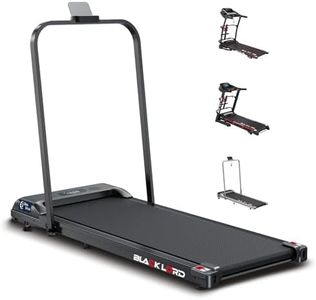
Foldability and StorageFoldability refers to the treadmill’s ability to be stored more compactly when not in use. Some treadmills have decks that fold up with hydraulic assist for easy lifting. Others are designed slim from the start or can be stored under a bed. If your workout space is limited or shared, look for treadmills known for easy folding and safe storage. If space is not an issue, a non-folding, fixed treadmill might provide increased stability.
Weight CapacityWeight capacity tells you the maximum user weight a treadmill safely supports. Typical ranges are 200–300 pounds, with some heavy-duty models allowing more. It’s important for both durability and your safety to choose a treadmill where your weight is within the capacity, ideally with some margin for comfort and machine longevity. Multiple users of varying weights should consider the highest likely user in the household.