7 Best Baby Swings For Newborns
From leading brands and best sellers available on the web.By clicking on a link to a third party's website, log data is shared with that third party.
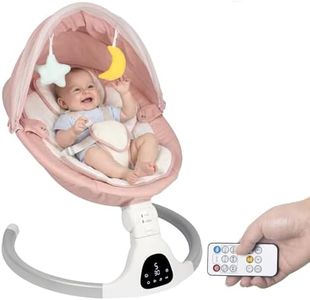
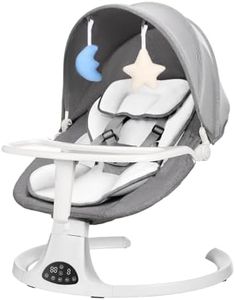
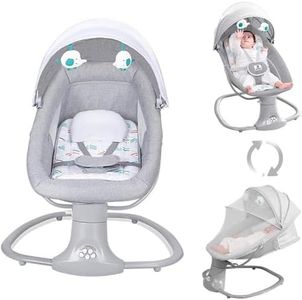
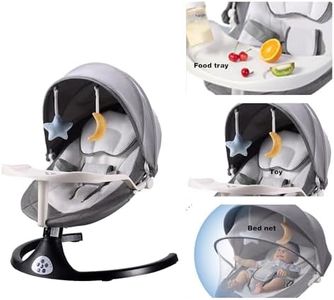
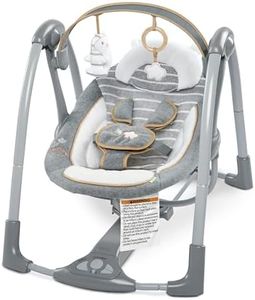
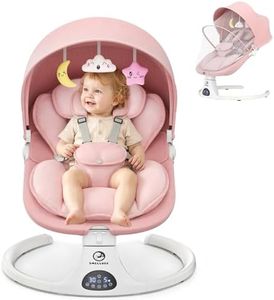
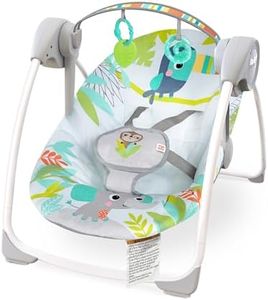
Buying Guide for the Best Baby Swings For Newborns
Choosing a baby swing for your newborn can make life easier by soothing your baby and giving you a safe place to rest them while you catch your breath. It's important to balance comfort, safety, and convenience, as newborns have specific needs in terms of support and movement. Start by thinking about where you'll use the swing, how much space you have, and how easily you want to move it around. Always keep safety as your top priority and make sure the swing is suitable for newborn use.Seat ReclineSeat recline refers to the angle at which your baby’s body will lie in the swing. This is especially important for newborns, who need strong head and neck support and should lie in a mostly flat position. Swings usually come with several recline positions: the most reclined setting is ideal for newborns, while more upright options might suit older babies. For newborns, always choose a swing with a deep recline that provides good support—the flatter, the better. As your baby grows and develops head control, you can start using more upright positions.
Swing MotionSwing motion describes how the seat moves to soothe your baby, such as side-to-side or front-to-back. For newborns, different motions can make a big difference—some babies love a gentle side-to-side rock, while others prefer a classic back-and-forth swing. Most swings will offer one or several speed options. If you're not sure what your baby likes, pick a model with multiple swing settings, so you can experiment and see which one settles your baby best.
Harness TypeA harness is the safety strap system that holds your baby in the swing, and it's essential for newborns. The best and safest choice is a 5-point harness, which secures the baby at the shoulders, waist, and between the legs. Some swings only offer a 3-point harness (just at the waist and between the legs), which is less secure for infants, particularly small or wiggly ones. Always look for a swing that has a sturdy, easy-to-use 5-point harness to keep your baby safely in place, especially in those early weeks and months.
Portability and SizeThis refers to how easy it is to move or store the swing and how much physical space it takes up. Some swings are large and stationary, while others are more compact or even foldable for storage or travel. If you have limited space at home or plan on moving the swing between rooms or to other houses, look for a lightweight and portable option. Measure your space beforehand and consider where you’ll use the swing most often to make sure it fits comfortably.
Weight LimitThe weight limit tells you the maximum size of baby the swing is designed to handle safely. Swings meant for newborns generally have lower limits, as newborns are very light, but as your baby grows, you’ll want to keep track of their weight to ensure they aren’t too heavy for the swing. Always check the weight range and make sure it will work for your baby for at least the first few months. Keeping within the recommended range ensures your baby’s safety and the swing’s performance.
Entertainment FeaturesEntertainment features include things like hanging toys, music, nature sounds, and vibration settings. These can help calm or distract your newborn, but not all babies enjoy noise or stimulation. Some swings keep things simple, while others offer a variety of toys and sound options. Decide how much stimulation your baby can handle, and if they’re sensitive or get overwhelmed easily, you might prefer a swing with minimal extras. For babies who like extra engagement, a swing with tunes or a mobile could be beneficial.
Ease of CleaningBabies are messy, so a swing that’s easy to clean will save you time and effort. Look for seats with removable, machine-washable covers, as spit-up and diaper leaks are common. Swings with smooth, wipeable surfaces and simple designs are usually the easiest to keep clean. If you expect frequent messes, make sure you can take the fabric parts on and off easily.