10 Best Baitcaster Combos
From leading brands and best sellers available on the web.By clicking on a link to a third party's website, log data is shared with that third party.
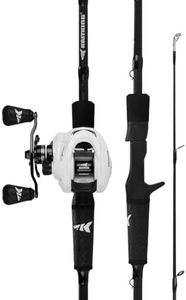
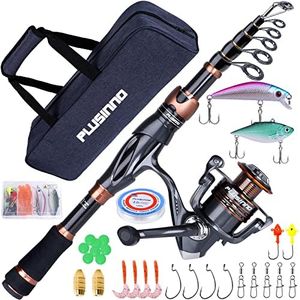
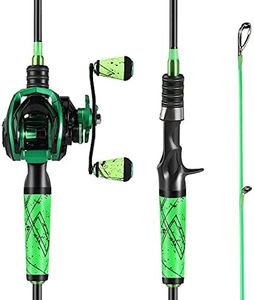
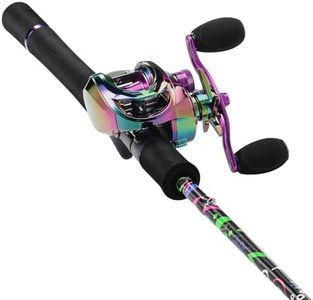
Related Products
Buying Guide for the Best Baitcaster Combos
Picking the right baitcaster combo can make a big difference in your fishing experience, whether you're a beginner or more experienced. A baitcaster combo means you're getting both the reel (the baitcaster) and the rod matched together, which can be convenient but still requires you to find a combo that fits your needs, comfort, and fishing style. Think about the type of fish you’ll be targeting, your local fishing environment, and your personal preference for handling and feel. The right choice will help you cast more accurately, reduce tangles, and land more fish.Rod LengthRod length is simply how long the rod is from tip to handle. This is important because the length affects how far you can cast, how much leverage you have when fighting fish, and how easy the rod is to handle. Shorter rods (around 6 feet) are great for close casts and dense cover, making them easier to control, while longer rods (up to 7.5 feet or more) cast farther and give you more control when reeling in bigger fish but can be harder to maneuver. Think about where you'll be fishing; bank fishing and open water might favor a longer rod, while fishing in tight spaces or from a boat might need something shorter.
Rod PowerRod power is a measure of how much force is needed to bend the rod, ranging from light to heavy. This matters because it determines what type of fish and lures you can use. Light power rods are best for small fish and light lures; they're sensitive but not as strong. Medium power rods are versatile and can handle a wide range of lure sizes and fish, making them a good starting point for most anglers. Heavy power rods are for big fish and heavy lures, like in bass or pike fishing. To pick the right power, think about the species you’ll target and the types of lures you want to use most.
Rod ActionRod action simply describes how much and where the rod bends when you put pressure on the tip. Fast action rods bend mostly near the tip, giving you quick hook sets and more sensitivity for feeling bites; these are good for single-hook lures and fishing in heavy cover. Moderate action rods bend more through the middle, which can help with casting distance and keeping fish from shaking off; these work well with treble-hook lures. Slow action rods bend all the way down, better for very light, flexible presentations. Your choice here depends on your preferred style and target fish; generally, faster action is good for beginners focused on accuracy, while moderate can be more forgiving.
Gear RatioGear ratio on a baitcaster reel shows how many times the spool rotates with one turn of the handle. This controls how fast you can retrieve your lure. Lower ratios (around 5:1) mean slower retrieves, good for techniques where you want to move lures slowly. Higher ratios (7:1 or greater) pull in line faster, great for techniques needing quick lure presentation or picking up slack line in a hurry. Middle ground ratios (6:1) are quite versatile. Choose a gear ratio based on your fishing techniques: slower ratios for crankbaits and bigger fish, higher ones for faster presentations and certain bass techniques.
Line CapacityLine capacity tells you how much fishing line the reel can hold and what strength (measured in pounds). This is important because it limits the size and kind of fish you can target and the casting distance you can achieve. If you fish for bigger species or in open water, you'll want higher line capacity so a strong fish doesn’t strip your line. For smaller species or short-range fishing, lower capacity is fine. Match your expected fish size and fishing conditions to the line capacity for best results.
Drag SystemThe drag system is a key part of the reel that controls how much resistance a fish feels when it pulls on your line. A smooth and adjustable drag helps you tire out fish and keeps your line from breaking. Higher quality drag systems allow for smoother, finer adjustments, important when dealing with bigger or fighting fish. If you plan on catching larger or stronger fish, prioritize smoothness and maximum drag strength in your combo.
Handle Comfort and GripThe comfort and design of the handle are more important than most people think because you'll be holding your combo for long stretches. Handles come in different materials such as EVA foam or cork, and shapes like single or dual knobs. If possible, test how a handle feels in your hand—choose one that feels secure, comfortable, and doesn’t tire your grip quickly. Bigger handles might suit big-water fishing and strong fights, while slim handles work well for finesse and lighter setups.