7 Best Baseball Hitting Nets
From leading brands and best sellers available on the web.By clicking on a link to a third party's website, log data is shared with that third party.
Buying Guide for the Best Baseball Hitting Nets
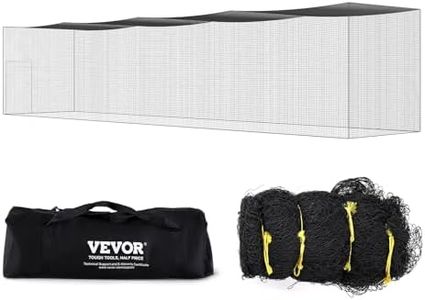
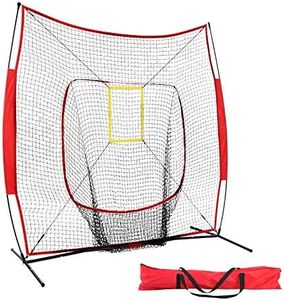
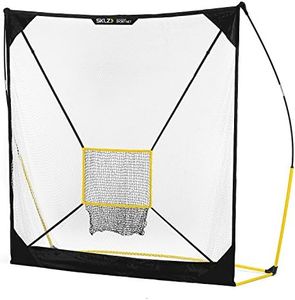
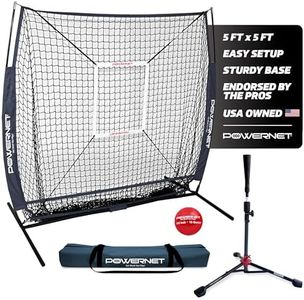
Choosing the right baseball hitting net can make practice sessions much more effective and enjoyable. A good net helps you work on your hitting technique anywhere without worrying about lost balls or damaging property. The right net for you depends on where you'll use it, how often, and your skill level. Understanding the main features will help you pick a net that's safe, durable, and easy to use.SizeSize refers to the overall dimensions of the net, especially its height and width. This is important because a larger net provides a bigger target and catches more balls, making practice less stressful and more convenient, especially for beginners or kids. Nets commonly range from smaller sizes around 5x5 feet to larger options like 7x7 or even bigger. If you're new, practicing indoors, or have limited space, a compact net might suit you best. More experienced players or those with more room should consider larger nets for extra coverage and flexibility.
PortabilityPortability is about how easy it is to move, set up, and store the hitting net. If you'll use the net at home and leave it up, portability matters less. But if you plan on taking it to parks or away games, or need to pack it away after each use, look for nets that are lightweight, come with carrying bags, and have easy assembly. Very portable nets are lighter and fold quickly, while sturdier, heavier nets might be better for stationary use but are harder to move.
Net Material and DurabilityNet material and durability refer to the strength and quality of the netting itself. Stronger netting resists tearing and stands up to repeated hard hits. Nets are usually made from polyester or nylon, graded by their thickness (ply) or knotting. Thin, lightweight nets are good for beginners with light-hitting, while high-ply, knotless nets are best for serious players who hit hard and practice often. Choose according to who is using it and how long you want it to last.
Frame ConstructionFrame construction describes what the structure holding the net is made of. Metal frames, especially steel, are the most durable and stable, while certain plastics or lightweight metals are easier to carry but less sturdy. If you expect the net to face heavy use or strong weather, a solid, metal frame is essential. For light, occasional practice, or indoor use, a simpler frame will do the job and be easier to handle.
Stability and AnchoringStability means how well the net stays in place, even after repeated ball impact or wind. Nets can come with ground stakes, heavier bases, or angled legs for extra support. If you plan to use it on grass, anchoring stakes are useful. For hard surfaces or indoors, wider or weighted bases are better. If you know you'll use the net in windy conditions or hit with power, look for nets with strong stability features.
Ease of AssemblyEase of assembly is how quickly and simply the net goes from packed away to ready to use. Some nets 'pop up' with minimal effort, while others have multiple parts and take longer to set up. If you're frequently moving locations or dislike complicated setups, favor nets with fewer pieces and clear instructions. Users who leave their nets assembled won't need to worry about this as much.