10 Best Battery Jump Boxes
From leading brands and best sellers available on the web.By clicking on a link to a third party's website, log data is shared with that third party.

Related Products
Up to 30% off
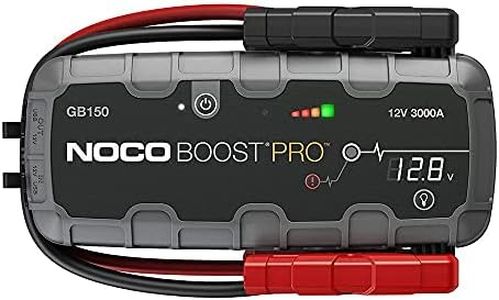
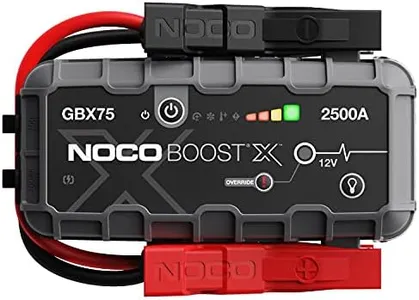
Buying Guide for the Best Battery Jump Boxes
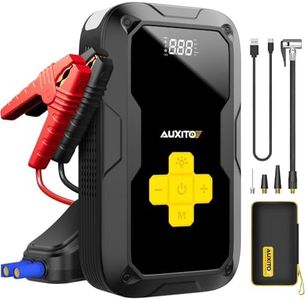
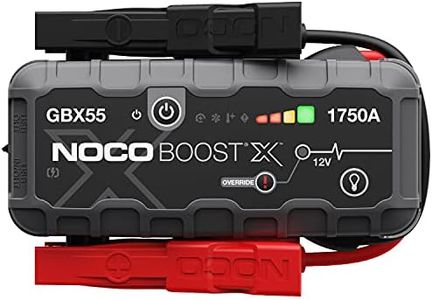
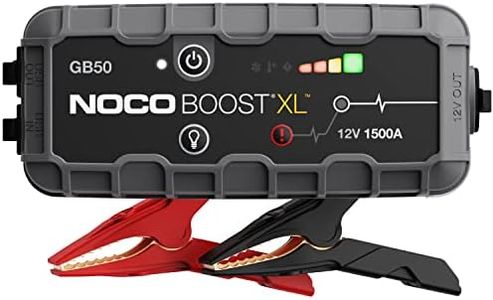
Battery jump boxes are portable power packs designed to jump-start a car or other vehicles when the battery dies. They offer a handy solution to get back on the road without needing a second vehicle for a jump. When choosing a jump box, it's essential to know which features matter most for your needs, so you can select a unit that’s reliable, easy to use, and safe for your specific vehicle and conditions.Peak AmpsPeak amps refer to the maximum amount of electrical current the jump box can deliver in a short burst. This is important because the higher the peak amps, the more powerful vehicles or larger engines the jump box can handle. Smaller vehicles and motorcycles typically need lower peak amps, while larger SUVs, trucks, and diesel engines require higher amounts. To decide what's right for you, check the engine size and type of your vehicle—compact cars can use models on the lower end of the range, while larger vehicles need more power.
Battery Capacity (mAh)Battery capacity, usually measured in milliamp-hours (mAh), shows how much electrical energy the jump box can store. A higher capacity means more jump-starts per charge and the ability to charge other devices like phones if the box has USB ports. For occasional use or compact vehicles, a lower capacity is sufficient; for frequent use or emergencies where you may need multiple jumps before recharging, a higher capacity is better. Think about whether you want it just for emergencies or as a general power bank too.
VoltageMost car batteries use 12 volts, but some heavy-duty vehicles operate on 24 volts. The voltage of the jump box needs to match the battery in your vehicle. Using the wrong voltage can damage your car’s electronics or make the jump box ineffective. Before choosing, check your vehicle’s battery voltage. Nearly all passenger vehicles are 12V, but some commercial trucks or machinery may be 24V.
Safety FeaturesSafety features protect both the user and the vehicle during a jump. These can include things like reverse-polarity protection, short-circuit protection, over-current protection, and spark-proof technology. They are important because incorrect connections or surges can cause injury or damage vehicle electronics. If you’re new to using jump boxes or want peace of mind, look for models that have clear safety features and indicators.
Size and PortabilityThe physical size and weight of a jump box affects how easy it is to store in your car and handle in an emergency. Smaller, lightweight units are easy to store and great for small vehicles, but may have lower power. Larger units can deliver more power but take up more space. To choose, consider your trunk space and how likely you are to need to carry the unit frequently.
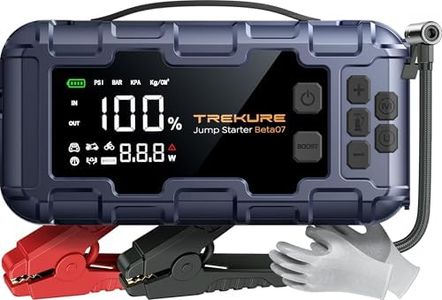
Additional FeaturesSome jump boxes come with extra features like built-in flashlights, USB charging ports, air compressors, or digital displays. These can be convenient in emergencies and add value, but may not be necessary for everyone. Think about how you want to use the jump box—just for jumping a car, or as an all-in-one emergency toolkit—and decide which extras matter to you.