10 Best Beginner Record Player
From leading brands and best sellers available on the web.By clicking on a link to a third party's website, log data is shared with that third party.
#1
Winner
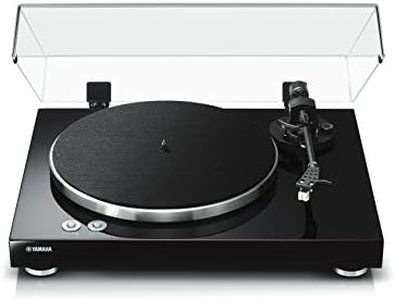
Related Products

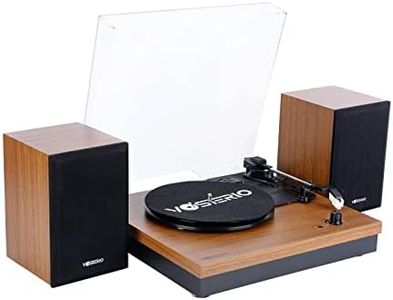
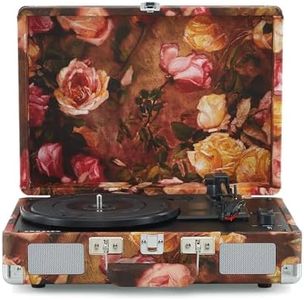
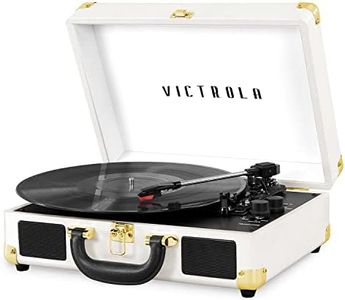
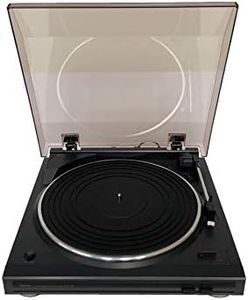
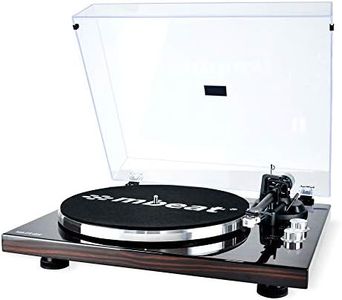
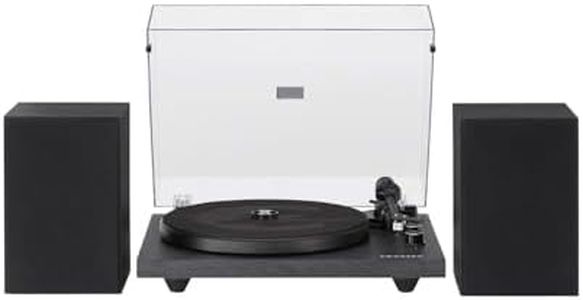


Buying Guide for the Best Beginner Record Player
Choosing your first record player is exciting, especially as vinyl makes a comeback for music lovers who want richer, more tactile listening experiences. As a beginner, it's important to focus on ease of use, reliability, and sound quality without getting overwhelmed by advanced features. Knowing what matters most for your listening habits and setup can help narrow your options. Understanding the main features of record players will guide you to a model that's enjoyable and simple to use as you start your vinyl journey.Drive TypeThe drive type refers to how the turntable platter is powered—either by direct drive or belt drive. This aspect is important because it affects how the record spins and the amount of noise or vibration that might be picked up during playback. Belt-drive systems are usually quieter and ideal for home listening, as the rubber belt absorbs motor noise. Direct-drive models connect the platter directly to the motor and are more robust, often preferred by DJs for quick starts and durability. Beginners looking for pure listening pleasure should lean towards belt-drive models, which are also more common at entry-level prices.
Automatic, Semi-automatic, or Manual OperationThis spec describes how much you need to do yourself when starting or stopping a record. Manual turntables require you to place the tonearm at the beginning and pick it up at the end, while automatic models take care of these steps at the push of a button. Semi-automatic options mix the two, often returning the arm automatically at the end. For people new to records, automatic or semi-automatic designs are easiest and help prevent accidental scratches—making them great choices for beginners.
Built-in PreampA built-in preamp boosts the signal from your turntable to make it ‘line level,’ so you can connect directly to powered speakers or standard audio equipment. This is essential because turntables send out a very weak signal that most speakers can’t use without a preamp. Some record players have this built-in, while others need you to buy a separate one. If you don’t have other audio gear with a phono input, a built-in preamp is very helpful and simplifies setup for those just starting out.
Speed SettingsSpeed settings indicate which types of records you can play, usually 33⅓ RPM (most albums), 45 RPM (singles and EPs), and sometimes 78 RPM (very old records). It is important because using the wrong speed changes the sound dramatically. As a beginner, make sure your record player covers at least 33⅓ and 45 RPM—these are the most common vinyl formats and will let you play most modern records.
Cartridge and Stylus QualityThe cartridge holds the stylus (needle) and translates grooves into sound. Quality here directly affects the sound you hear and how much wear your records will face. Entry-level turntables often come with pre-installed cartridges that are good for beginners and easy to replace. Choosing a model with a decent, upgradable cartridge gives you flexibility as your ears get more discerning. As a beginner, it’s wise to start with what’s installed, but look for a simple replacement process.
Connectivity OptionsConnectivity covers how you hook up your record player to the rest of your audio system. Some models include RCA outputs, built-in Bluetooth, or USB ports for digitizing your records. While RCA is a traditional, reliable way to connect to speakers, Bluetooth lets you play wirelessly, and a USB connection is useful if you want to record vinyl into digital format. Think about your current speakers and if you want the flexibility to use wireless or connect to a computer; this can guide you to the best option.