10 Best Beginner Vlogging Cameras
From leading brands and best sellers available on the web.By clicking on a link to a third party's website, log data is shared with that third party.

Related Products
Up to 22% off
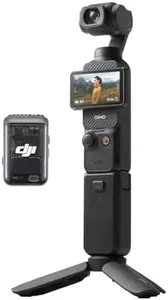
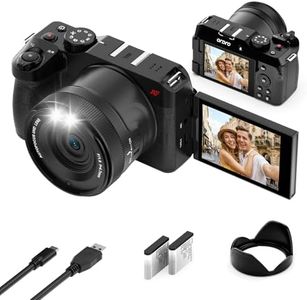
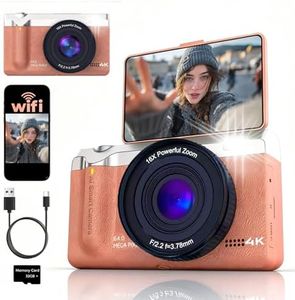
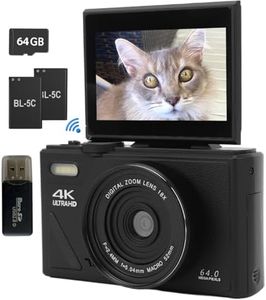


Buying Guide for the Best Beginner Vlogging Cameras
Choosing your first vlogging camera can feel overwhelming, but focusing on your needs and understanding the most relevant features will make the process much easier. As a beginner, you want a camera that’s straightforward to use, portable, and captures good quality video and audio. Think about where and how you plan to vlog (indoors, outdoors, on-the-go, etc.), and let those needs guide you as you compare key specifications.Video ResolutionVideo resolution is the amount of detail a camera captures in its footage, usually listed as 1080p (Full HD) or 4K. A higher resolution means clearer, sharper videos. Full HD (1080p) is standard and works perfectly well for most beginner vloggers, offering good clarity and manageable file sizes. 4K video is even sharper and gives you more flexibility to crop or zoom in when editing, but it also takes up more storage and requires more powerful computers for editing. Beginners often start with 1080p for easier handling, especially if they’re sharing videos on social media.
Autofocus SystemAutofocus helps keep your face or a chosen subject sharp and in focus while recording. Good autofocus is important for vlogging because you often move around and need the camera to adjust automatically. Autofocus systems vary: basic cameras might only have simple face detection, while more advanced ones feature fast and accurate tracking. If you record a lot of moving shots or film yourself walking and talking, pick a camera known for reliable autofocus. For more static, sit-down videos, autofocus is less critical, but still helpful for ease.
Portability (Size and Weight)Portability refers to how easy the camera is to carry around. Smaller, lighter cameras are easier to hold for long periods, throw in a bag, or use on a selfie stick, making them ideal for travel vlogs or recording on-the-go. Larger cameras might offer better image quality but can be tiring to handle all day. Think about how much you’ll be carrying the camera around—if you mostly film at home, size and weight might not matter as much, but for outdoor or travel vlogs, a compact, lightweight model is best.
Audio Quality and Microphone InputAudio quality is crucial because poor sound can turn viewers off, even if your video looks good. Many beginner cameras have built-in microphones, which are okay in quiet settings but can pick up unwanted background noise. Some cameras let you plug in an external microphone, which greatly improves sound quality. If you plan to vlog in noisy environments or want professional-sounding audio, look for a camera with a microphone input. For quiet, indoor vlogging, internal microphones might be enough.
Flip or Articulating ScreenA flip or articulating screen lets you see yourself while recording. This is very useful for framing your shots, checking focus, and making sure you’re in the center of the frame. Some screens flip up, others flip out to the side—both work for solo filming. If you want to record yourself without help, a camera with a flip screen makes the process much easier and more reliable.
StabilizationStabilization helps prevent shaky videos, especially when you’re moving or hand-holding the camera. Some cameras use in-body or digital stabilization, while others rely on stabilized lenses. Good stabilization is important if you plan to vlog while walking, traveling, or recording action. For mostly stationary, tripod-based filming, it’s less essential. Consider your filming style—if you’re often on the move, prioritize a model with effective stabilization.
Ease of Use and ConnectivityEase of use means how friendly and simple the camera is for beginners. Cameras with user-friendly menus, automatic modes, and clear instructions help you get started faster. Many modern cameras also offer features like Wi-Fi or Bluetooth so you can easily transfer videos to your phone or computer. If you value convenience or are new to cameras, look for models touted for their easy controls and quick sharing options.