10 Best Bluetooth Bookshelf Speakers
From leading brands and best sellers available on the web.By clicking on a link to a third party's website, log data is shared with that third party.
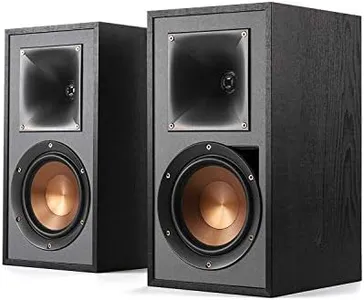
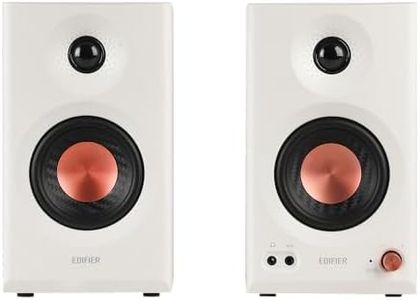
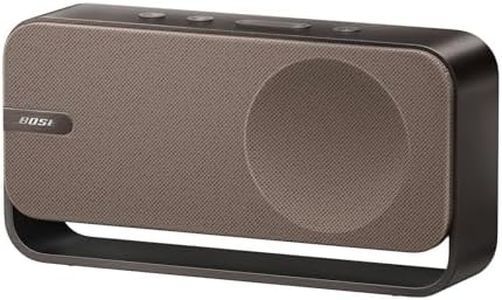
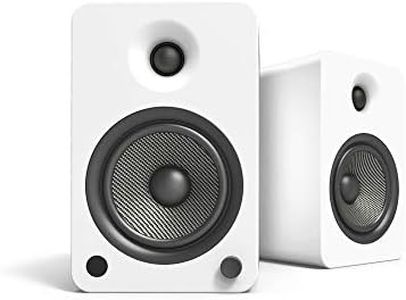

Related Products
Up to 8% off

Recommended lists


Buying Guide for the Best Bluetooth Bookshelf Speakers
Choosing Bluetooth bookshelf speakers can be exciting, but to find the perfect match for your needs, it's best to consider how and where you plan to use them. Think about your listening preferences, the space you’ll be using the speakers in, and what devices you want to connect. Key factors like sound quality, size, connectivity options, and extra features will shape your listening experience. Focusing on these elements ensures your new speakers will sound great and fit seamlessly into your lifestyle.Speaker SizeSpeaker size refers to both the dimensions of the whole speaker and the size of the drivers (the part that produces sound). Larger speakers and drivers can produce deeper bass and often handle louder volumes without distortion, which is important if you have a large room or enjoy powerful sound. Smaller speakers are easier to fit on shelves or desks and are usually sufficient for smaller spaces or near-field listening. Consider the size of your room and where you’ll place the speakers; for a bedroom or office, smaller speakers might be perfect, while living rooms might benefit from larger ones.
Power Output (Watts)Power output, measured in watts, tells you how loud the speakers can get and how well they can fill a space with sound. Low-wattage speakers (under 30 watts per channel) are best for casual, close-up listening, while higher-wattage options (50 watts or more per channel) are better for bigger rooms or more demanding music playback. If you mostly listen at moderate volumes in a small room, you won’t need much power. But if you host gatherings or want a dynamic experience, choose higher wattage.
Bluetooth Version and RangeThe Bluetooth version affects connection stability, range, and sometimes audio quality. Newer versions like 5.0 or above usually offer better range (up to 30 meters or more) and a more reliable connection, while older versions may have shorter range and can be more prone to dropouts. If you want to stream music from across a large room or even different rooms, opt for the latest versions. For close-up use, almost any recent Bluetooth will suffice.
Inputs and ConnectivityIn addition to Bluetooth, most bookshelf speakers also have other input options, like AUX (3.5mm), RCA, optical, or USB. This means you can connect non-Bluetooth devices, such as turntables, TVs, or computers. Having more input options gives you flexibility, especially if you want to use the speakers for multiple sources. Think about what you'll connect now and in the future—choose speakers with a variety of input ports if versatility is important to you.
Frequency ResponseFrequency response describes which pitches or frequencies the speakers can play, measured in hertz (Hz) for lows and kilohertz (kHz) for highs. A wider frequency range allows the speakers to reproduce more detail, from deep bass to sparkling highs. However, not everyone needs the widest possible range—if you enjoy bass-heavy music or watch movies, look for speakers able to reach lower frequencies (around 50 Hz or lower). For everyday listening, mid-range frequency coverage will generally sound satisfying.
Built-in AmplifierBookshelf speakers may be 'active' (with a built-in amplifier) or 'passive' (requiring a separate amp). Active speakers are ready to play—just plug them in and connect your devices. Passive ones need an external amplifier, adding complexity. For hassle-free setup and easy use, active (amplified) speakers are usually the best choice for most people.
Controls and FeaturesSome speakers come with convenient features like remote controls, EQ settings (to adjust bass and treble), app support, or even built-in voice assistants. These extras can make everyday use easier or allow you to tailor the sound to your preferences. If you like adjusting sound based on what you’re listening to, or want quick access without getting up, look for these user-friendly features.