10 Best boomerangs
From leading brands and best sellers available on the web.By clicking on a link to a third party's website, log data is shared with that third party.


Related Products
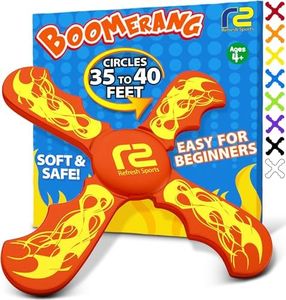
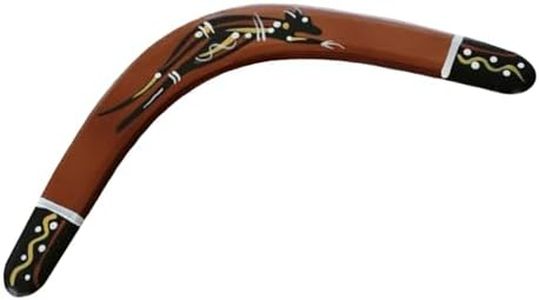
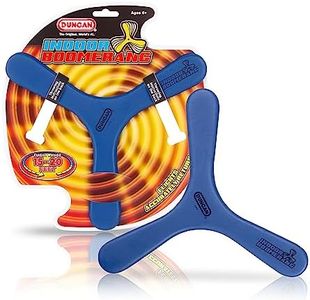
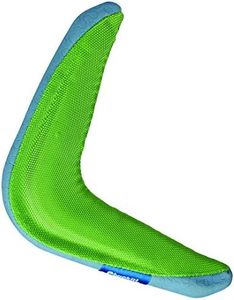
Buying Guide for the Best boomerangs
Choosing the right boomerang is more than just picking one that looks interesting. The best boomerang for you depends on your throwing experience, where you plan to use it, and what you want out of the experience. By understanding the key features of boomerangs, you can pick one that's fun, safe, and suited to your skill level. It’s important to take a little time to consider how each of the main specs matches your needs, especially if you’re just starting out or looking to advance your skills.MaterialThe material of a boomerang is what it's made from, and this can include wood, plastic, or composite materials. This spec is important because it affects the boomerang’s durability, weight, and how easy it is to throw and catch. Lighter materials like plastic or soft foam are generally more forgiving and safer, making them suitable for beginners and children. Wooden or composite boomerangs can offer better flight characteristics and durability for outdoor use and are preferred by enthusiasts or those wanting a more authentic experience. Think about where and how you’ll throw your boomerang, as well as your experience, when choosing the material that will work best for you.
Flight RangeFlight range describes how far the boomerang travels from the thrower before returning. This matters because it determines what kind of space you’ll need to safely use the boomerang. Short-range boomerangs (10-20 meters) are best for beginners, younger players, or smaller spaces such as parks or backyards. Medium-range models (20-40 meters) offer more of a challenge and are good for those with some experience. Long-range boomerangs (over 40 meters) are typically used by advanced throwers and require large open areas to throw safely. Consider your skill level and where you plan to throw when choosing the optimum flight range.
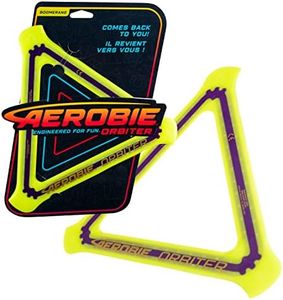
Number of Wings/ArmsThis spec refers to how many 'arms' or 'wings' the boomerang has, which can range from two (most common), to three or sometimes more. This is important because it affects stability and the return flight path. Two-winged boomerangs provide classic performance and are great for learning, while those with three or more wings are often more stable and easier to catch, making them appealing for beginners or for trick throws. If you’re new to boomerangs, a larger, tri-blade design can help you get used to catching a returning object, whereas more traditional shapes give the classic boomerang flight and challenge.
Size and WeightBoomerangs come in different sizes and weights, which influences how they fly and how easy they are to throw. Smaller, lighter boomerangs generally need less force and are less likely to cause injury, so they’re good for kids and beginners. Heavier and larger boomerangs need more strength and proper technique but can perform better in windy outdoor environments and provide longer flights. When picking a boomerang, consider your physical strength and age, as well as the conditions you’ll be throwing in, to find a comfortable match.
Handedness (Left- or Right-Handed)Boomerangs are typically designed for either right-handed or left-handed throwers, determined by how the wings are shaped. This is important because throwing with the incorrect hand will make the boomerang fly incorrectly and not return. Make sure to choose a boomerang specifically built for your dominant hand. If you are right-handed, pick a right-handed boomerang, and the same applies for left-handed individuals. There are ambidextrous models, but they are less common and may perform differently.
Safety FeaturesSome boomerangs, especially those meant for beginners or children, include safety features such as rounded edges or softer materials. These are important because they reduce the risk of injury during missed catches. If you’re buying for children or for group activities, safety features offer peace of mind and make learning to throw and catch more comfortable. For advanced users, this may be less of a concern, but it’s wise to factor in safety if you’re still learning.