10 Best Budget Down Comforters
From leading brands and best sellers available on the web.By clicking on a link to a third party's website, log data is shared with that third party.


Related Products
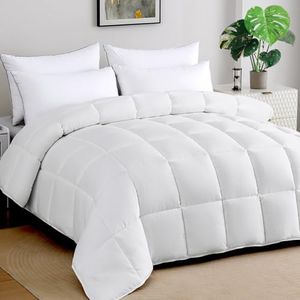
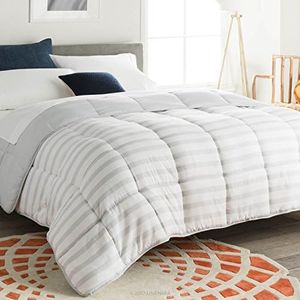


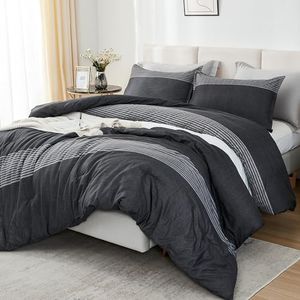
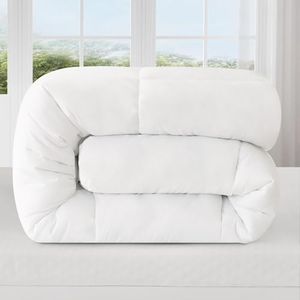
Buying Guide for the Best Budget Down Comforters
Picking the right down comforter is all about finding a balance between warmth, comfort, and practicality for your needs. Begin by considering how warm you need your comforter to be for your climate and sleeping habits. Look out for the type and quality of down filling, the construction method, and the outer fabric, as each of these affects comfort and durability. Keep in mind that your preferences—such as allergies, warmth readiness, and weight—will guide you toward the best option for you.Fill PowerFill power measures how much space one ounce of down occupies and is a key indicator of the fluffiness and insulating ability of a comforter. Higher fill power means the comforter is lighter, fluffier, and warmer for its weight. Generally, fill power between 400-600 is considered good for mild climates and people who sleep warm, 600-800 provides extra warmth which is suitable for colder seasons or people who feel cold easily, and above 800 is premium, for those seeking maximum loft and insulation. Your choice should depend on how cold your bedroom gets and if you like a very warm or medium-warm feeling.
Fill WeightFill weight is the amount of down inside the comforter, measured in ounces, and tells you how heavy and how warm the comforter might feel. Lower fill weights make for lighter, cooler comforters ideal for warmer rooms or summer use, medium fill weights are best for year-round comfort, and higher fill weights are suited for cold climates or for people who like extra warmth. Think about whether you get hot or cold at night and choose a fill weight that matches your comfort needs.
Down TypeDown can come from different birds, mainly duck or goose, and this affects the overall quality and price. Goose down tends to be fluffier and warmer, while duck down can be more affordable but may have a slightly different texture or insulation quality. For most people, either will be comfortable, but if you want extra loft and insulation, look for goose down. Consider allergies as well, as some types of down may be processed differently and be hypoallergenic.
ConstructionThe construction refers to how the comforter is sewn, which affects how the down stays distributed. Baffle-box construction provides compartments that keep down from shifting, resulting in consistent warmth and less clumping, while sewn-through construction is simpler but can develop cold spots. For even warmth, baffle-box is often better, but for a lighter and sometimes less expensive option, sewn-through may be fine. Choose based on whether you want maximum warmth and structure, or a lighter, more basic comforter.
Outer FabricThe fabric that covers the comforter is important for comfort and durability. Common choices include cotton, microfiber, and blends, with different levels of softness, breathability, and noise. Higher thread count cotton is softer and more breathable, while microfiber can be smoother but less breathable. If you have sensitive skin or prefer a quieter, softer feel, go for a higher thread count cotton. If easy care matters more, microfiber can be a good fit. Match the fabric type to your comfort preferences and care habits.
Allergen ResistanceFor those with allergies or asthma, hypoallergenic down or special treatments can help prevent reactions. Some comforters are made with down that is cleaned more thoroughly or with special materials to reduce allergens. If you have allergies, make allergen resistance a priority; look for labels or descriptions that address this need. Otherwise, this feature is optional based on your sensitivity.