10 Best Budget Fly Rods
From leading brands and best sellers available on the web.By clicking on a link to a third party's website, log data is shared with that third party.
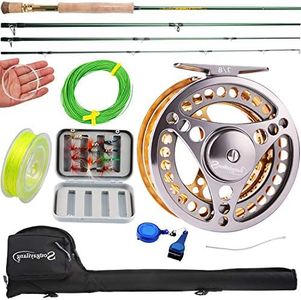

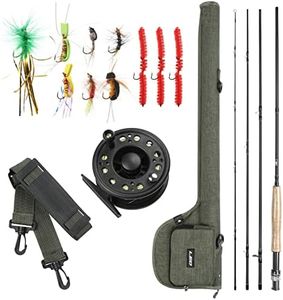
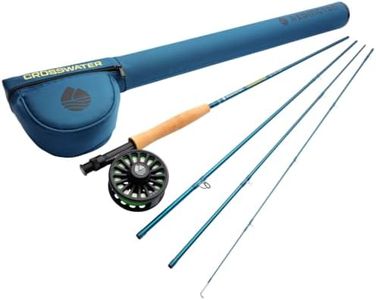
Related Products




Recommended lists
Top rated
Fly Rods
Buying Guide for the Best Budget Fly Rods
Choosing the right fly rod, even when shopping on a budget, can make a big difference in your fishing experience. It’s important to think about where and what you’ll be fishing for, as well as your own level of skill. The best fly rod for you will feel comfortable in your hand, be suited to your target fish, and help you cast with confidence. Don’t get overwhelmed by all the technical terms; focus on a few key features that really impact performance and enjoyment.Rod LengthRod length refers to how long the fly rod is from end to end. It’s important because it affects casting distance, control, and the environments you can fish in. Shorter rods, around 7 to 8 feet, are easier to use in tight spaces with lots of trees or brush, while longer rods, typically 9 feet and above, allow for longer casts and better line control on open water. To choose the right length, think about where you’ll fish most often – small streams call for shorter rods, while larger rivers and lakes benefit from longer rods.
Rod Weight (Line Weight Rating)Rod weight, also called the line weight rating, tells you the size of the fly line the rod is designed to handle, usually marked as a number like 4wt, 5wt, or 6wt. This is important because it affects what kind of fish you can target and how the rod casts. Lower weights (2–4wt) are good for small fish and delicate casts, medium weights (5–6wt) are the most versatile for trout and average-sized fish, and higher weights (7wt and above) are for big fish or heavy winds. Match the rod weight to the species and water you’ll fish most.
ActionRod action describes how much and where the rod bends when you cast. Fast action rods are stiff and bend mostly at the tip, giving longer casts but requiring good technique. Medium action rods bend more towards the middle and are easier for most people to learn on, offering a balance of distance and feel. Slow action rods bend throughout, making them very forgiving for short, gentle casts but not ideal for windy conditions. Beginners or those who want more forgiveness should lean towards medium or medium-fast action rods.
MaterialBudget fly rods are typically made from graphite, fiberglass, or a mix. Graphite rods are lightweight and crisp, giving good accuracy and distance, and are the most common choice. Fiberglass rods are heavier but very flexible and forgiving, great for short casts and small streams. The right material depends on whether you value a lighter, quicker action (go graphite) or a slower, smoother feel (try fiberglass). Both can last with proper care.
Pieces/PortabilityThis spec tells you how many sections the rod breaks down into. More pieces (like 4 or even 6) make it easier to pack and transport, which is handy for travel or hiking. Fewer pieces (usually 2) are quicker to set up but less compact. If you need to carry your rod in a backpack, look for higher-piece designs. If portability isn’t important, a 2-piece rod works just fine.