10 Best Cameras For Content Creators
From leading brands and best sellers available on the web.By clicking on a link to a third party's website, log data is shared with that third party.
Related Products
Up to 32% off

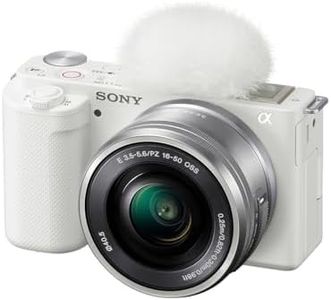

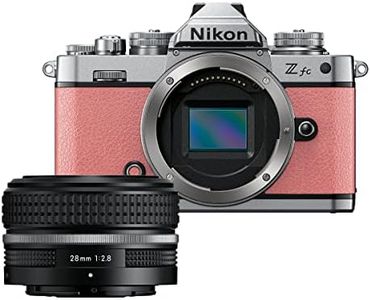
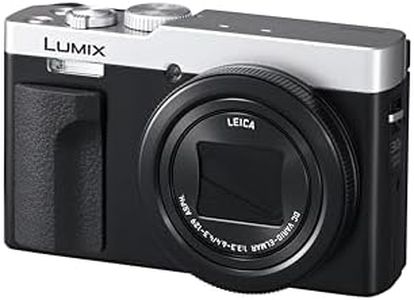
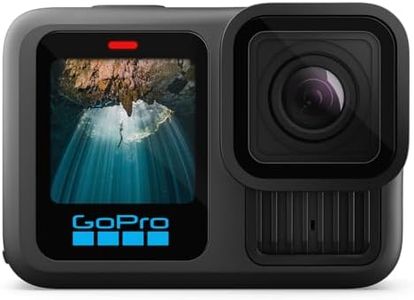
Buying Guide for the Best Cameras For Content Creators
Picking a camera as a content creator is an exciting process, since your camera will be your main tool to generate captivating videos and photos. The right camera for you greatly depends on the type of content you plan to create—like vlogs, tutorials, travel diaries, or product reviews—and where you’ll usually record, whether it’s indoors, outdoors, or on the move. It’s important to know which features really matter for your work, so that your investment makes your creative process easier and your results better.Sensor SizeThe sensor is the heart of the camera, and its size affects image quality, depth of field, and low-light performance. Larger sensors (like full-frame) generally deliver higher quality and work better in dim light, but they make the camera bulkier. APS-C sensors offer a balance between quality and portability, while micro four-thirds sensors make the camera even more compact and lightweight. If you mostly shoot in controlled lighting or prioritize portability, smaller sensors are great. For content creators who want the best image quality, especially for YouTube or professional work, a bigger sensor might be worth it.
Autofocus SystemAutofocus helps keep your subject sharp and in focus, which is crucial for video work, vlogging, or if you’re often moving around in your frame. Some cameras have fast and reliable eye or face-tracking autofocus, while others might be slower or less accurate. If you film yourself or unpredictable subjects, look for cameras known for quick and precise autofocus. For planned, static shots, this might be less critical.
Video Resolution and Frame RateVideo resolution (like 1080p or 4K) determines how crisp your videos look, and frame rate (like 24fps, 30fps, or 60fps) affects how smooth the motion appears. Most content creators are fine with 1080p for online content, but 4K gives you more detail and flexibility to crop or reframe shots in editing. Higher frame rates allow for smooth slow-motion, which can add polish to your videos. Choose the highest resolution and frame rate combination you’ll realistically use, depending on your editing skills, file storage, and platform needs.
Audio Input OptionsGood audio is just as important as good video for content creation. Some cameras have a built-in microphone only, while others offer a microphone input for better external mics or even a headphone jack for monitoring. If you want professional-sounding audio (for interviews, voice-overs, or vlogs), make sure your camera can connect to quality mics. If you’re always shooting in controlled, quiet settings, the in-camera audio might be enough.
Stabilization FeaturesStabilization keeps your footage smooth and steady, reducing shakiness from hand-held shooting or walking with the camera. Some cameras have built-in image stabilization (IBIS), while others rely on lens stabilization or digital methods. For vloggers, travel content creators, or anyone filming without a tripod, strong stabilization makes a huge difference. If most of your content is static or shot on a tripod, this is less essential.
Screen Type and ArticulationThe camera’s screen lets you see what you’re recording or photographing. Some screens are fixed, some tilt, and others fully flip out and rotate (articulating screens). For solo creators, a flip-out or articulating screen lets you see yourself, check framing, and touch to focus while filming. If you always have a camera operator or only shoot landscapes and products, a fixed or tilting screen might suffice.
Connectivity OptionsConnectivity features, like Wi-Fi, Bluetooth, or USB streaming, help you transfer files, livestream, or control the camera from your phone. Some cameras also offer direct livestreaming capabilities. If you want to quickly share content on social media, work with remote teams, or livestream often, strong connectivity will make your workflow much smoother. If you prefer to edit on a computer and upload later, basic connectivity works fine.