6 Best Camping Hammocks With Stand
From leading brands and best sellers available on the web.By clicking on a link to a third party's website, log data is shared with that third party.
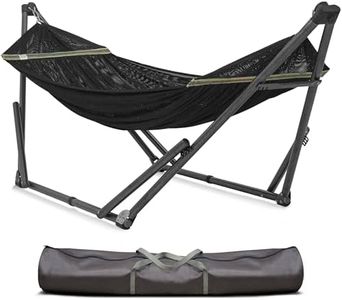
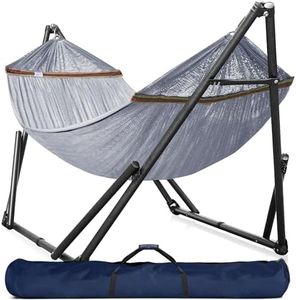


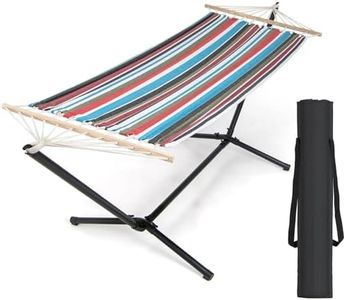
Buying Guide for the Best Camping Hammocks With Stand
When choosing a camping hammock with a stand, it’s important to think about how and where you'll use it. These products are convenient because they don’t require trees or fixed points, making them versatile for many situations. Whether you’re relaxing in the backyard, camping at a site with limited trees, or just want something easy to set up, the right hammock can make your experience much more enjoyable. Focus on your comfort, how easy it is to transport, how long setup takes, and your intended use, as these will help guide your choice.Hammock MaterialThe material of the hammock affects both comfort and durability. Most camping hammocks use nylon or polyester fabrics, which are lightweight, quick-drying, and resistant to mold. For extra softness, cotton is sometimes used, but it is heavier and retains moisture. Lightweight nylon (like parachute nylon) is ideal for backpackers or those prioritizing easy transport, while heavier materials might be better for long-term backyard use. Think about how much you’ll be moving the hammock and whether it will be exposed to rain or sun when picking the fabric.
Weight CapacityThis tells you the maximum weight a hammock with its stand can support safely. Typical limits range from around 200 pounds (for basic or ultralight models) to 500 pounds (for heavy-duty or double hammocks). When shopping, consider whether the hammock is for one person or needs to fit two. For solo use, most models suffice, but always ensure your weight and any gear are well within the stated limit for safety and longevity.
Stand Type and MaterialThe stand gives the hammock its structure, so its design and what it’s made of matter for both stability and portability. Stands are usually steel, aluminum, or wood. Steel is the most common for camping stands due to its strength and reasonable weight. Aluminum is lighter but sometimes less sturdy, while wood is aesthetically pleasing but typically heavier. If you want something you can move and set up on trips, look for lightweight metal stands that fold or disassemble easily. For a permanent spot, a heavier or wooden stand could be suitable.
Hammock SizeHammock dimensions (length and width) affect comfort and suitability for one or more people. Single hammocks are narrower and shorter, making them lighter but cozier. Double hammocks provide extra space for comfort or fitting two people, but are bulkier. If you’re tall or like to sprawl, a wider and longer hammock may be more comfortable, whereas smaller users or those prioritizing portability might prefer compact sizes.
PortabilityPortability refers to how easy the hammock and stand are to carry and set up. Check if the stand collapses or comes with a carry case, and the total packed weight. If you intend to take it hiking or camping away from your vehicle, lighter weight and compact size will be more important. For those staying near a car or using it at home, portability may matter less.
Ease of SetupHow quickly and simply the hammock and stand can be put together is key, especially after a long hike or if you plan to move it often. Some hammock stands use tool-free designs and snap or click together quickly, while others require more time or effort. If you're a beginner or want something convenient, look for designs marketed as 'quick setup' or 'no-tools needed.'
Weather ResistanceIf you’ll leave your hammock outside or take it camping frequently, weather resistance becomes important. Look for fabrics that resist UV degradation, mold, and mildew, as well as metal stands with rustproof coatings. This ensures the hammock lasts longer and stays comfortable even when exposed to the elements. Consider how much exposure to rain and sun will occur based on your camping locations and habits.