We Use CookiesWe use cookies to enhance the security, performance,
functionality and for analytical and promotional activities. By continuing to browse this site you
are agreeing to our privacy policy
10 Best Car Paint Sprayers
From leading brands and best sellers available on the web.By clicking on a link to a third party's website, log data is shared with that third party.

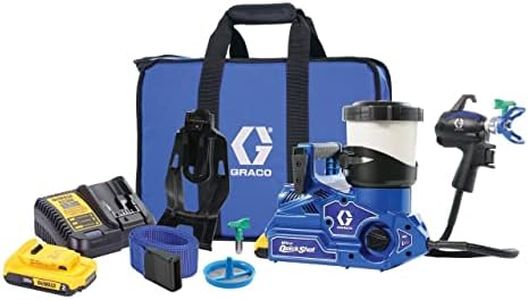
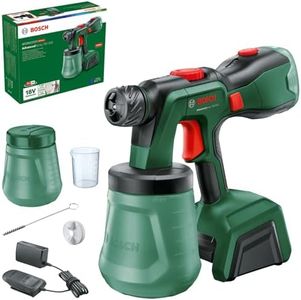
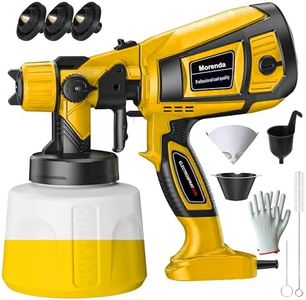
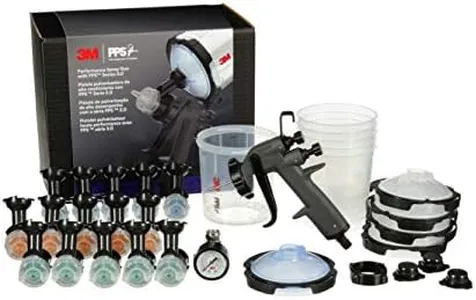
Related Products
Up to 6% off

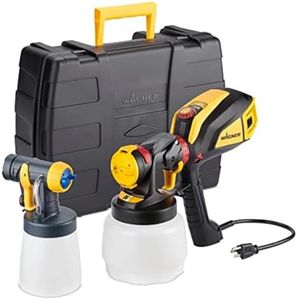
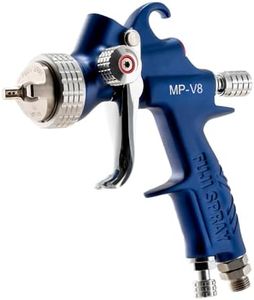
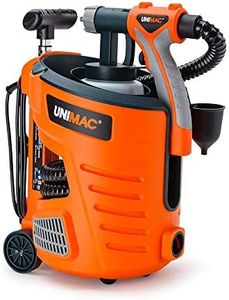
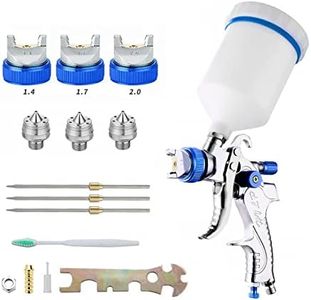
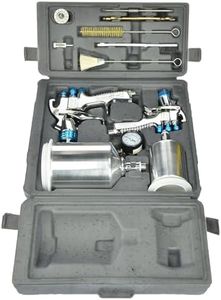
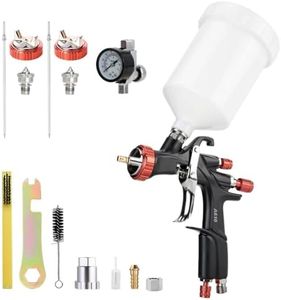
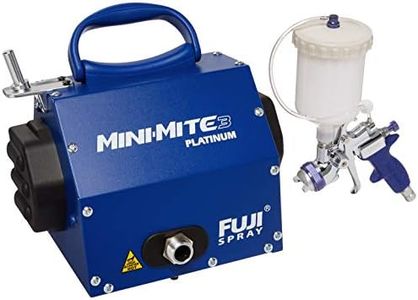
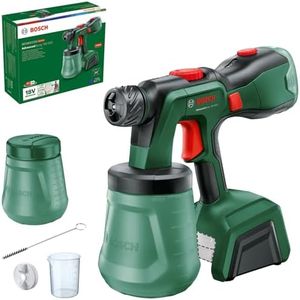
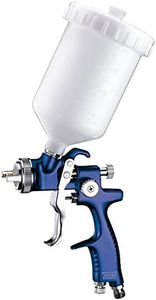
Buying Guide for the Best Car Paint Sprayers
Choosing the right car paint sprayer can enhance the quality of your paintwork, save time, and produce professional-looking results. It's important to consider what type of paint jobs you'll be doing, how often you plan to use the sprayer, and the level of detail or finish you want to achieve. Understanding the key specifications will help you match the tool to your needs and skills, ensuring you get the best value and results from your purchase.Sprayer TypeThe type of car paint sprayer refers to how the device applies paint, with the main types being HVLP (High Volume Low Pressure), LVLP (Low Volume Low Pressure), and airless sprayers. HVLP is common for car painting as it offers precise control and less overspray, making it ideal for detailed work and beginners. LVLP uses even less air, suitable for smaller compressors and fine finishes, while airless sprayers work faster for covering large surfaces but may not provide the same level of detail. When deciding, consider if you need fine, smooth finishes (good for touch-ups and detailing) or mass coverage (better for full resprays).
Nozzle SizeNozzle size determines how much paint comes out and what types of paint you can use. Smaller nozzles (around 1.0-1.3 mm) are best for thin materials like clear coats, while larger nozzles (1.4-1.8 mm) handle base coats and thicker paints. If you’ll paint with different materials, look for a sprayer with interchangeable nozzles, or choose the size that matches the main type of paint you plan to use, making your project smoother and more efficient.
Paint Cup CapacityThe paint cup is the container that holds your paint during spraying. A small cup (under 1 liter) is light and easy to maneuver, ideal for spot repairs or small tasks, while larger cups (over 1 liter) need fewer refills and are better suited for complete car paint jobs. Choose a size that matches how big your projects are: small cups for spot fixes and large ones for repainting whole panels or vehicles.
Air Compressor RequirementsMany car paint sprayers need to connect to an air compressor, which powers the spray. Check the sprayer's required air pressure (PSI) and air volume (CFM) to make sure your compressor can provide enough power for smooth spraying. Lower PSI and CFM requirements are easier on smaller compressors. Match the sprayer’s needs to your existing compressor, or factor in the cost and size of getting a compatible one if you’re starting from scratch.
Adjustability and ControlsGood sprayers allow you to adjust the spray pattern, pressure, and paint flow. This lets you cover large areas quickly with a wide pattern or zero in on small details with a narrow stream. Adjustability is important if you do different styles of jobs or want precise finishes. Look for models with easy-to-use knobs and dials, especially if you prefer having control over your work and expect your project needs to change.
Ease of CleaningSpraying paint can be messy, and cleaning the sprayer is essential to keep it working well. Some models are easier to clean than others, with fewer parts or designs that come apart quickly. If you want to save time on maintenance, look for sprayers advertised as easy to clean, or those that come with cleaning tools. This is especially useful if you plan to use different paint colors or switch between clear, base, and primer coats regularly.