10 Best Cellular Trail Cameras
From leading brands and best sellers available on the web.By clicking on a link to a third party's website, log data is shared with that third party.


Related Products
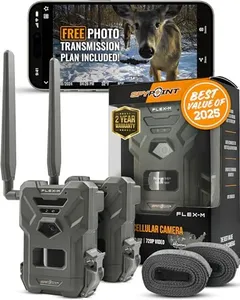
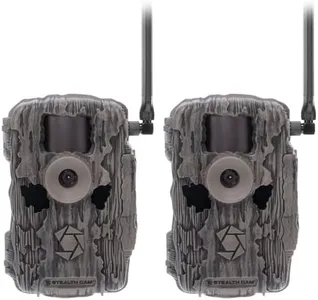
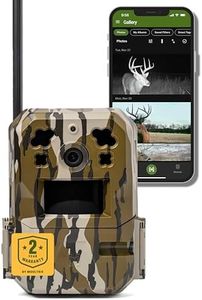
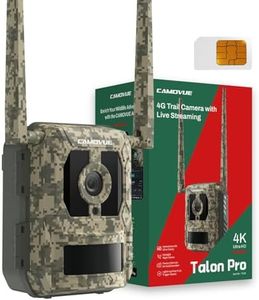
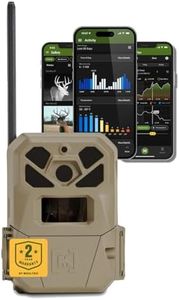
Buying Guide for the Best Cellular Trail Cameras
When shopping for a cellular trail camera, it’s important to focus on how you plan to use it—whether it’s for wildlife monitoring, property security, or hunting. The best approach is to match camera features to your specific needs and the environment where you will deploy the camera. Evaluating the right specs will help you get clear images, reliable remote access, and overall peace of mind.Cellular Network CompatibilityCellular network compatibility refers to which mobile network (like 4G LTE) the trail camera uses to send images or videos to your phone or email. This is essential because the camera needs a strong network signal where you deploy it. Cellular trail cameras typically support either one or a select few carriers, so you need to confirm that your chosen area has sufficient coverage. For remote locations, a camera that supports the most widespread carrier will be ideal. Those using it near populated or suburban areas can usually rely on any major network, but always check coverage maps first.
Image ResolutionImage resolution determines the detail and clarity of the photos or videos captured by the camera, usually measured in megapixels (MP). Higher resolution means clearer images, which is important for identifying animals or people. Cameras with lower resolutions (8-12 MP) are adequate for basic monitoring. Mid-range resolutions (12-20 MP) offer better detail and are practical for most users. High-resolution cameras (over 20 MP) provide very sharp images but use more storage and data. If you mainly want to track animal movements, lower to mid-range works fine; for capturing fine details, choose higher resolutions.
Trigger SpeedTrigger speed is the time it takes for the camera to detect motion and take a photo. Fast trigger speeds (under 0.5 seconds) are important if you want to capture fast-moving wildlife or intruders. Slower trigger speeds might cause you to miss critical moments. If your main aim is property security or monitoring quick-moving animals, look for the lowest trigger speed. For stationary subjects or simple time-lapse observation, a slower trigger speed may suffice.
Detection RangeDetection range is the maximum distance at which the camera can sense movement to trigger a photo or video. Cameras with short detection ranges (30-50 feet) are suitable for small, targeted zones. Mid-range (50-80 feet) models are good for monitoring typical trails or yards. Long detection range cameras (80 feet or more) cover wider areas, making them best for open fields or large properties. Your choice depends on the size and openness of the area you wish to monitor.
Battery LifeBattery life describes how long the camera can run on one set of batteries. This is influenced by the number of pictures taken, cellular transmissions, and standby time. Cameras with excellent battery life are preferable for remote locations where checking and changing batteries often is difficult. If you’re placing the camera somewhere convenient, shorter battery life isn’t a big drawback. For less maintenance, look for models known for their efficient power management or that support external power sources like solar panels.
Night VisionNight vision uses infrared LEDs to capture images in low light or darkness, which is vital since many animals are active at night. Cameras can have low, medium, or no-glow infrared—no-glow being less likely to spook animals or reveal the camera’s presence. If stealth is key, choose no-glow. The effective night vision range should match the camera’s detection or desired monitoring distance. More powerful night vision is better for wider or more open monitoring.
Data Plan OptionsSince cellular trail cameras send images over mobile networks, they rely on data plans. Some cameras use prepaid SIMs, others work with specific data packages. Consider how many images you expect to send monthly, as higher usage will need larger plans. Occasional users can opt for smaller plans, while frequent or professional monitoring will require more generous data allocations. Choosing a camera with flexible data options makes it easy to adjust as your needs change.
Ease of Setup and App FeaturesHow easy the camera is to install, configure, and manage remotely is often overlooked. Some cameras offer user-friendly apps, remote control, live view, and firmware updates. If you’re not tech-savvy or want something hassle-free, look for cameras with clear instructions and reliable, well-reviewed mobile apps. Advanced users who want more control or automation will value cameras that offer extensive configuration options via their mobile app.