9 Best Ceylon Cinnamon Powders
From leading brands and best sellers available on the web.By clicking on a link to a third party's website, log data is shared with that third party.
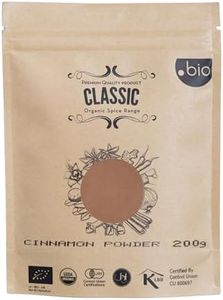
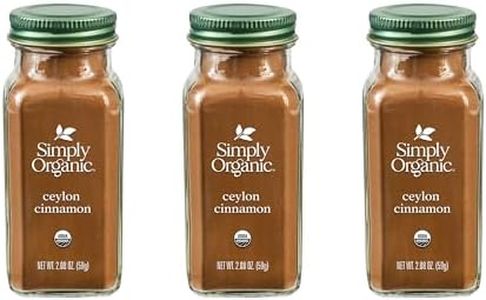
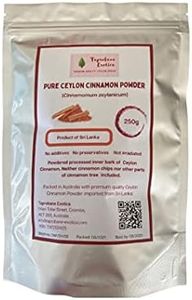
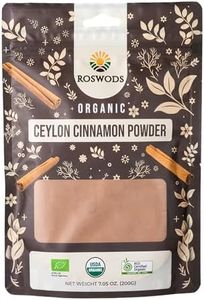
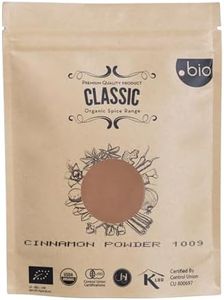
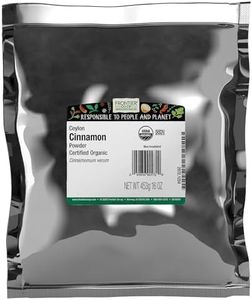
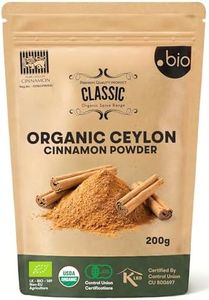
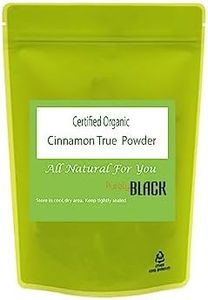
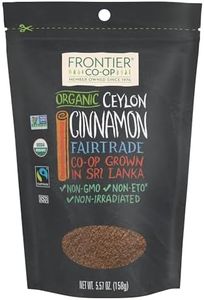
Buying Guide for the Best Ceylon Cinnamon Powders
Choosing the right Ceylon cinnamon powder is important if you want to enjoy its unique taste and health benefits. Unlike the more common Cassia cinnamon, Ceylon is known for its delicate flavor and lower coumarin content, which many consider healthier for regular consumption. When picking a Ceylon cinnamon powder, it's helpful to pay attention to a few key specifications to make sure you get a quality product suited to your needs, whether that's for baking, health supplements, or daily use in drinks.OriginThe origin of Ceylon cinnamon refers to where the cinnamon is grown and harvested, typically Sri Lanka, which is the only region producing true Ceylon cinnamon. This is important because Ceylon cinnamon from its original location usually comes with more authentic flavor and quality. Some products may claim to be ‘Ceylon’ cinnamon but come from other regions, which could impact taste and overall value. If authentic flavor and all the classic qualities of Ceylon cinnamon are important to you, look for products clearly stating ‘Sri Lanka’ or ‘Ceylon’ as the origin.
PurityPurity refers to whether the powder is made from 100% Ceylon cinnamon bark without any additives, fillers, or blends with cheaper Cassia cinnamon. This matters because pure Ceylon cinnamon powder delivers better flavor and health benefits, while blends or adulterated products might not. When checking for purity, look at the ingredient list for ‘Ceylon cinnamon’ as the only ingredient. If you’re prioritizing taste, health, or dietary restrictions, pure powder is your best choice.
Texture (Grind Fineness)Texture or grind fineness ranges from coarse to ultra-fine and affects how the powder dissolves or blends into food and drinks. Ultra-fine powders dissolve more easily in liquids, while coarser grinds may give a rustic texture in some recipes. Decide based on how you plan to use the cinnamon—smoother, finer powders are best for drinks or delicate desserts, while medium or coarse grinds can add texture to baking or oatmeal.
ColorCeylon cinnamon powder’s color usually ranges from light tan to a soft brown. This spec signals both purity and freshness, as true Ceylon cinnamon is lighter than the darker, reddish-brown Cassia. Being aware of color helps you avoid mistakenly buying Cassia powder if you want the gentler taste of Ceylon. If a subtle, mild flavor is your goal, then a lighter colored powder is a good indicator.
Aroma and TasteCeylon cinnamon is celebrated for its warm, sweet, and slightly citrus-like scent and taste, which is milder than Cassia. Though you may not be able to smell or taste before you buy, reviews and brand descriptions often mention aroma and flavor. If you are looking for a cinnamon that won’t overpower food and is pleasant for sensitive palates, focusing on descriptions of mildness and sweetness can guide your decision.
PackagingPackaging impacts both freshness and convenience. Good packaging for cinnamon powder is airtight and protects from light, preserving the aroma and preventing clumping or contamination. Whether you buy in a resealable pouch, jar, or tin, make sure it can be securely closed after each use. If you use cinnamon powder regularly, opt for practical packaging that is easy to store and reseal.
Non-GMO/Organic CertificationSome users prefer cinnamon powders that are certified organic or labeled as non-GMO. These labels mean the product was grown without synthetic chemicals or genetic modification. This is optional but important for those who want cleaner, more natural products. If avoiding artificial chemicals or supporting sustainable farming is a priority, look for reputable organic or non-GMO certifications.