9 Best Chair Mats For Thick Carpets
From leading brands and best sellers available on the web.By clicking on a link to a third party's website, log data is shared with that third party.
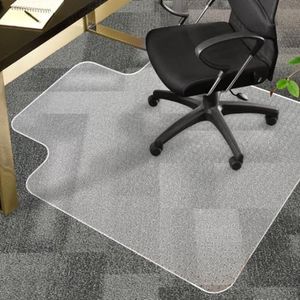
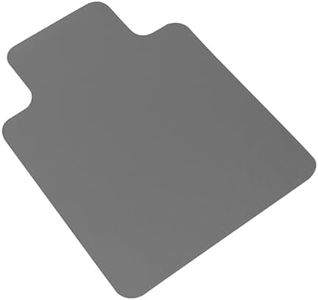
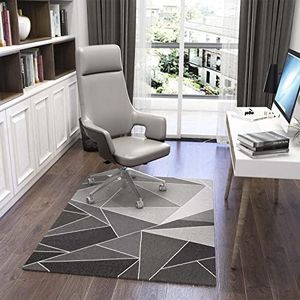
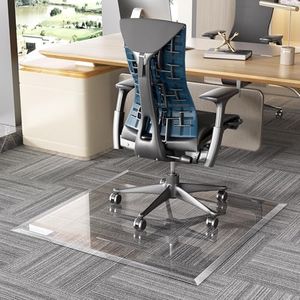

Buying Guide for the Best Chair Mats For Thick Carpets
When it comes to buying a chair mat for thick carpets, the main goal is to protect both your flooring and your chair’s wheels, while making it easier to move around. Chair mats intended for thick carpets need to prevent your chair from sinking into the pile, which can otherwise make moving your chair difficult and tiring. The right chair mat improves mobility and comfort, helps your carpet last longer, and protects your investment. To make a wise choice, it is important to familiarize yourself with some key features and specifications to ensure the mat serves your needs and stands the test of time.ThicknessThickness refers to how deep or sturdy the mat is from top to bottom. For thick carpets, this is a crucial feature because a thin mat will easily bend or crack, and may not stop your chair from sinking. Typically, thicker mats (around 0.2 inches or more) are recommended for plush or high-pile carpets, while medium mats work for medium-pile, and slim mats suit low-pile or hard floors. To pick the right one, check the height of your carpet: if your feet leave a noticeable impression, go for the thickest mat available. This will provide enough support and prevent the chair wheels from getting stuck.
MaterialMaterial determines the mat’s durability and flexibility. Most chair mats are made from polycarbonate, PVC, or tempered glass. Polycarbonate is strong, doesn’t curl, and offers high transparency. PVC is usually a bit more flexible and affordable, but might not hold up as well under heavy weight or over plush carpets. Tempered glass is best for heavy-duty use and is the least likely to bend, but it's heavier and may be overkill for most home offices. Consider how much you move your chair, how heavy your chair and yourself are, and how much use the area gets to decide which material would give you lasting performance.
Studded vs. Smooth BackingThe backing refers to the underside of the mat. Mats designed for carpets usually have small studs or spikes that grip and prevent sliding, while mats for hard floors are smooth. For thick carpets, a mat should have large, deep studs to dig through the carpet pile and anchor itself in place. If your mat slides or shifts, it defeats its purpose. When choosing, always opt for a studded backing if your carpet is plush or high-pile; the taller the fibers, the more grip you need.
Size and ShapeChair mats come in different sizes and shapes—rectangular, lipped (with a small extension for under the desk), and even circular. The right size depends on how much you move your chair. Consider how much floor you cover in your daily tasks and the space under and around your desk. It’s better to err on the larger side so your chair wheels never go off the mat and get stuck in the carpet, which can damage both the wheels and the carpet.
Edge DesignThe edge of a chair mat can be either beveled (angled) or straight. A beveled edge makes it easier to roll your chair onto or off the mat, which is important if you move frequently between carpet and mat area. Straight edges are fine for situations where your mat covers the whole area you’ll need, but a beveled edge is generally recommended for high-pile carpets because it helps prevent tripping and improves movement.