We Use CookiesWe use cookies to enhance the security, performance,
functionality and for analytical and promotional activities. By continuing to browse this site you
are agreeing to our privacy policy
10 Best Chalk Line Tools
From leading brands and best sellers available on the web.By clicking on a link to a third party's website, log data is shared with that third party.


Related Products
Up to 8% off
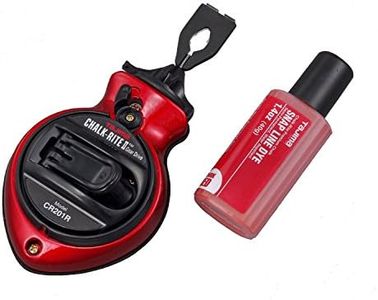
Buying Guide for the Best Chalk Line Tools
Choosing the right chalk line tool can make marking straight, accurate lines on surfaces much easier and faster, whether you're working on carpentry, masonry, painting, or DIY projects. The key is to consider how often you’ll use the tool, the types of surfaces you typically work with, and the size of the job. By understanding the main features of chalk line tools, you’ll be able to pick one that suits your needs and helps you get clean, visible lines for any project.Line LengthLine length refers to the maximum length of string that the chalk line tool can extend. This is important because it determines the longest straight line you’ll be able to mark in a single pull. Shorter lines (around 30 feet or less) are often enough for smaller indoor tasks like hanging pictures or cutting tiles, while longer lines (50 to 100 feet or more) are ideal for large layout jobs in carpentry or construction, such as marking out walls or decks. Think about the scale of your typical projects—if you often work on large surfaces, opt for a tool with a longer line.
Chalk CapacityChalk capacity is the amount of powdered chalk the tool can hold. A larger capacity means you can make more lines before you have to refill it, which is convenient for big projects or frequent use. Small-capacity tools are lighter and suited for quick jobs or occasional marking, while high-capacity models are heavier but better for long or repeated tasks. If you just need a chalk line occasionally, a smaller size will be fine. But if you’re marking lines all day, a bigger chalk box will limit interruptions.
Line MaterialThis refers to what the string is made out of, which affects durability and line thickness. Common options are cotton or polyester. Cotton lines can hold more chalk, giving you bolder lines, but can fray over time. Polyester lines are more durable and last longer but may give slightly thinner markings. If you prioritise bold lines for visibility, choose cotton. If you want something tough that lasts a long time, go for polyester.
Hook Design and PerformanceThe hook is the small metal piece at the end of the line used to secure it to a surface before snapping. A sturdy, well-designed hook makes setting precise lines easier, especially on uneven surfaces. Some hooks are designed to latch securely onto nails, edges, or specific construction features. If you usually work alone or on tricky surfaces, look for a tool with a versatile hook that grips well and stays in place.
Ease of RewindingAfter you snap a line, you retract the string. Some tools have gears to make rewinding faster and smoother, while basic models require manual winding, which can be slow. Fast-rewind features are particularly useful if you’re making lots of lines in a short time. For occasional or light use, manual winding will be sufficient, but for frequent projects, a quick-rewind tool can save time and effort.
Chalk Visibility and Color OptionsChalk comes in various colors like blue, red, or black, each designed for specific surfaces or lasting power. Brighter or contrasting colors offer better visibility on different materials. Some chalks are formulated to be temporary and wipe away easily, while others are permanent and weather-resistant. Consider what surfaces you’ll mark—white chalk is great for dark surfaces and blue for general, indoor use, while red or yellow is often used for outdoor or long-lasting marks.