10 Best Coaxial Cable For Cb Radio
From leading brands and best sellers available on the web.By clicking on a link to a third party's website, log data is shared with that third party.

Related Products
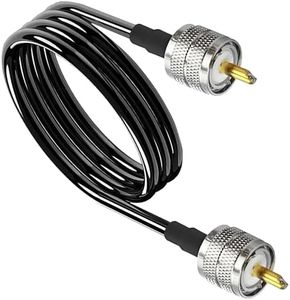
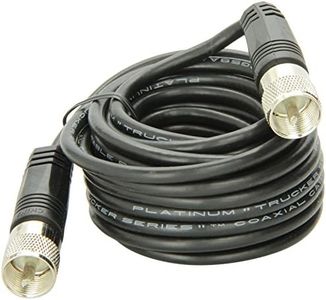
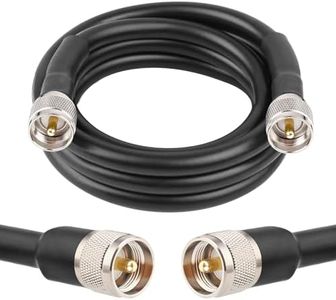
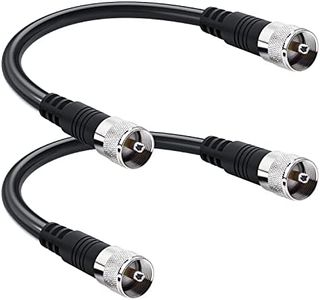
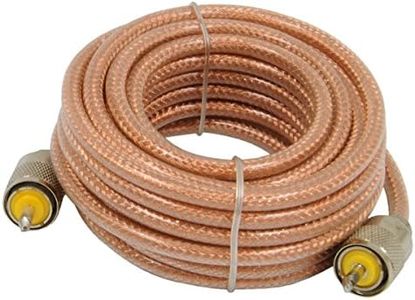
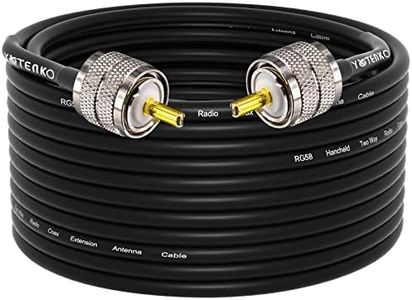
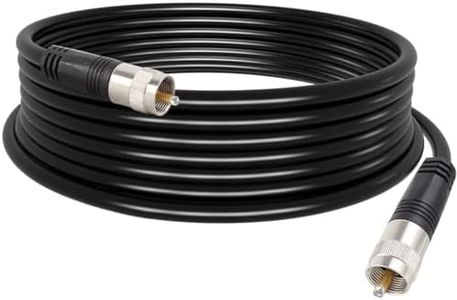
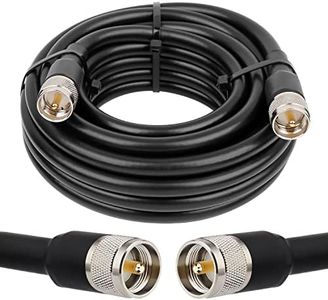
Buying Guide for the Best Coaxial Cable For Cb Radio
Choosing the right coaxial cable for your CB radio is crucial because the cable not only connects your radio to the antenna, but it also plays a major role in how clearly your radio transmits and receives signals. A well-chosen coaxial cable ensures efficient signal flow, minimizes interference, and affects your overall radio performance. When shopping, pay close attention to the specifications, as different environments and uses (like mobile vs. base station setups) demand different cable types and qualities.Cable ImpedanceImpedance is a measure of electrical resistance and, for CB radios, the standard impedance is 50 ohms. This value is important because both the radio and antenna are designed for 50-ohm systems, and mismatched impedance can cause signal loss and interfere with performance. Always look for coax cables labeled as 50 ohms when using them with CB radios, as higher or lower values are meant for other uses and could damage your equipment or reduce range.
Cable LengthLength matters because the longer your coaxial cable, the more the signal can weaken, which is known as signal loss. For short runs, this loss is minimal, but over longer distances, a better-quality or thicker cable may be needed. For most CB radio users in vehicles or with antennas close by, a length between 9 and 18 feet is typical. Only use as much cable as you need and avoid making it excessively long as it can negatively affect your radio’s performance.
Cable Thickness (RG Type)The thickness of the cable is mostly referred to by its RG number, such as RG-58 or RG-8X. Thicker cables like RG-8X have less signal loss and are better for longer runs or higher-power setups, while thinner cables like RG-58 are more flexible and easier to route in tight spaces, making them suitable for most standard mobile CB installations. Your specific environment and install location should guide you here: use thinner for tight, short runs, and thicker for longer or permanent setups.
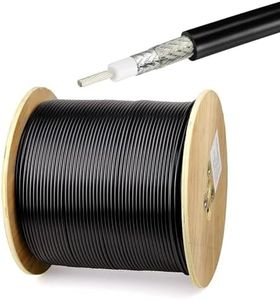
Shielding QualityShielding refers to the cable’s ability to block unwanted interference from things like engines, other electronics, or radio frequencies. Cables with double or braided shielding offer better protection and help prevent signal disturbance, which is important if you install your CB in areas with heavy electrical noise. If you plan to use your CB radio in environments with lots of electronic devices or near engines, go for a cable with higher shielding quality.
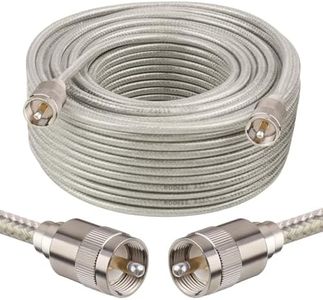
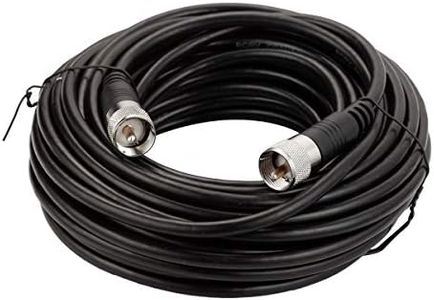
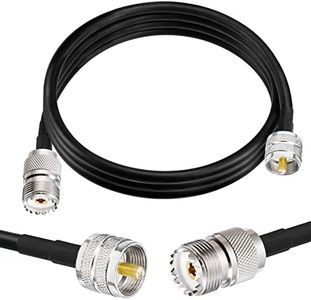
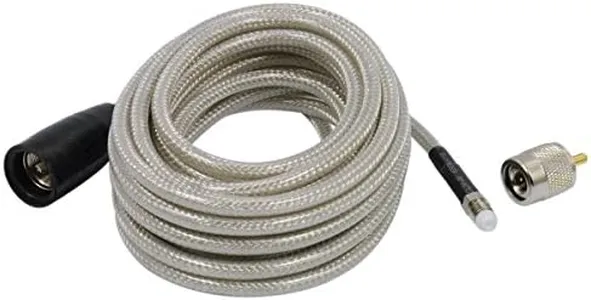
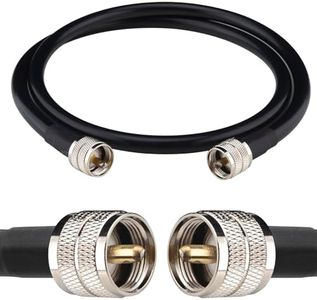
Connector TypeThe connectors are the metal ends that attach the cable to your radio and antenna. The most common type used for CB radios is the PL-259 connector. It’s important to choose a cable that already has the connectors you need pre-installed, or make sure they are compatible and can be added. The right connector ensures a snug, secure connection, making installation easier and ensuring the best signal transfer.
Flexibility and DurabilityFlexibility is all about how easily the cable can be routed in your vehicle or setup, while durability refers to its ability to withstand wear, weather, and movement over time. If you need to run the cable through tight bends or around corners, a more flexible cable is ideal. If it will be exposed to harsh environments (outdoors, moving parts, or through doors/windows), make sure to pick a cable with a tough outer jacket that resists abrasion and weather.