10 Best Coin Microscopes
From leading brands and best sellers available on the web.By clicking on a link to a third party's website, log data is shared with that third party.
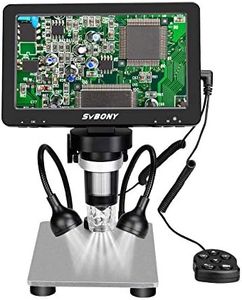
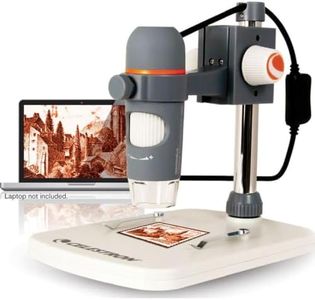
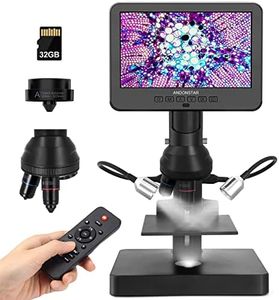
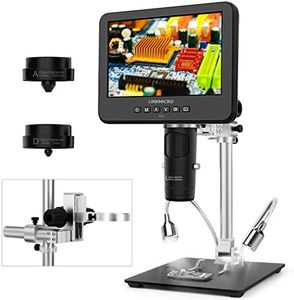
Related Products
Up to 16% off


Buying Guide for the Best Coin Microscopes
When choosing a coin microscope, the main aim is to get a clear, detailed view of coins to inspect their features or identify details like mint marks, surface wear, and errors. The right microscope depends on how closely you need to examine coins and whether you want to view them with your eyes or using a screen. Understanding a few key specifications will help you select a microscope that fits your coin collecting needs and comfort, ensuring you get sharp images and an easy-to-use experience.MagnificationMagnification tells you how much larger the microscope can make the coin appear compared to the naked eye. For coin collectors, magnification helps reveal tiny details that might not be visible otherwise. Magnification values typically range from 20x to 1000x or higher. For general coin examination, 20x to 40x is usually sufficient; it lets you see surface detail and minor features comfortably. If you need to study micro-details like die varieties or very tiny markings, magnification between 50x and 200x might be helpful. Anything much higher than 200x is rarely needed for coins and may make the image blurry or hard to position unless you're doing very specialized study. Consider your typical use: general identification and examination need less magnification, while highly detailed study may benefit from more.
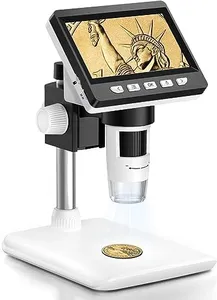
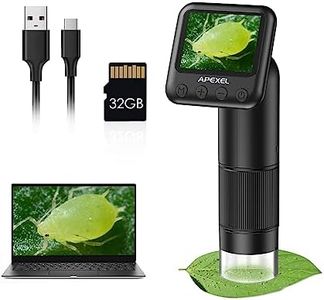
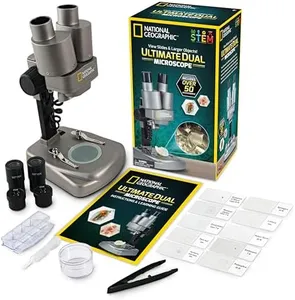
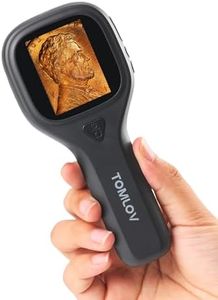
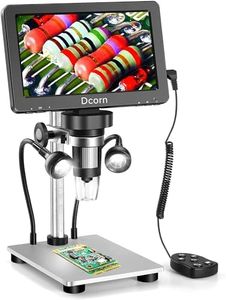
Optical vs. DigitalCoin microscopes come as optical (you look through eyepieces) or digital (the image is shown on a screen). Optical microscopes provide direct visual clarity and fast focus, while digital microscopes are connected to a computer or have a built-in screen, making it easier to save and share images. Optical is great if you like traditional viewing and accuracy, while digital is better if you want to document your coins or examine the images on a larger screen. Consider if you like working with your eyes directly or prefer the convenience of screens and image sharing.
LightingGood lighting ensures you can see all the details on your coins clearly. Coin microscopes often have built-in LED lights that can be adjusted for brightness and angle. This is important because coins are metallic and reflect light in different directions. Adjustable lighting lets you reduce glare and highlight small scratches or raised features. Some microscopes have ring lights while others have side illumination. If you plan to examine different kinds of coins or want to notice fine surface variations, look for a microscope with customizable lighting options.
Working DistanceWorking distance is the space between the microscope lens and the coin where you can focus clearly. A longer working distance lets you easily place and move coins under the microscope without bumping the lens, which is especially important for larger coins or frequent inspection. Short working distances can be tricky to use and may limit what types of coins you can examine. If you want convenience and flexibility, choose a microscope with a comfortable working distance.
Image Resolution (for Digital Microscopes)For digital microscopes, image resolution refers to how detailed and sharp the captured photos and videos will be. Higher resolutions (measured in megapixels) allow for clearer and more detailed images, which can be useful for sharing or archiving coin images. Lower resolutions may be sufficient for basic viewing but won't capture fine details well. If you plan to create a record of your collection or need clear images for online identification or sales, look for higher resolution; for simple examination, moderate resolution will do.
Portability and Ease of UseSome microscopes are compact and lightweight, making them easy to carry to coin shows or club meetings, while others are larger and best kept on a desk. Portability can be important if you plan to move your microscope often. Ease of use includes adjustable stands, focus controls, and intuitive design. If you want convenience and flexibility, look for a microscope that's not too heavy, is easy to set up, and has user-friendly controls suited to your level of familiarity with microscopes.