10 Best Compact Microwave Ovens
From leading brands and best sellers available on the web.By clicking on a link to a third party's website, log data is shared with that third party.


Related Products
Up to 20% off
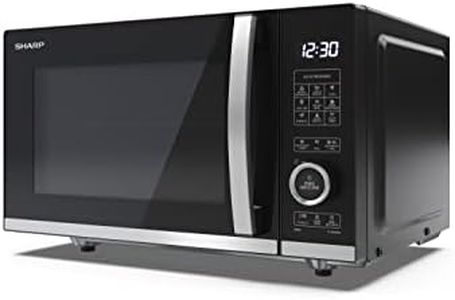
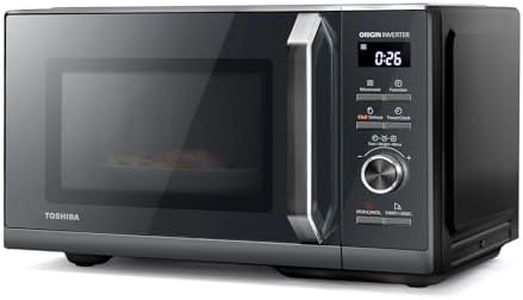
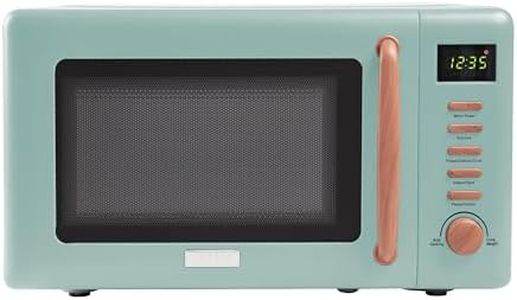
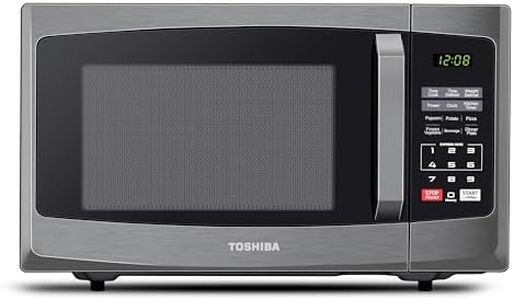
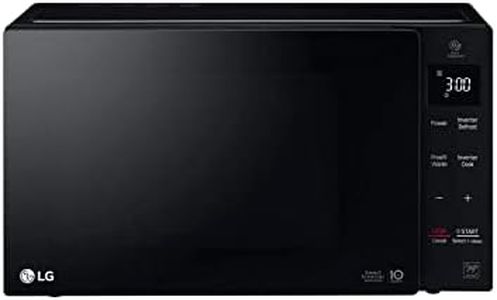

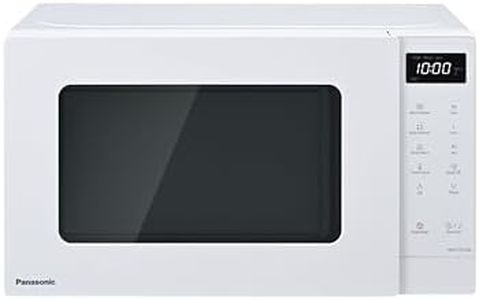
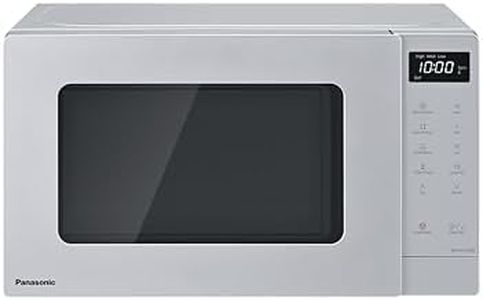
Buying Guide for the Best Compact Microwave Ovens
When choosing a compact microwave oven, it's important to keep your needs and available space in mind. Compact microwaves are great for small kitchens, apartments, dorm rooms, or offices. Focus on finding a balance between size, power, useful features, and ease of use. Think about what you'll mostly be using the microwave for: reheating, cooking meals, defrosting, or making snacks. The best choice is the one that matches your cooking habits, the amount of space you have, and the number of people who will be using it.Size (External Dimensions)The size of a compact microwave oven refers to its external measurements, which determine how much space it will take up on your counter or shelf. This spec is important to ensure the microwave fits into the available spot in your kitchen or wherever you plan to use it. Compact microwaves can be especially small—typically between about 17 to 20 inches wide and 10 to 13 inches tall. Think about where you’ll place the microwave, measure that space, and choose a microwave whose dimensions are slightly smaller than your available area so you have room for ventilation.
Capacity (Internal Volume)Capacity is how much space is inside the microwave, usually measured in cubic feet or liters. It tells you how much food—or what size of plates and containers—you can fit inside. Compact microwaves usually have a capacity between 0.5 and 1.0 cubic feet. A smaller capacity (like 0.5 to 0.7) works for simple tasks like reheating a cup of coffee or a small plate, while capacities closer to 1.0 can handle larger plates or bigger bowls of food. Consider what kinds of dishes you want to heat and check if they fit inside the microwave you’re looking at.
Power (Wattage)Wattage tells you how powerful the microwave is. A higher wattage means the microwave cooks or reheats food faster and more evenly. Compact models usually range from about 600 to 1000 watts. If you'll mainly use the microwave for quick reheating or snacks, models around 700 watts are often good. If you want to cook meals or defrost food regularly, look for something closer to 900–1000 watts for better performance. Choose wattage based on how quickly and evenly you want your food cooked, considering that lower-watt microwaves may take longer and may not cook as consistently.
Control Panel and PresetsThe control panel is how you interact with the microwave. Compact ovens sometimes have simple rotary dials, basic push buttons, or digital keypads. Preset buttons offer quick access to common cooking options like popcorn, pizza, or defrost. Simple dial controls are easy for basic reheating, while a digital panel with presets adds convenience for a wider range of uses. If you prefer one-touch options, look for models with multiple presets. For people who like things straightforward, manual dials may be just right.
Turntable SizeA turntable is the rotating glass plate inside the microwave. Its size affects what dishes will fit and if they’re heated evenly. In compact models, turntables are usually between 9 and 11 inches in diameter. If you regularly use larger dinner plates, check that the turntable is big enough. If you mostly reheat cups or small bowls, a smaller turntable is fine. Always check both the turntable size and the internal capacity to make sure your dishes will fit without hitting the sides.
Child Lock/Safety FeaturesSome compact microwaves offer a child lock or safety lock feature, which prevents the microwave from operating if the controls are accidentally pressed. This is especially important in homes with children. If safety is a concern or you keep the microwave in a communal space, look for models that offer easy-to-use safety features to provide peace of mind.
Noise LevelMicrowaves generate noise when operating, which can be a factor in small spaces or quiet environments. This spec isn’t often listed in numbers, but you can get a sense from reviews or manufacturer information. If you’re sensitive to noise or use the microwave in a quiet office, look for models described as quiet or with low operating noise, and avoid those with loud beeps in their alerts if that bothers you.