8 Best Compact Superzoom Cameras
From leading brands and best sellers available on the web.By clicking on a link to a third party's website, log data is shared with that third party.
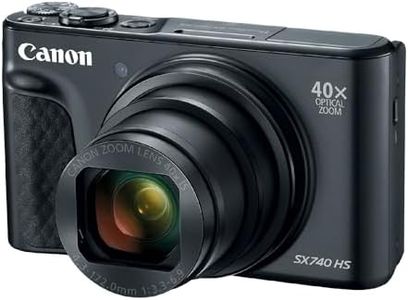
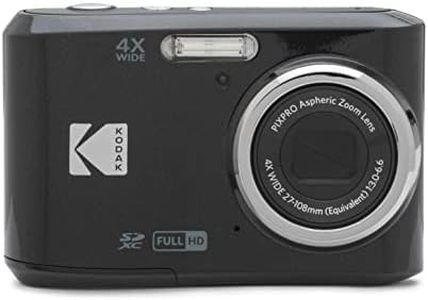
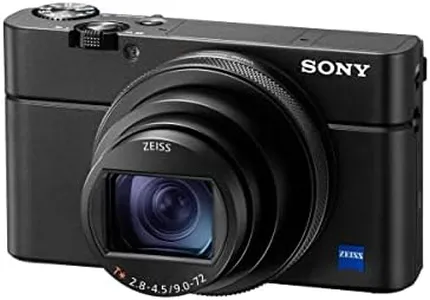
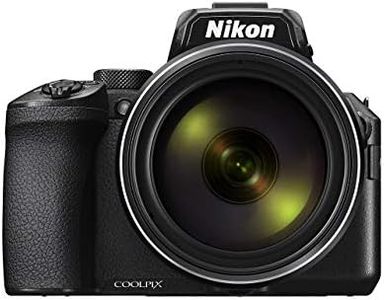
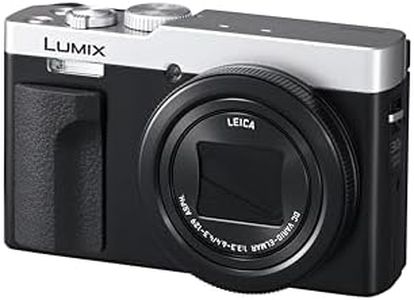
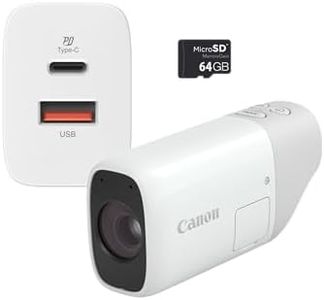
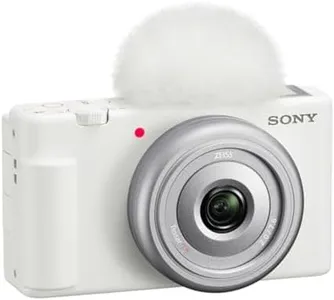

Buying Guide for the Best Compact Superzoom Cameras
Choosing a compact superzoom camera is all about matching your photography style and needs to the camera’s features. These cameras are popular for their portability and ability to zoom in very close to distant subjects, making them great for travel, events, or everyday snapshots. Since they pack a lot of versatility into a small body, it's important to balance things like image quality, zoom range, and ease of use to find the best fit for you.Zoom Range (Optical Zoom)Zoom range, usually indicated as 'x' (such as 20x or 40x), tells you how far the camera can optically magnify a subject. This is important if you want to photograph subjects that are far away, like wildlife or sports, without losing image quality. Smaller zoom ranges (up to 20x) are fine for general use and city travel, while bigger zooms (30x-60x or more) are best if you like to capture distant scenes. If you mostly do close-up or group shots, a moderate zoom is easier to handle and often gives better image quality.
Sensor SizeThe sensor is the part of the camera that captures light and creates the picture. Bigger sensors generally deliver clearer photos, especially in low light. Most compact superzoom cameras have small sensors (like 1/2.3-inch), which helps keep the size down but affects how well they perform in dim environments. Some premium models have larger sensors for better quality. If you want the best possible photos (especially indoors or in the evening), look for a camera with a bigger sensor. If outdoor, daytime photos are your main goal, the standard small sensor is usually enough.
Image StabilizationImage stabilization helps reduce blur when you’re shooting at long zoom levels or in low light without a tripod. This feature is built into the camera and makes it easier to get sharp pictures, especially with shaky hands or moving subjects. There are varying types and strengths, but most modern superzooms offer decent stabilization. If you often shoot at the max zoom or take photos in dim conditions, prioritize good stabilization.
Size and WeightOne of the main reasons to pick a compact superzoom is portability. Cameras can range from coat-pocketable to ones that need a small bag. If you want something you can truly slip into a pocket, focus on the slimmest options, but be prepared for slightly fewer manual controls and a smaller lens. If you’re okay carrying something a bit larger, you'll usually get a better grip and sometimes a bigger zoom.
Manual Controls and ModesManual controls let you adjust things like shutter speed and aperture, which can help you get creative or handle tricky shooting situations. Some superzooms keep it simple with only auto and a few scene modes, perfect for those who want to point and shoot. Others let you adjust everything, which is great if you’re interested in learning more about photography or like experimenting. Think about how much control you want: lots of modes are fun to explore, but if you mostly want simplicity, you don’t need to look for advanced settings.
Video CapabilitiesMany compact superzoom cameras can record video as well as take photos. Resolution (HD, Full HD, or 4K) affects how sharp the video looks. Some also offer features like slow-motion or time-lapse. If you plan to shoot travel vlogs, kid’s events, or want crisp home videos, pay attention to video specs. For occasional clips, standard HD is just fine. If you want to future-proof your videos or plan to do more with them, look for a camera with 4K recording.
Screen and ViewfinderMost compact superzooms have a built-in screen to preview and review photos. Some screens tilt or flip, which is really helpful for selfies or shooting at odd angles. A few models add a small electronic viewfinder, which helps a lot in bright sunlight. If you tend to shoot outdoors or love taking self-portraits, pay attention to screen features. If you’re often in bright places, a viewfinder can make composing shots much easier.
Connectivity (Wi-Fi, Bluetooth, NFC)Modern superzooms often let you wirelessly send photos to your phone or computer using Wi-Fi or Bluetooth. Some also allow remote control through an app. If sharing photos quickly is important, or you want to back up to the cloud, look for cameras with strong connectivity options.