10 Best Concrete Adhesives
From leading brands and best sellers available on the web.By clicking on a link to a third party's website, log data is shared with that third party.
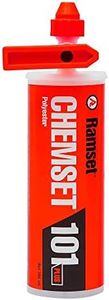
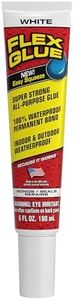
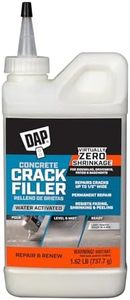
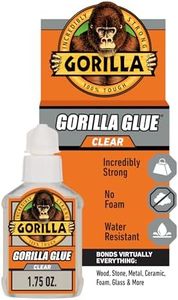
Related Products

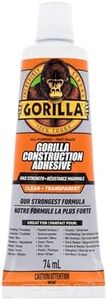
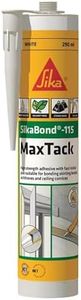
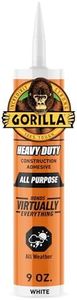
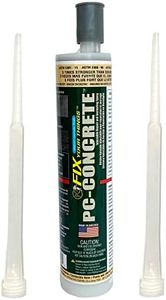
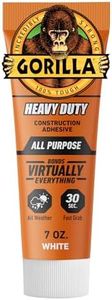
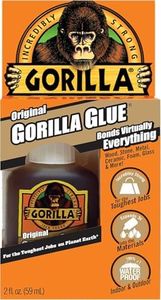
Buying Guide for the Best Concrete Adhesives
Choosing the right concrete adhesive can make a huge difference in the strength and durability of your construction or repair project. The purpose of these adhesives is to bond concrete to other surfaces, such as concrete, wood, metal, or plastics, making them essential for everything from minor repairs to major renovations. To find the best concrete adhesive for your needs, you need to understand the main specifications and what role each plays in your expected project. It's all about matching the adhesive's abilities to the demands of your job, keeping in mind how permanent, weather-resistant, or strong a bond you require.Bond StrengthBond strength refers to how much force the adhesive can withstand before the bond between materials fails. Higher bond strengths are needed for load-bearing repairs or where heavy objects are involved, while lighter duty projects may not need as much. Bond strength can typically be divided into low, medium, and high. Low-strength adhesives work for non-structural fixes, like securing loose tiles; medium for general repairs, like patching or bonding small concrete pieces; and high for critical structural joints. Consider what kind of loads or usage the adhesive will be exposed to, and select accordingly.
Set Time (Cure Time)Set time, or cure time, is the period it takes for the adhesive to harden and reach its full strength. Fast-setting adhesives can harden in as little as 10-30 minutes, which is helpful for quick fixes or when you need fast project turnover, but they may give you less time to reposition materials. Standard-setting adhesives might take several hours up to a day, giving you more flexibility during application. For larger or more complex jobs, slower set times might actually be better. Choose based on how quickly you need to use the bonded area and how much time you'll need to position materials accurately.
Application MethodThis spec relates to how the adhesive is applied—typical forms include tubes for caulking guns, bottles, buckets for troweling, or dual cartridges for mixing. Smaller, tube-based products are great for small repairs and ease of application. For larger surfaces or bigger repair jobs, bucket or cartridge types allow for even spreading and stronger bonds. Your choice depends mostly on the scale of your project and what tools you have—so think about how much surface area you're covering and how precise you need the application to be.
Surface CompatibilityNot all concrete adhesives work on every kind of surface; some are specially formulated to adhere to metal, wood, stone, or plastic as well as concrete, while others only bond concrete-to-concrete. Check whether the adhesive lists compatibility with all materials in your project—if you're joining concrete to another material, ensure the adhesive is designed for both. This spec guides you based on what you're trying to stick together, so start by identifying the surfaces you need to bond.
Water and Weather ResistanceThis tells you how well the adhesive stands up to moisture, rain, and outdoor exposure. Some adhesives are designed specifically for indoor use, while others are weatherproof for outdoor projects. If your repair or construction will be exposed to water or extreme temperature changes, choose an adhesive that explicitly offers water or weather resistance. Indoor repairs, like basement walls or floors, may require less resistance than outdoor fixes like steps or patios.