10 Best Concrete Drills
From leading brands and best sellers available on the web.By clicking on a link to a third party's website, log data is shared with that third party.

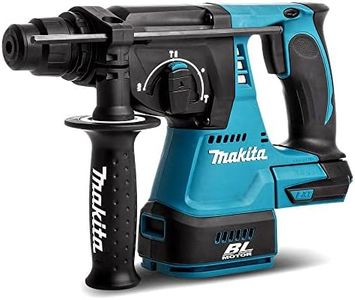
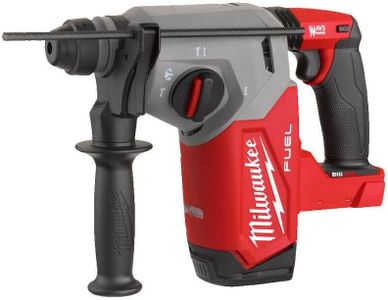
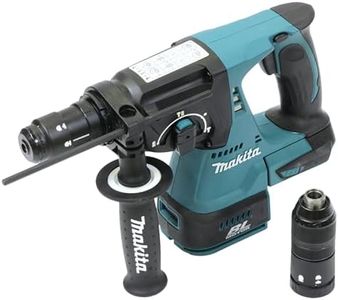
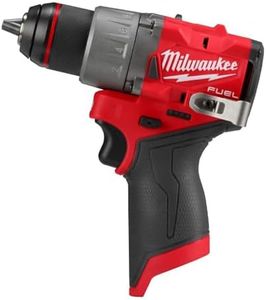
Related Products
Up to 8% off


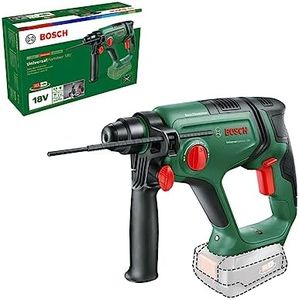
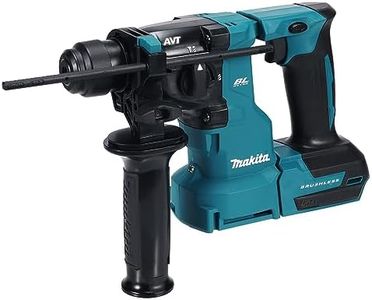
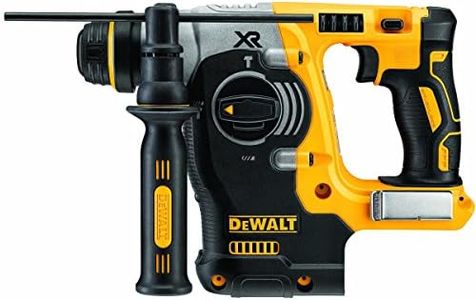

Buying Guide for the Best Concrete Drills
Buying a concrete drill (often called a hammer drill or rotary hammer) can make tough projects much easier, but picking the right one depends on what you plan to drill and how often you'll use it. Think about the type and thickness of concrete you'll face, the frequency of use, and the comfort needed for your work. With a little knowledge about the key specifications, you'll find it simpler to select a drill that gets the job done efficiently without being too heavy-duty or too underpowered for your needs.Power (Amps or Watts)The power of a concrete drill tells you how strong the tool is, often shown in amps (for corded drills) or volts (for cordless). More power means the drill can handle tougher, thicker, or reinforced concrete without slowing down or overheating. Lower-powered drills (below 7 amps) are suited for light-duty tasks like drilling into thin masonry or occasional use. Mid-range drills (7–10 amps) are good for regular home improvement and moderate concrete work. High-powered drills (over 10 amps or heavy duty) are best for professionals or frequent use on thick or extra-hard concrete. If you'll mostly do small jobs around the house, a mid-range power is plenty; if you plan larger projects like anchoring bolts in a garage floor, go for higher power.
Drilling CapacityDrilling capacity tells you the maximum diameter hole that the drill can safely and comfortably make in concrete. It’s usually listed in millimeters or inches for masonry/concrete bits. Smaller capacity drills (up to 1/2 inch or 13 mm) are fine for hanging shelves or light-duty anchors. A mid-range capacity (5/8 – 3/4 inch, about 16–19 mm) is ideal for more serious home projects, like putting in bigger anchors or dowels. Heavy-duty drills with large capacities (over 1 inch or 25 mm) are best if you’re installing heavy bolts or breaking up concrete. It’s smart to match the capacity to your typical hole size—oversized drills are heavier, so don’t go bigger than you need.
Hammering Action (BPM)BPM, or blows per minute, measures how many times the drill’s hammering mechanism strikes the back of the drill bit each minute. A higher BPM helps the drill break up tough concrete more quickly, making drilling faster and less effort. For light, infrequent jobs, a moderate BPM is enough. If you expect to drill many holes or work with extra-hard concrete, look for a higher BPM (over 4000). Keep in mind, though, that both BPM and power together determine overall effectiveness—the best balance depends on whether speed or comfort is more important for you.
Speed (RPM)RPM stands for rotations per minute, or how fast the drill bit spins. Concrete drilling doesn’t need super high RPM, but a moderate speed (about 700–1500 RPM) with adjustable settings gives you better control. Lower RPM is better for large holes and hard material, while higher RPM is good for smaller holes or when you need to drill faster. If you’ll be switching between different sizes or materials, choose a drill with variable speed control so you can adjust RPM to the task.
Chuck Type and SizeThe chuck is the part of the drill that holds the bit. For concrete drills, keyless chucks are convenient, but SDS (Slotted Drive System) chucks are common for more demanding work since they hold special SDS bits that resist slipping and can handle the hammering action better. Chuck size indicates the maximum diameter of the drill bit shank; most commonly, you’ll see 1/2 inch or 13 mm chucks for home use, and larger or SDS chucks for heavy work. If you want fast, fuss-free bit changes or expect to use big bits, pick an SDS-plus or SDS-max chuck; for light jobs, a standard keyless chuck will often do.
Weight and ErgonomicsThe weight of the drill affects how long you can comfortably use it, especially if drilling above your head or on a ladder. Lighter models (under 6 pounds or 2.7 kg) are easier to control but may have less power. Heavier drills offer more muscle but can tire you out faster. Consider the grip, balance, and whether there’s vibration reduction—if you’ll drill lots of holes, comfortable handles and low vibration make a huge difference. Match your choice to your typical projects and how much strength you want to save.
Corded vs CordlessCorded concrete drills generally offer more consistent power and can run as long as you need, which is useful for big jobs or lots of holes. Cordless models are more portable and flexible for small jobs or places without easy access to outlets, but battery life limits long sessions. If you’ll work mainly in one spot or on demanding tasks, corded is best; for quick, scattered tasks or drill use on sites without plugs, cordless is more handy. Think about where you’ll use the drill most often before making a decision.