10 Best Cordless Jig Saws
From leading brands and best sellers available on the web.By clicking on a link to a third party's website, log data is shared with that third party.
Related Products
Up to 10% off
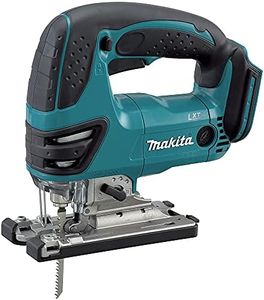
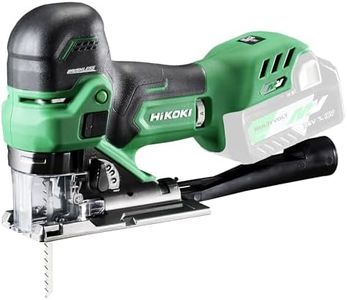
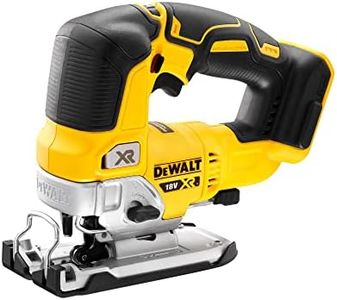
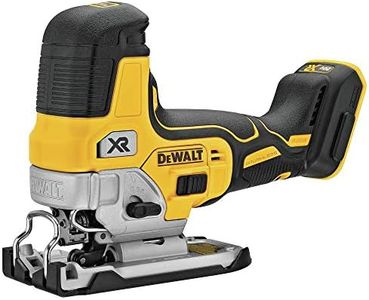
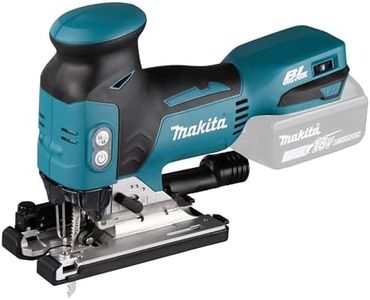
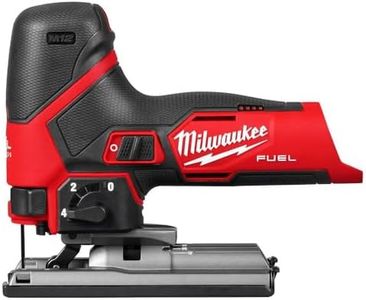
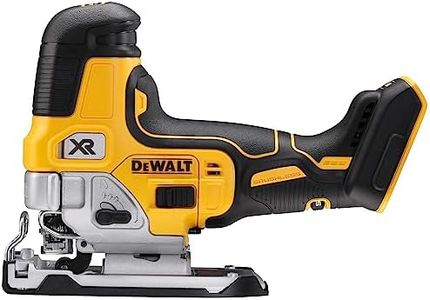
Buying Guide for the Best Cordless Jig Saws
Choosing the right cordless jig saw is all about matching the tool's features to the types of projects you plan to tackle. Cordless models offer flexibility and portability, making them a favorite among DIYers and professionals alike. The key is to focus on specifications that determine performance, comfort, and practicality for your typical sawing tasks. Understanding what each feature means and how it impacts everyday use will help you zero in on the best fit.Battery VoltageBattery voltage indicates how much power the jig saw can deliver. In general, higher voltage means more cutting power, which is useful for tough materials or demanding tasks. Common segments are 12V, 18V, and 20V models. Lower voltages (like 12V) are lighter and suitable for light cutting, such as thin wood or delicate curves; mid-range voltages (18V) offer a balance for general-purpose use; while higher voltage tools (20V and above) can tackle thick or dense materials more efficiently. Choose a battery voltage that matches the toughest material you expect to cut most often.
Strokes Per Minute (SPM)Strokes per minute (SPM) refers to how fast the blade moves up and down. Higher SPM usually means faster cutting, but may result in rougher edges, while lower SPM can give you more control and cleaner cuts. Jig saws often offer variable speed, so you can adjust for different materials—lower speeds for metals and higher for wood. Consider your main tasks: if you want speed and work mostly with wood, higher SPM helps; for detail work or metals, look for a tool that lets you slow things down.
Stroke LengthStroke length measures how far the blade travels in one cycle. A longer stroke cuts through material faster, making it good for straight or aggressive cuts, but it can be harder to control on detailed work. Shorter strokes are best for precision and intricate patterns. Most users will benefit from a moderate stroke length unless they have a special need for extra fine control or high-speed cutting.
Orbital ActionOrbital action is a feature that lets the blade move slightly forward and backward in addition to the up-and-down motion. This results in smoother, faster cuts through wood. Most jig saws let you adjust or turn off this function. For straight, fast cuts in wood, you'll want more orbital action. For precise, curved, or metal cutting, less or no orbital movement is preferable. If you plan to use your saw for a range of materials, look for adjustable orbital action.
Blade Change SystemThis refers to how easy it is to swap out blades. Some jig saws have tool-free systems, letting you quickly replace blades with a simple mechanism, while others need an extra tool. If you expect to switch between blades often—for example, going from wood to metal—a tool-free system saves time and effort. Those who use their saw for straightforward work with infrequent blade changes may not need this as much.
Bevel CapabilityBevel capability allows you to tilt the base of the jig saw, so you can make angled cuts (common angles are up to 45 degrees). If your projects involve cutting angles for joints or artistic effects, this feature is important. Consider the range and ease of adjustment; some models have simple levers while others may require tools. If angle cuts aren't something you need often, just make sure it's available and easy to use when called for.
Weight and ErgonomicsThe weight of a cordless jig saw impacts comfort, control, and fatigue. Lighter models are easier to maneuver, especially above your head or on detailed projects, while heavier ones may feel steadier for thick or straight cuts. Ergonomics covers the grip and feel—rubber grips and balanced designs make longer jobs easier. Choose based on how long you'll use the tool in one session and the type of work you do most often.
Dust Blower and ExtractionA dust blower keeps your cut line clear of debris, making it easier to see your work. Some models also have connections for dust extraction, letting you attach a vacuum for cleaner workspaces—especially important in indoor use. If visibility and tidiness are concerns, especially with fine lines or indoor projects, look for these features.