10 Best Cordless Nail Guns
From leading brands and best sellers available on the web.By clicking on a link to a third party's website, log data is shared with that third party.
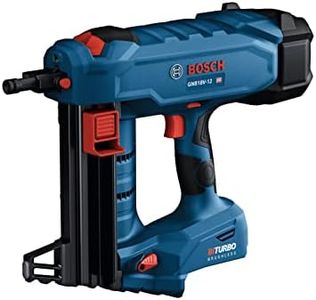

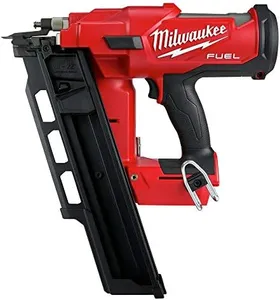
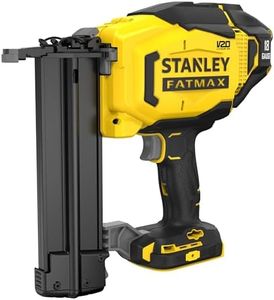
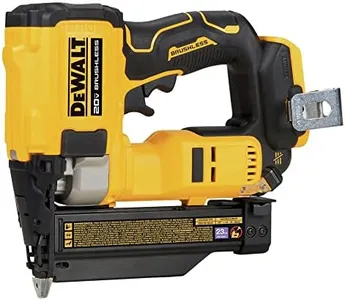
Related Products
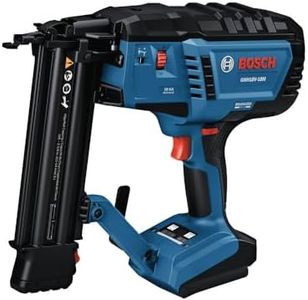
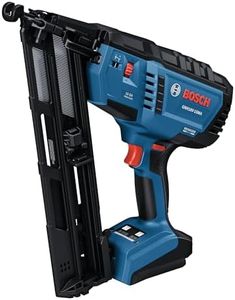
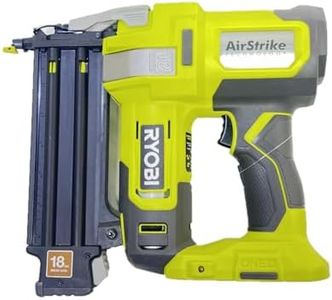
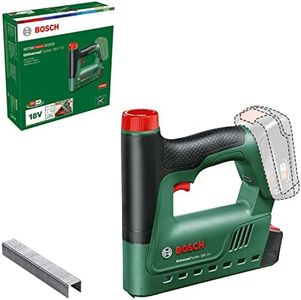
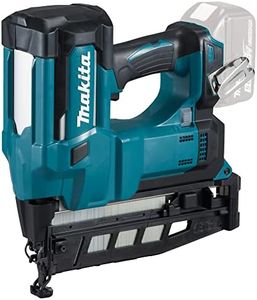
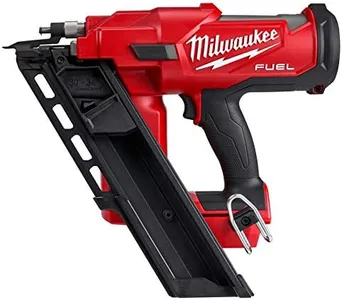
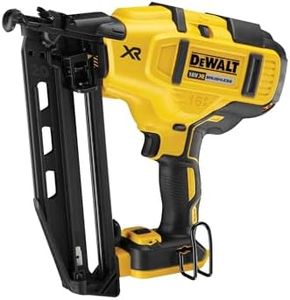
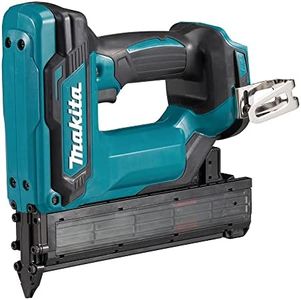
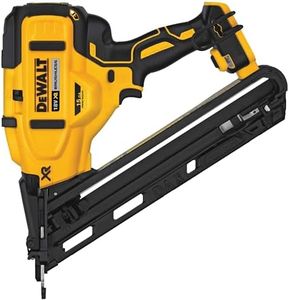
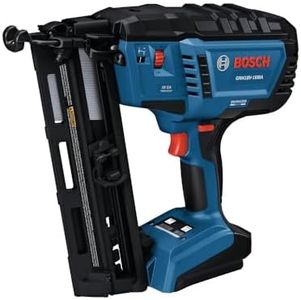
Buying Guide for the Best Cordless Nail Guns
Choosing a cordless nail gun can feel overwhelming because there are several types and features to consider. Understanding what you will use your nailer for is vital—some are great for quick home repairs, others excel in precision woodworking, and some are necessary for heavy-duty framing tasks. Start by thinking about the kind of jobs you will mostly be working on, how often you'll use the tool, and how portable you need it to be. This approach will help you prioritize the features that matter most for your needs.Type of Nail GunThere are various types of cordless nail guns such as brad nailers, finish nailers, framing nailers, and staplers. Each of these is designed for a specific type of work. Brad and finish nailers are best for lighter jobs and detail work like trim or cabinetry. Framing nailers are more powerful and suitable for heavy construction projects. Choosing the right type starts with knowing what kind of material and thickness you'll usually be working with.
Nail Size CompatibilityThis refers to the range and length of nails a cordless nail gun can fire. It's important because using the wrong size can either damage your project or simply not hold materials together strongly enough. Shorter nails (like 5/8 to 2 inches) are ideal for delicate or thin materials, while longer nails (2 to 3.5 inches or more) are for framing and heavier construction. Check the typical nail sizes your projects require and ensure your nailer covers that range.
Battery Power (Voltage and Capacity)Cordless nail guns use rechargeable batteries, usually rated by voltage and ampere-hours (Ah). Higher voltages generally provide more power for tougher jobs, while higher capacity (Ah) means the battery lasts longer on a single charge. For basic home repairs or light work, a lower voltage and capacity may suffice. If you're working on long or demanding tasks, prioritize higher battery ratings, so you're not constantly recharging or swapping batteries.
Firing ModesMost nail guns offer different firing modes, such as single (sequential) and bump (contact) firing. Sequential firing is slower but more precise, good for careful placement, while bump firing is faster and suitable for repetitive, high-speed nailing. Think about whether you need more accuracy or speed for your usual jobs, and choose a tool with the right modes for your workflow.
Weight and ErgonomicsThe overall weight and how the tool feels in your hand is crucial, especially for extended use. Lighter and ergonomically shaped nailers reduce fatigue, making them better for overhead or long-duration work. If you expect to use the tool for hours at a time or in awkward positions, pay special attention to its balance, grip, and weight.
Magazine CapacityMagazine capacity tells you how many nails you can load at once. A larger capacity means less time spent reloading, which can be an advantage during bigger projects. For small tasks or occasional fixes, a smaller magazine might be fine, but for projects like decking or framing, a bigger one will improve efficiency.
Tool-Free Jam ClearingNail jams happen even with good tools, and being able to clear jams quickly without extra tools saves you frustration and downtime. If you value convenience and minimal interruption, look for a nailer that advertises easy, tool-free jam clearing.