10 Best Countertop Reverse Osmosis Water Filters
From leading brands and best sellers available on the web.By clicking on a link to a third party's website, log data is shared with that third party.


Related Products

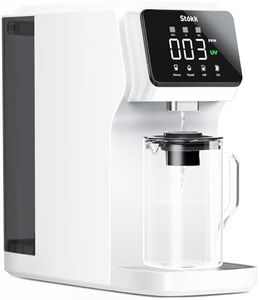
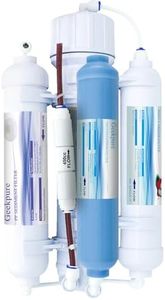

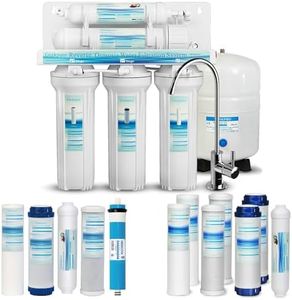
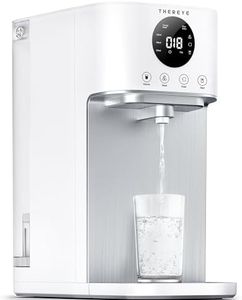
Buying Guide for the Best Countertop Reverse Osmosis Water Filters
Choosing a countertop reverse osmosis (RO) water filter can greatly improve the taste and quality of your drinking water. The key to finding the right one for you is understanding how these systems work, what features truly matter for your needs, and how your daily usage and water conditions guide your choice. Spend some time learning about the different specs, so you can make an informed decision and enjoy fresher, filtered water every day.Filtration StagesFiltration stages refer to the number of individual filters or processes the water passes through, often ranging from three to five or more. Each stage targets specific impurities such as sediment, chlorine, heavy metals, or dissolved solids. More stages generally mean more thorough filtration, but can also increase maintenance. If your tap water is already treated and relatively clean, a basic three-stage system usually suffices. If water quality is poor or you want the purest result, opt for more stages. Your choice depends on what you’re most concerned about removing and your local water quality.
Flow Rate or Output RateThis is the volume of filtered water the system can produce in a given time, usually measured in gallons (or liters) per day (GPD). Lower output models might produce 50-75 GPD, which is enough for drinking and cooking for most small households, while higher output models can go up to 400 GPD for larger families or those who use a lot of filtered water. If you entertain often or have high daily needs, aim for a higher flow rate, but for single users or couples, a lower rate is likely sufficient.
Waste Water RatioReverse osmosis naturally produces some waste water as it filters, and this ratio describes how much water is wasted per gallon of filtered water. Traditional systems might waste up to 4 gallons for every gallon purified, while newer, efficient systems waste less (sometimes 1:1 or better). If conserving water or being eco-friendly is important to you, look for systems with a low waste water ratio; if not, this spec may be less critical.
Tank vs. Tankless DesignSome countertop RO filters come with a built-in storage tank, while others are tankless and provide water on demand. Tank systems usually store a set amount of filtered water, so it’s always available, but they can take up more counter space and may require cleaning. Tankless systems are more compact and don't store water, but may have slight delays before dispensing. Choose a tank model if you want instant access to a larger volume; choose tankless if you prioritize space and modern design.
Installation and PortabilityCountertop systems typically require minimal installation compared to under-sink models, but some still need to be connected to your faucet. Others are fully portable and only require filling a reservoir. If you move frequently, rent, or want to use the system in multiple places, go for a model with simple setup and no plumbing required. If it will be in a fixed spot long-term, a system that taps into your faucet might be more convenient.
Filter Replacement IndicatorThis feature notifies you when it's time to change filters, which is important for maintaining water quality. Some systems have electronic indicators, while others rely on periodic manual checks or schedules. If you prefer hassle-free maintenance, choose a system with a clear indicator; if you don’t mind keeping track yourself, this feature may be less crucial.