8 Best Cylinder Bore Gauges
From leading brands and best sellers available on the web.By clicking on a link to a third party's website, log data is shared with that third party.
Buying Guide for the Best Cylinder Bore Gauges
Choosing the right cylinder bore gauge is essential if you want to accurately measure the internal diameter of cylinders, especially in engines or other machinery. It's important to understand how these tools work and what makes them suitable for different tasks. You'll want to pick a gauge that provides precise readings, is comfortable to use, and matches the size ranges you'll be working with. Start by thinking about what you'll be measuring most often, and consider how often you’ll be using the tool. Understanding the key specifications will help match the tool to your specific needs.Measuring RangeThe measuring range refers to the smallest and largest diameters the gauge can measure. This is important because it ensures the gauge will actually fit inside the cylinders you need to check. Some gauges cover small ranges for precision work, while others can go up to very large diameters. When choosing, think about the typical size of the cylinders you’ll measure. For smaller engines, a gauge with a smaller range is usually better, while larger industrial cylinders need a gauge that can accommodate them. Make sure the range covers all your expected needs without going too far beyond, as wider ranges can sometimes sacrifice accuracy.
Resolution or GraduationResolution, sometimes called graduation, is how fine the measurements are; for example, whether it reads down to 0.01mm or 0.001mm. This matters if you need very precise measurements, such as in high-performance engine rebuilding. Lower values (like 0.001mm) mean the tool can detect smaller differences. If you're working on general automotive tasks, a resolution of 0.01mm may be plenty, but for professional-grade engine work or quality control, higher resolutions can be important. Pick the resolution based on how much accuracy your task really requires, but avoid going overly precise unless you truly need it.
Contact Points Material and ShapeThe contact points are the parts of the gauge that actually touch the cylinder wall. Their material and shape affect not only the durability but also how well they conform to the surface for accurate readings. Hardened steel or carbide-tipped contacts are good for repeated, long-term use and for harder cylinder materials. Shapes can vary—some are rounded for general use and some are shaped to fit specific bore profiles. Choose a gauge with contact points that match the hardness of the cylinder materials you work with most and the typical shape of the bores.
Indicator TypeCylinder bore gauges use different types of indicators, mainly dial or digital. The indicator shows the actual measurement. Digital indicators are easier to read and sometimes store or transfer readings, but they may need batteries and can be more delicate. Dial indicators are mechanical, require no power, and are often preferred for their durability and reliability. If you want quick and straightforward readings, go digital. If you want simplicity and ruggedness, a dial indicator could be best. Think about your preference for readouts, and whether you might need to record results quickly or share them electronically.
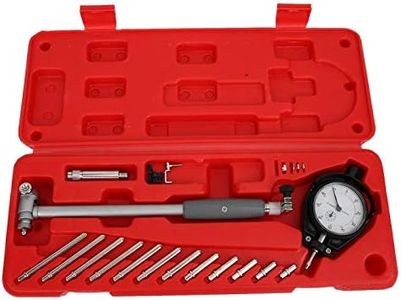
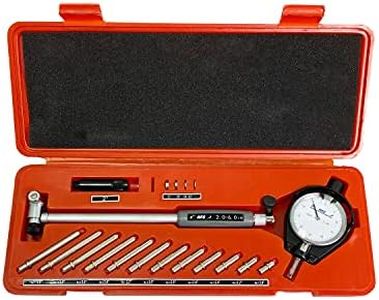
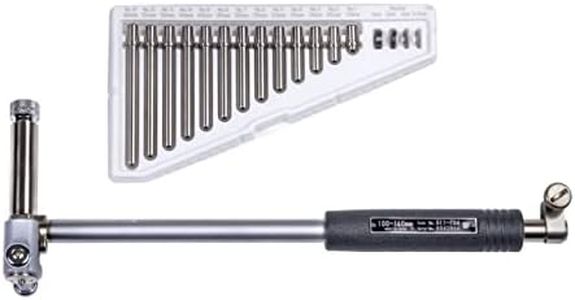
Extension Rods and AdjustabilityMany bore gauges come with extension rods or adjustable parts to help measure different bore depths and sizes. This is important if you need to check bores at varying depths, as in multi-stage engines. More adjustability means one gauge can serve several measurement jobs, but it could also make the tool more complex. If your work involves lots of different-sized bores, or bores that aren’t easily reached, look for a gauge that comes with multiple extensions or has easily interchangeable parts. For more routine jobs, fewer parts might mean easier, faster use.
Ease of CalibrationCalibration is how you ensure the gauge is giving correct readings by comparing it against a known standard. Some bore gauges are easier to calibrate and come with reference standards or rings. This is important if accuracy matters over long-term or heavy use, as tools can drift out of calibration. If you expect to use the gauge often or for critical measurements, choose one with straightforward calibration processes and, ideally, included reference tools. For infrequent use, ease of calibration may be less crucial but still helpful for peace of mind.