10 Best Dac Amp Combos
From leading brands and best sellers available on the web.By clicking on a link to a third party's website, log data is shared with that third party.
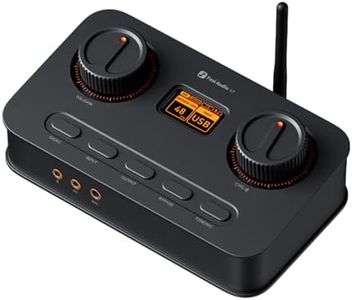
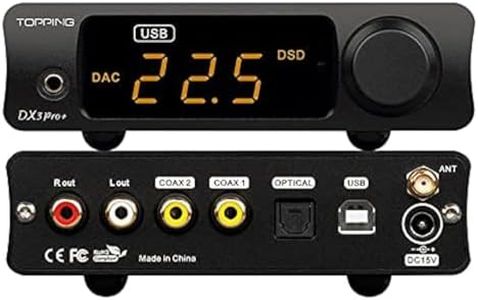
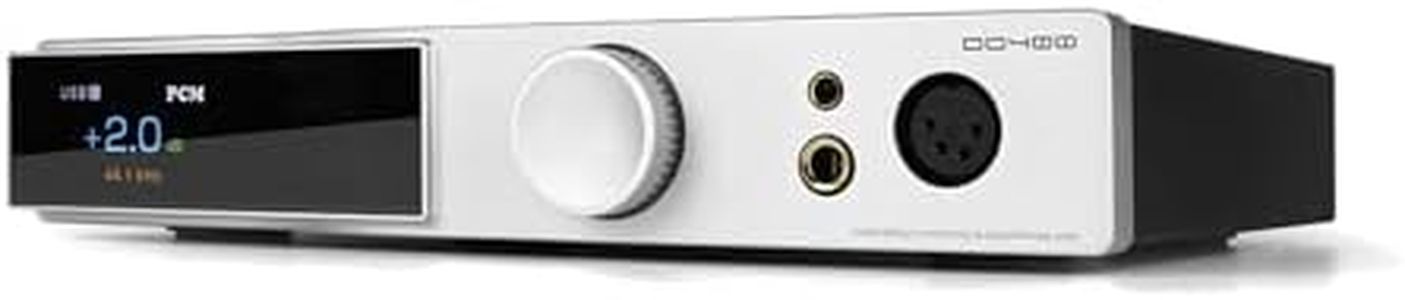
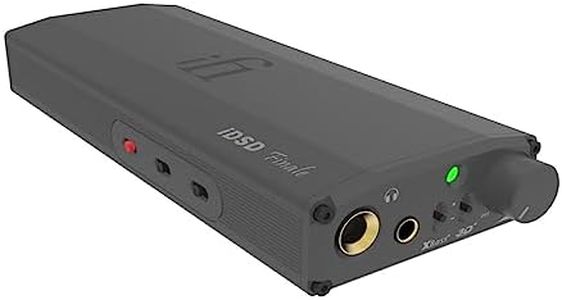
Related Products
Up to 15% off
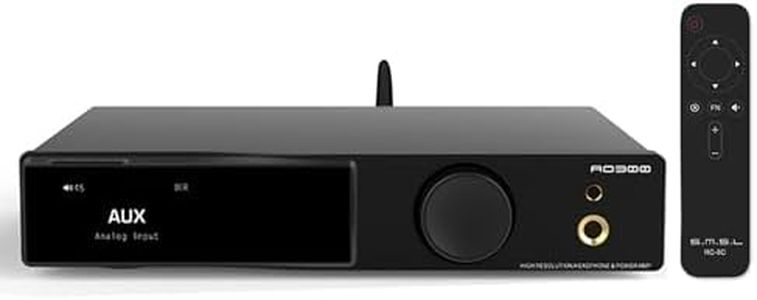
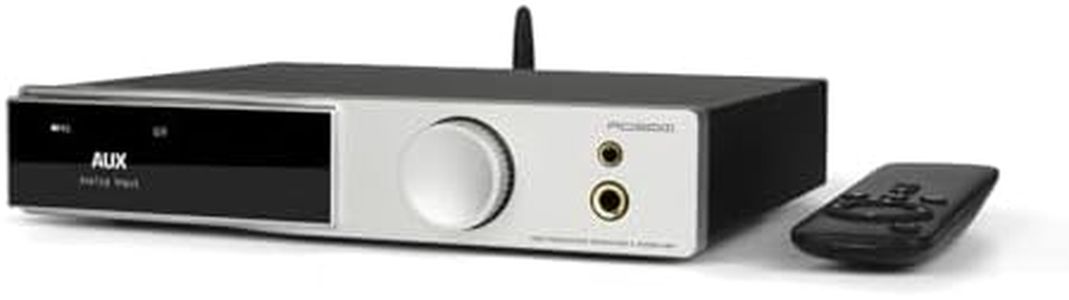
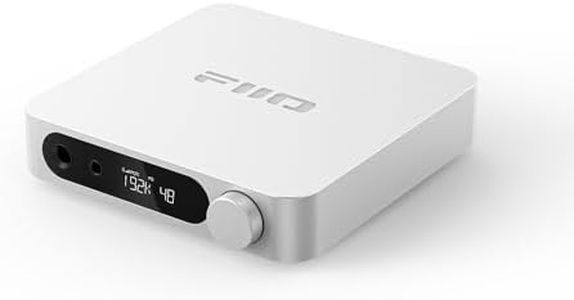
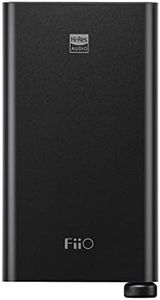
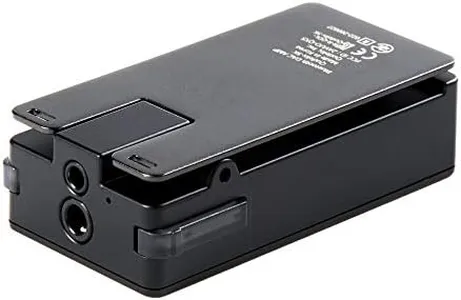
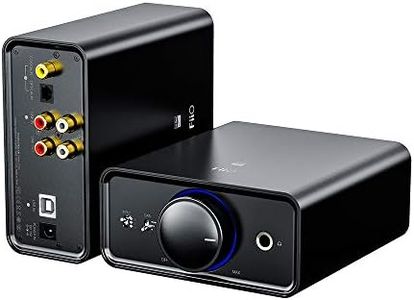
Buying Guide for the Best Dac Amp Combos
When you're looking to buy a DAC-AMP combo, you're essentially after a device that improves the quality of your audio (compared to your phone or computer's built-in sound) and powers your headphones properly. The DAC (Digital-to-Analog Converter) transforms digital audio signals into analog, which you actually hear, while the AMP (amplifier) provides enough power so that headphones—especially high-end or demanding models—sound their best. When choosing a DAC-AMP combo, think about how you'll use your headphones (music, gaming, professional work), what headphones you own or plan to get, and your setup—whether it's desktop, portable, or both.Output PowerOutput power tells you how much energy the amp can supply to your headphones, usually given in milliwatts (mW) or watts (W). This matters because some headphones need more power to sound their best, especially those with high 'impedance' or low 'sensitivity.' Lower output power (under 100mW) is fine for most portable or easy-to-drive headphones, while higher output (a few hundred mW or more) is needed for larger or more demanding headphones. Pick a device with enough output power for your headphones—generally, it's better to have a little more than you need.
Supported Formats and Bit RatesDACs support different audio file qualities and sample rates, like 16-bit/44.1kHz (CD quality), 24-bit/96kHz, and even higher. This spec is about how much audio detail the DAC can process. If you mostly use standard streaming services, even basic support is enough, but high-resolution audio files (like FLAC, DSD, or MQA) require a DAC that supports the higher bit rates and formats. Choose based on the quality of music you listen to and what you may use in the future.
Impedance MatchingImpedance matching is about how well the DAC-AMP can handle headphones or earphones of different electrical resistance (measured in ohms, Ω). Lower-impedance headphones (<50Ω) are easy to drive, whereas higher-impedance headphones (sometimes up to 600Ω) need more voltage and a suitable amp. Make sure the DAC-AMP can handle the impedance of your headphones; most combos list suitable impedance ranges.
Connectivity OptionsConnectivity refers to the kinds of inputs and outputs the DAC-AMP has, such as USB, optical, coaxial, or Bluetooth, and headphone outputs like 3.5mm, 6.35mm, or balanced outputs. The right combination depends on your source devices (computer, phone, gaming console) and headphones. More options give you flexibility, while a simple setup might need just USB and a standard headphone jack.
PortabilityPortability considers whether the device is meant to stay on your desk (desktop) or be carried with you (portable). Portable units are smaller, battery-powered and designed for travel, while desktop units are larger, more powerful, and need to be plugged in. Choose a portable DAC-AMP if you use headphones on the go, or a desktop model for a permanent music/gaming setup at home.
User Controls and FeaturesUser controls include things like volume knobs, gain switches, EQ settings, and filters. Extra features like a good display or easy switching between inputs/outputs can make the DAC-AMP easier to use day-to-day. Think about how much hands-on control you want: simple setups have fewer controls, while more customizable models let you tweak the sound or accommodate many devices.