10 Best Dado Blades
From leading brands and best sellers available on the web.By clicking on a link to a third party's website, log data is shared with that third party.


Buying Guide for the Best Dado Blades
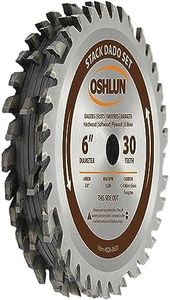
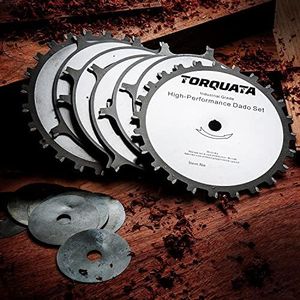
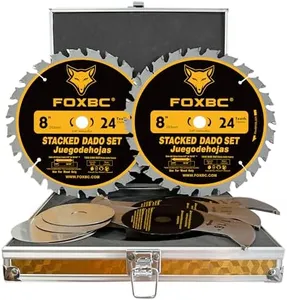
Dado blades are special saw blades used to cut wide grooves—called dadoes—in wood, commonly for joinery work like shelves, cabinets, or picture frames. Choosing the best dado blade for you can feel confusing because several different features affect the type, quality, and flexibility of the cuts you can make. Picking the right one is about matching the blade’s abilities to the kind of woodworking job you’re planning to do, how smooth or wide you need your grooves, and which saw you’ll be using.Type (Stacked vs. Wobble)Dado blades come in two main styles: stacked and wobble. A stacked dado set consists of several blade parts (outer blades and chippers) that you assemble together, letting you precisely set the width of your cut by adding or removing pieces. Wobble blades, on the other hand, are a single blade mounted at an adjustable angle to cut varying groove widths as it spins. Stacked sets generally give much cleaner, flatter-bottomed cuts and are more popular for precise woodworking, whereas wobble blades are simpler and cheaper but cut less cleanly. Beginners or anyone wanting tidy, accurate work should lean toward stacked sets. Wobble blades might suit someone who only occasionally needs rougher dadoes and values simplicity.
Adjustable Width RangeThis spec describes how wide a groove the dado blade can cut, usually ranging from as small as 1/4 inch up to 13/16 inch or more. The wider the range, the more flexibility you have for different jobs. Think about what types of joints or grooves you’re likely to cut most often—if you mostly need 3/4-inch dadoes for shelving, for example, make sure your set covers that. Those doing varied projects should look for a set that covers a broad range, while someone doing repetitive, single-size cuts could get by with a narrower set. Always make sure the blade's range matches your future projects, not just your current needs.
Number and Thickness of ChippersChippers are the smaller blades that go between the two outer blades in a stacked dado set, and their number and thickness determine how accurately you can fine-tune the width of each groove. More chippers and a variety of thicknesses allow for more precise adjustments in groove width. If you’re fussy about fit and want tight joinery, choosing a dado set with several chipper sizes (including thin shims) will let you get closer to your ideal width. For general use, a basic set with a couple of chippers may suffice, but users who crave precision should prioritize this.
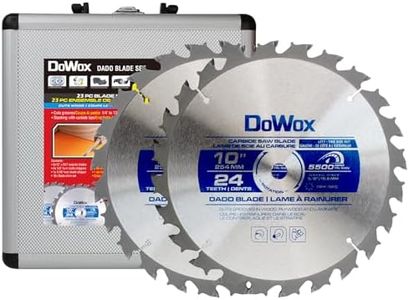
Blade DiameterThe blade diameter, usually 6, 8, or sometimes 10 inches, affects how deep you can cut into your workpiece and whether the blade will fit your tablesaw. Larger diameters let you cut deeper grooves but may require a more powerful saw and adequate throat capacity. Most home woodworkers find 8-inch dado sets the most balanced for common tablesaws, combining adequate depth with compatibility. Check your saw’s manual to ensure which diameter it can accept—this spec must match!
Compatibility with Your Table SawNot all table saws can accept dado blades; many compact or jobsite saws have a short arbor, small inserts, or a motor not suited for the strain of wider blades. Before buying a dado blade, ensure your saw’s manual mentions dado compatibility and that you can fit both the blade and any necessary throat plates. Users with a full-size contractor or cabinet saw usually have no issues, but owners of smaller or budget saws often have limitations. This is a make-or-break factor—always check first.
Tooth Count and Tooth DesignThis refers to how many cutting teeth each blade has and their shape (ATB, FT, or combination teeth). Higher tooth counts and specialized tooth shapes can provide smoother cuts, while lower tooth counts cut faster but rougher. For nice, splinter-free grooves, especially in plywood or fine hardwood, sets with more teeth and optimized grind patterns offer better results. DIYers doing rough carpentry can get by with fewer teeth, but for cabinetry or precise joinery, a higher tooth count is a plus.
Material and DurabilityDado blades are made from various metals and often have carbide-tipped teeth for longer life and cleaner cuts. Carbide tips stay sharper longer, especially when cutting hardwoods or plywood with glue. If you expect frequent use or want to avoid frequent sharpening, prioritize carbide-tipped sets or higher-grade steel for the main bodies. Occasional hobbyists might be fine with entry-level sets, while heavier users should focus on overall durability and build quality.