10 Best DC Amp Clamp Meters
From leading brands and best sellers available on the web.By clicking on a link to a third party's website, log data is shared with that third party.
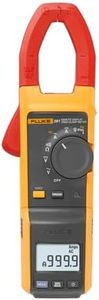
Related Products
Up to 20% off

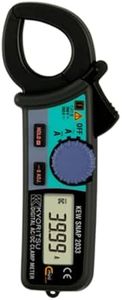
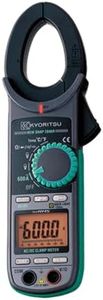
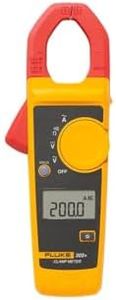
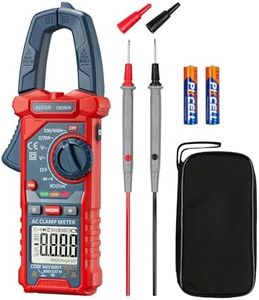
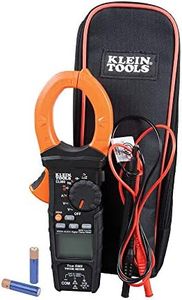
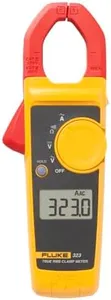


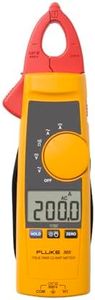
Buying Guide for the Best DC Amp Clamp Meters
Choosing a DC amp clamp meter can seem overwhelming, but by understanding some key features and how they match your needs, you can find a tool that works perfectly for you. These meters are handy for measuring electric current in a wire without direct contact, offering convenience and safety. When picking one, focus on the core specifications and think about how you plan to use the meter, whether for automotive work, solar panel setups, or other electrical projects.Current Measurement RangeThe current measurement range tells you the minimum and maximum amperage the clamp meter can accurately measure. This is crucial because selecting a meter with a range too low for your tasks might lead to inaccurate readings or equipment damage, while a very high range may sacrifice sensitivity at lower levels. Meters with low ranges (up to 40A) are best for small electronics and automotive diagnostic work. Mid-range models (up to 400A) cover most household and light industrial applications, whereas high-range meters (over 600A) are suited to heavy-duty electrical work. Think about the highest current you expect to measure and choose a clamp meter that safely covers this while still being accurate at the lower end.
Jaw Opening SizeJaw opening size describes the maximum diameter of a conductor (wire or cable) that the clamp can fit around. This determines which wires you can measure directly. Smaller jaw sizes are fine for household wiring or automotive cables, while larger jaws are necessary for thick power cables found in industrial settings. Estimate the size of the cables you commonly work with and ensure your clamp meter can accommodate these.
DC vs. AC Measurement CapabilitySome clamp meters can only measure AC current, while others can measure both AC and DC. If your work involves circuits powered by batteries, solar panels, automotive systems, or other direct current sources, you need a meter that specifically states it can measure DC current. Check this carefully, as not all clamp meters support DC measurement.
Resolution and AccuracyResolution refers to the smallest change in current the meter can detect, while accuracy is how close the reading is to the true value. Higher resolution and better accuracy mean you can trust your readings more, which is especially important for sensitive electronics or troubleshooting where small differences matter. For home or automotive use, moderate accuracy is usually enough, but if you're working in a professional or industrial context, prioritize higher precision.
Display TypeThe display shows your measurement readings and may be analog (needle gauge) or digital (LCD or LED). Digital displays are easier to read, especially in low light, and often provide extra features like backlighting or data hold. If you'll work in varied lighting conditions or need to keep a record of your readings, look for a bright, clear digital display.
Additional Measurement FunctionsMany clamp meters can measure more than just current. Some include voltage, resistance, continuity, and temperature functions, making them more versatile for troubleshooting. Consider what measurements you’ll need most often. If all you need is current measurements, a simple model may suffice. If you want a tool for broader use, look for one with extra measurement options.
Safety RatingsSafety ratings indicate the maximum voltage and category of circuits where the meter can be safely used. Common ratings like CAT III or CAT IV show suitability for different environments, from home panels to industrial locations. Make sure the meter's rating matches the environment you plan to work in to reduce the risk of accidents or damage.