9 Best Desoldering Stations
From leading brands and best sellers available on the web.By clicking on a link to a third party's website, log data is shared with that third party.
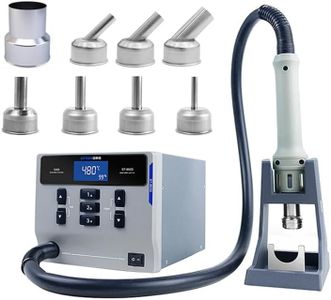
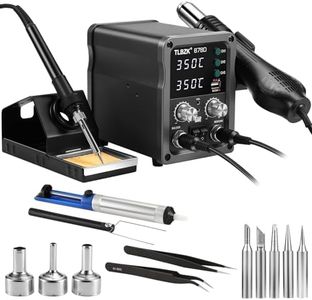
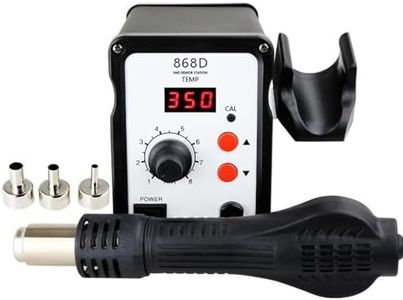
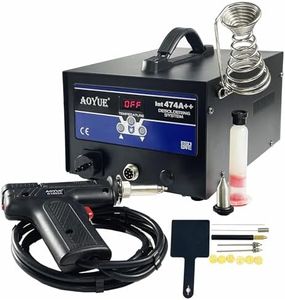
Buying Guide for the Best Desoldering Stations
Choosing a desoldering station can make your electronics repair or hobby work much easier and neater. The right station allows you to safely and efficiently remove solder from circuit boards without damaging the components or the board itself. There are multiple types of desoldering stations, each designed for different uses, so understanding the key features will help you find the best fit for your projects. It’s important to think about your typical usage: Are you working on small, delicate electronics, or larger, more robust equipment? Do you need quick operation for heavy workloads, or occasional precise work? Consider your experience level, the types of electronics you handle, and your preferred workflow before making a decision.Suction Power (Vacuum Strength)Suction power measures how effectively the desoldering station can pull molten solder away from components and pads. Higher suction means quicker and cleaner removal—important for dense or old solder. Entry-level stations may have lower suction and are best for light, occasional jobs or delicate electronics where too much power could cause damage. Medium suction works for most typical repair tasks, striking a balance between strength and control. High suction is useful for larger joints or production environments but requires more care to avoid damaging small components. Think about the types of boards and joints you’ll encounter: if you handle a wide range, adjustable suction is helpful, letting you match the power to each job.
Heater Power (Wattage)Heater power is the wattage that drives the heating element, affecting how fast and consistently the tip heats up. Lower wattage (20-50W) is suitable for simple, smaller jobs and less heat-sensitive work. Medium wattage (50-80W) covers typical circuit board repairs, offering good heat recovery without being too aggressive. High wattage (80W+) enables rapid heating and is needed for large, lead-free, or multi-layer boards but can be overkill for light work. Choosing a suitable wattage depends on how quickly you want the station to be ready and the size of joints you regularly desolder. If you work with larger or more complex boards, a higher wattage helps maintain efficiency.
Temperature Control and RangeTemperature control lets you adjust how hot the desoldering tip gets, and the temperature range indicates the maximum and minimum heat levels available. Precise control is important to avoid overheating sensitive components or boards. Basic stations may have fixed settings or limited range, which is fine for standard solder types. Stations with broad and accurate temperature control are ideal for advanced users who tackle varied tasks, different solder types, and delicate circuitry. Think about whether you need to occasionally tweak settings or if your jobs always use similar solder and components—if you do lots of diverse, sensitive work, prioritize stations with flexible temperature control.
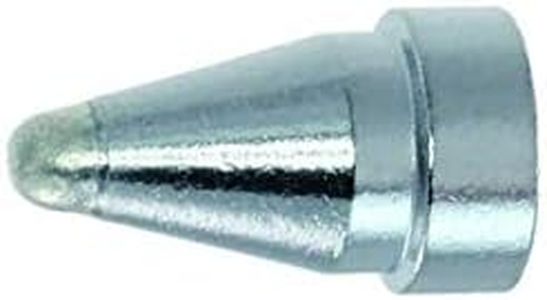
Nozzle and Tip VarietyThe nozzle or tip is the part that contacts and melts the solder. Having various sizes and shapes lets you adapt to different tasks: narrow tips for tiny, closely packed joints; wider tips for larger components. Basic stations may have only one or two tips—good for occasional work on commonly sized joints. Advanced stations offer many tip options, which is useful if your projects range in size or require special access. When picking, consider whether your work involves a variety of component sizes and densities—if so, choose a station with easily replaceable and diverse tip options.
Ease of Cleaning and MaintenanceDesoldering stations collect waste solder in a chamber or tube, which needs regular emptying to maintain performance. Stations with removable, visible, and large capacity waste reservoirs make cleaning easier. Some designs allow for quick disassembly and simple tip cleaning, reducing downtime. If you expect to use your station frequently or for long sessions, prioritize user-friendly maintenance. For occasional users, a simpler design may suffice, but reliability and straightforward cleaning are always a plus.
ESD SafetyESD (Electrostatic Discharge) safety ensures the desoldering station won’t build up static electricity that can damage sensitive electronic components. ESD-safe stations are designed with grounding and non-static materials. This feature is crucial when working on modern electronics, such as computers or smartphones, where static can easily cause invisible harm. If you’re mainly repairing basic items or older gear, this might be less critical, but if you often handle sensitive or expensive equipment, always pick a desoldering station with ESD protection.