3 Best Dual Fuel Inverter Generators
From leading brands and best sellers available on the web.By clicking on a link to a third party's website, log data is shared with that third party.

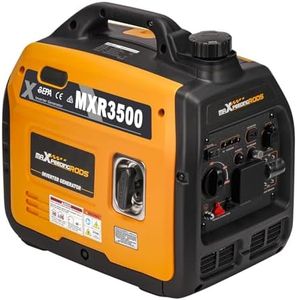
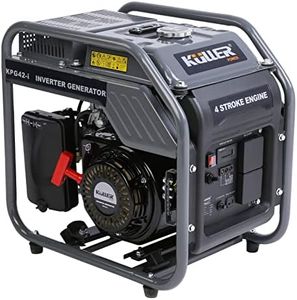
Buying Guide for the Best Dual Fuel Inverter Generators
Choosing a dual-fuel inverter generator is a great decision if you value both versatility and efficient power for various needs such as camping, RVing, home backup, or outdoor events. These generators allow you to use either gasoline or propane, giving you flexibility during fuel shortages or emergencies. Inverter technology ensures the power output is clean and stable, making it safe for sensitive electronics. When picking the best unit, it's important to consider your specific use case—whether you want something lightweight for portability, extended runtime for long outages, or enough wattage for multiple appliances. Always start by listing what you want to power, then use that as your guide through the key specifications.Power Output (Wattage)Power output, measured in watts, tells you how many and what types of devices your generator can run simultaneously. Lower wattage units (around 2000-2500W) are great for charging small devices, powering lights, and running a few kitchen items. Middle-range units (3000-4000W) can handle RV air conditioners, refrigerators, and multiple appliances at once. Higher wattage generators (over 4000W) are better for whole-home backup or job sites. To pick the right output, list everything you want to run at once and add up their wattage—this total should guide your choice.
Fuel Type and Tank CapacityDual-fuel generators can run on gasoline or propane, which is valuable for flexibility. Gasoline is easy to find but produces more fumes; propane burns cleaner and stores longer. The tank capacity determines how long your generator can operate before needing a refill—smaller tanks are lighter and more portable but need more frequent refills, while larger tanks offer longer runtime. Think about how easily you can access each fuel and whether you need long runtimes without interruptions to pick your best option.
Run TimeRun time tells you how long the generator can supply power on a full tank of gas or a standard propane cylinder at a given load. Shorter run times (under 6 hours) are enough for quick jobs or short camping trips, while longer run times (8-12 hours or more) are better for overnight or backup use. Your choice should be based on how long you need power between refueling—longer is often more convenient for overnight or extended outages.
Portability (Weight and Size)Portability matters most if you’ll be moving the generator frequently, like for camping or RV travel. Lightweight and compact models (30-50 lbs) are easy to lift and store, while heavier units (over 70 lbs) are better suited for stationary backup use or come with wheels for rolling around. Consider how strong you are, whether you’ll move it by yourself, and the typical distance you need to haul it.
Noise LevelNoise level, measured in decibels (dB), determines how loud your generator will be. Quieter models (below 60 dB) are excellent for campgrounds, community events, or neighborhood backup—essential where noise restrictions apply. Middle-range units (60-70 dB) are acceptable for general outdoor use but may be noticeable. Louder units are more noticeable and less suited for quiet environments. Consider where you’ll use the generator and whether you or your neighbors will be bothered by noise.
Outlets and ConnectivityGenerators come with different outlets—standard household outlets, RV-ready outlets, USB ports, and sometimes 12V DC ports. The right mix depends on what you’ll plug in: basic models have enough for small appliances, while those with specific RV or transfer switch connections are better for specialized uses. Review your device plugs before choosing the right configuration.
Parallel CapabilityParallel capability lets you connect two compatible generators to double your power. This is very useful if you might need extra power on occasion, without buying a large generator up front. If you want odd flexibility—using a smaller unit most of the time and combining two only when you need more power—look for this feature.