9 Best Ecoflow Generator
From leading brands and best sellers available on the web.By clicking on a link to a third party's website, log data is shared with that third party.
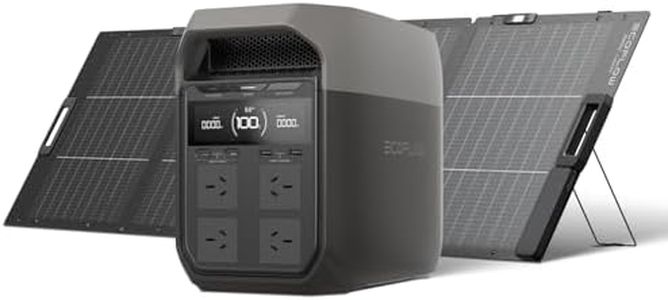

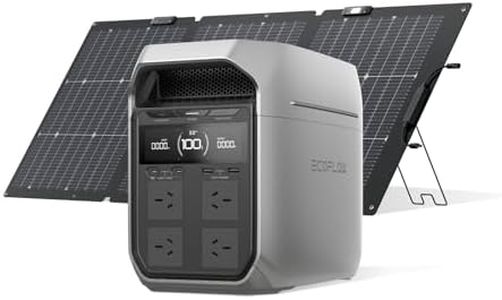
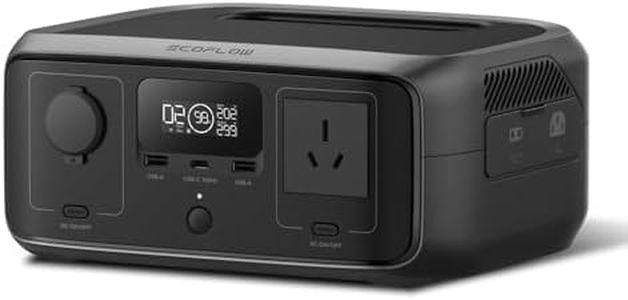

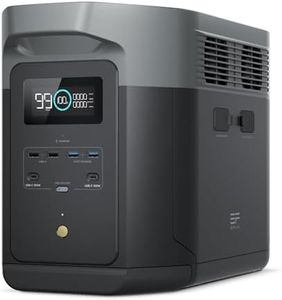


Buying Guide for the Best Ecoflow Generator
Choosing the right portable power station, often referred to as a generator like EcoFlow's, can greatly improve your ability to keep devices running during travel, outdoor adventures, or power outages. The main job of these units is to provide reliable electricity when you're away from standard outlets. To find the best one for your needs, it's important to understand the key specs that affect performance, ease of use, and overall satisfaction. Focusing on how you plan to use the generator—such as camping, home backup, or travel—will help guide your decision.Battery Capacity (Wh)Battery capacity, measured in watt-hours (Wh), tells you how much electrical energy the generator can store and supply. A higher capacity means the unit can power more devices or run them for a longer period before needing a recharge. Smaller capacities (under 500 Wh) are good for personal electronics or short trips. Mid-range (500-1500 Wh) is suitable for powering several devices like laptops, fans, or small appliances for a day or two. Large capacities (over 1500 Wh) can keep household appliances running for longer or serve as backup during power outages. Think about how many devices you need to power and for how long, then choose a size that matches your lifestyle.
Output Options and PortsOutput ports dictate what kind of devices you can plug into your generator. These include AC outlets for standard wall plugs, USB ports for charging phones, and DC or car outlets for special devices. More ports and different types mean greater flexibility in what you can charge at once. If you want to charge many types of devices at the same time, look for a model with varied and multiple outputs. Consider your gadgets: if you mostly need to charge phones and tablets, USB ports are enough. For running kitchen appliances or power tools, make sure there are powerful AC outlets.
Recharge TimeRecharge time is how long the generator takes to fully recharge its battery, whether from the wall, a car, or solar panels. Shorter recharge times mean less waiting when you're on the go or when the power goes out. Fast charging is helpful for travelers or during emergencies, while longer charging is acceptable if you can leave it charging overnight. If your use is urgent or frequent, aim for the quickest recharge available, otherwise balance this with other features.
Weight and PortabilityThe weight and design determine how easy it is to move and transport the generator. Lighter units are more portable and perfect for camping, travel, or smaller spaces, but they often have lower capacity. Heavier units usually offer higher power output but can be tough to carry unless they come with wheels or handles. Pick a size and weight that you can handle based on how and where you plan to use it—go lighter for mobile needs and heavier if it’ll mostly stay at home.
Inverter Type (Pure Sine Wave vs. Modified)Inverter type refers to how the generator delivers its AC power. Pure sine wave inverters provide cleaner, more stable electricity, which is important for sensitive devices like laptops, medical equipment, or certain appliances. Modified sine wave inverters are less expensive but can cause buzzing or malfunction in delicate electronics. If you intend to power anything delicate or high-tech, always choose pure sine wave. For simple tasks like charging basic batteries or running lights, modified sine wave may be acceptable.
Solar Charging CompatibilityThis tells you whether the generator can recharge using solar panels. This feature is important for off-grid use where you might have no access to wall outlets. Some models allow for direct solar input while others need special adapters. Look at the maximum solar input the unit accepts—the higher it is, the faster you can recharge with solar panels. If you camp, travel, or work outdoors frequently, or want a sustainable backup, ensure your unit supports solar charging.