10 Best Endoscope Inspection Cameras
From leading brands and best sellers available on the web.By clicking on a link to a third party's website, log data is shared with that third party.
Related Products
Up to 37% off
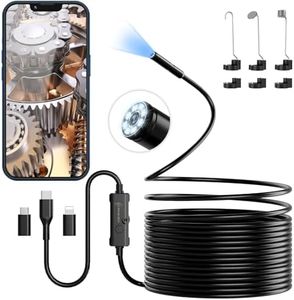
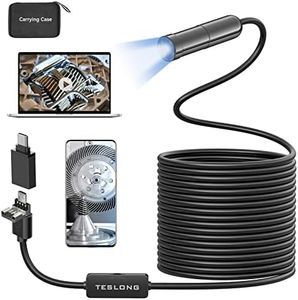
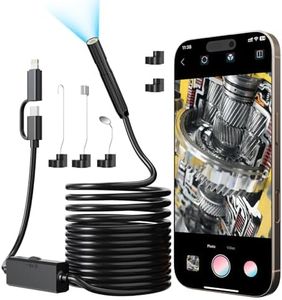
Buying Guide for the Best Endoscope Inspection Cameras
Choosing the right endoscope inspection camera can make tasks like pipe inspection, car repair, or electronics troubleshooting much easier and more effective. Because endoscope cameras are used to see into difficult-to-reach areas, it's important to focus on what you'll be inspecting, how often you'll use it, and under what conditions. Thinking about the size of the spaces you need to access, the level of detail you require, and how you'll view and save images will help you select the best tool for your needs.Camera ResolutionCamera resolution refers to how clearly the endoscope camera captures images or videos. Higher resolution means more detailed pictures, which is especially helpful if you need to see small cracks or identify fine features. Most inspection cameras offer resolutions from standard definition (around 640x480), which is fine for basic tasks like checking drains, up to full high definition (1080p or 2 megapixels), which lets you see much finer details. Choose a higher resolution if clarity is important for your inspections, especially in detailed or professional work, but lower resolutions can be enough for quick checks or rough diagnostics.
Cable Length and FlexibilityThe cable is what lets you guide the camera where you need it to go. Cable length can range from 1 meter to over 10 meters. Longer cables let you reach further but can be harder to maneuver in tight bends. Flexibility matters because a more flexible cable can navigate tight spaces, but too much flexibility may make controlling the camera tip difficult. Consider shorter, less flexible cables for small, precise jobs like laptops or engines, and longer, more flexible cables for deep or complex piping.
Camera Head DiameterThis is the width of the camera at the end of the cable. Smaller diameters let you enter tighter places, which is crucial if you're dealing with narrow pipes or tiny access holes. Head diameters range from under 5mm for the tightest spaces up to 15mm or more for general inspections. Pick a diameter that's small enough for your typical inspection spaces, but not so small that you sacrifice features or image quality you need.
LightingMost endoscopes have built-in LED lights around the camera. Lighting is essential because these tools are often used in dark spaces. It's important to have adjustable brightness so you can avoid glare or shadows. The number of LEDs can range from 4 to 8 or more, and more LEDs usually mean better, more even light. If you expect to work in especially dark or large spaces, more powerful or adjustable lighting will help you see clearly.
Display and ConnectivitySome endoscope cameras come with built-in displays, while others connect to your smartphone, tablet, or computer. Built-in displays are handy for quick use without needing other devices, but wireless models can be more flexible and allow for easier sharing or saving of images. Think about whether you need immediate, standalone viewing or plan to record and share images for analysis.
Water and Dust ResistanceThese cameras are often used in places with water, dust, or oil. The IP rating (such as IP67) tells you how resistant the device is to water and dust. A higher rating means better protection and longer life if you’ll be working in wet pipes, engines, or outdoors. Match the level of resistance to the environments where you’ll use the camera most often.
Power SourceEndoscope inspection cameras can be powered by rechargeable batteries or through a wired connection (such as USB). Battery-powered units are more portable and convenient for places without easy access to power, while wired units can offer longer operation without recharging but may be less mobile. Decide based on whether you need the freedom to move around or expect long inspection sessions in one location.