10 Best Espresso Hand Tampers
From leading brands and best sellers available on the web.By clicking on a link to a third party's website, log data is shared with that third party.
Related Products
Up to 16% off
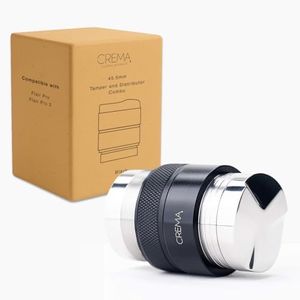
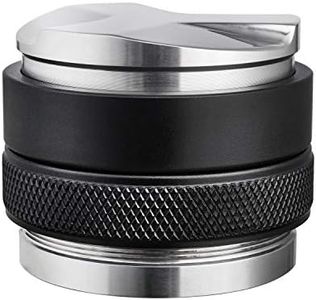
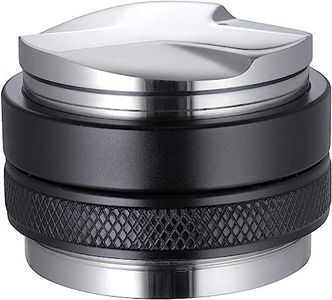
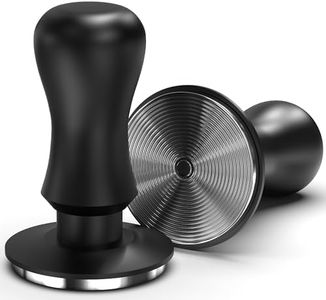
Recommended lists


Buying Guide for the Best Espresso Hand Tampers
Choosing the right espresso hand tamper is a key step to crafting great espresso at home or in a cafe. The tamper's main job is to compress coffee grounds evenly into the portafilter, creating the right density for water to flow through and extract the flavors properly. A well-chosen tamper not only helps with consistency in your shots but also makes tamping comfortable and repeatable. Pay attention to features that match your espresso machine and your own hand size and tamping style.DiameterThe diameter of a tamper is the width of the surface that compresses the coffee. Getting the right size is essential because it needs to fit closely within your filter basket to avoid leaving loose grounds at the edges. Most domestic portafilters are either 49mm, 51mm, 53mm, or 58mm in diameter. If you use a tamper that’s too small, it won’t compress all the grounds evenly; too large, and it may not fit into your basket. To pick the right size, you’ll need to know the inside diameter of your portafilter and look for a tamper that matches or is just slightly smaller—typically allowing for 0.5mm less to ensure a comfortable fit without pinching.
WeightThe weight of a tamper affects both comfort and pressure consistency during tamping. Some tampers are lightweight to prevent fatigue, while others are heavy to help you apply even pressure with less effort. Lighter tampers (less than 250g) might suit people with small hands or those who want more control, while heavier ones (over 300g) can help achieve steady pressure and may be favored by those making multiple espressos daily. Pick a weight that feels comfortable to hold and matches your tamping style—if you press firmly, you may prefer a lighter tamper; if you want tamping to feel more effortless, a heavier one may help.
Shape of BaseTampers come with different base shapes: flat and convex are the most common. A flat base offers an even, uniform tamp and is widely used, giving you consistent espresso extraction if your grind and distribution are already good. A convex base is slightly curved and can help ensure the coffee is compressed more in the center, which can reduce channeling for some users. If you’re just starting out or want a reliable, easy option, a flat base is a safe choice. Those having issues with channeling or using certain machines may experiment with convex bases, but most home users do well with the flat.
Handle Material and ErgonomicsHandle material affects both the look and the feel of the tamper. Common materials include wood, metal, and plastic. Wood can be aesthetically pleasing and warm to hold, but metal and plastic offer more durability and are easier to clean. Ergonomics is crucial—look for a handle shape that feels comfortable in your hand, especially if you’ll tamp a lot. Smaller, bulbous handles suit small hands, while larger or longer handles may fit bigger hands better. Try a few grips if you can, and consider comfort first, as this can make a big difference in repeated use.
Leveling FeaturesSome modern tampers include features to help ensure your tamp is perfectly level. These might be wider ridges that rest on the portafilter rim or even adjustable depth stops. These features guide you to press straight down, minimizing uneven extraction. Beginners or those seeking maximum repeatability may benefit from these options, while experienced users with a solid technique may prefer a simple traditional tamper. Consider a tamper with leveling aids if you’re new to espresso or want to minimize variation in your tamping results.