7 Best Fine Art Printers
From leading brands and best sellers available on the web.By clicking on a link to a third party's website, log data is shared with that third party.

Buying Guide for the Best Fine Art Printers
Choosing the right fine-art printer can be the key to bringing your creative visions to life. Fine-art printers are designed to produce high-quality prints with exceptional color accuracy and detail, making them ideal for photographers, artists, and anyone who wants to showcase their artwork at its best. To find the best fit for your needs, you should understand how different features affect both the final print and your overall workflow. By paying attention to the main specifications and considering your typical use—such as print size, frequency, and desired print longevity—you can feel confident in your choice.Printer Technology (Inkjet vs Dye-Sublimation)This spec refers to how the printer puts images onto paper. For fine-art printing, inkjet printers are the most common choice because they use liquid inks sprayed onto media, allowing for high resolution and rich color depth. Dye-sublimation printers use heat to transfer dye onto materials, which can provide continuous tones and are often used for specialty media. If your main focus is gallery-quality photo prints on fine art paper, inkjet is usually the better choice. Dye-sublimation may suit you if you want to print on canvases, fabrics, or other non-paper materials.
Print Resolution (DPI)Resolution, measured in dots per inch (DPI), indicates how detailed your prints can be. A higher DPI generally means crisper and more detailed prints, especially noticeable in fine lines and textures. Standard printers may offer 1200x1200 DPI, while high-end fine-art printers can reach up to 4800x2400 DPI or more. For most photography and art prints, a DPI of 2400 or higher ensures fine detail. If you mainly print large images to be viewed from a distance, you may not need the highest possible resolution, but for close-up viewing and intricate artwork, prioritize a higher DPI spec.
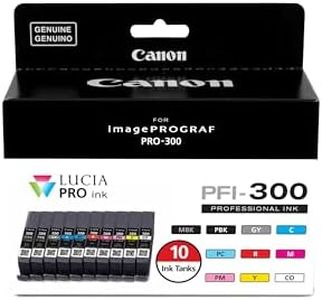
Ink System (Number and Type of Inks)This spec defines how many separate ink cartridges or tanks are used and what types they are (such as pigment or dye-based). More ink channels, such as 8, 10, or even 12-color systems, allow better color accuracy, smoother gradients, and richer blacks. Pigment-based inks are more resistant to fading and suitable for archival quality, while dye-based inks can provide more vibrant colors but may not last as long. If your art demands nuanced color or you need prints that last years without fading, pick a printer with a higher number of pigment-based inks.
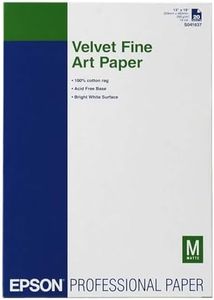
Media Handling (Supported Paper Sizes and Types)This refers to which sizes and types of paper (or other media) the printer can handle. Some printers are limited to standard sizes like A4 or letter, while others can work with large sheets or roll paper for panoramic prints. Fine-art printers often support thicker, textured papers and canvases. If you plan to create large or unusually formatted prints, make sure your printer handles those media. Consider your typical artwork: if you often frame large prints or use specialty surfaces, ensure your printer supports those sizes and materials.
Print Longevity (Archival Quality)Print longevity, or archival quality, tells you how long a print will last before colors begin to fade or paper degrades, often under standard indoor display conditions. Printers using archival-grade pigment inks and acid-free papers can produce prints lasting 50-100 years or longer. This is especially important for artists selling their work or for museum and gallery display. If permanence matters for you, such as when your prints are for sale or exhibition, prioritize printers and media rated for archival quality.
Color Management (ICC Profiles and Calibration Support)Color management options determine how accurately your printer reproduces the colors you see on your computer screen. Support for ICC profiles and printer calibration means you can better match screen colors to print output, which is crucial for professional artists and photographers. If you require precise, predictable color results across projects, look for a printer that works well with color management tools and offers good documentation or support for ICC profiles.