9 Best Fingerprint Gun Safes
From leading brands and best sellers available on the web.By clicking on a link to a third party's website, log data is shared with that third party.
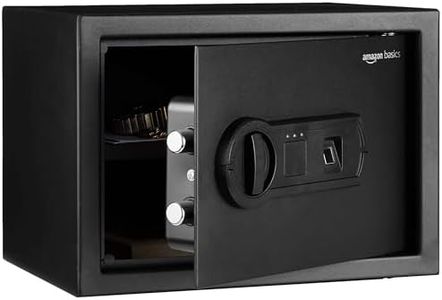
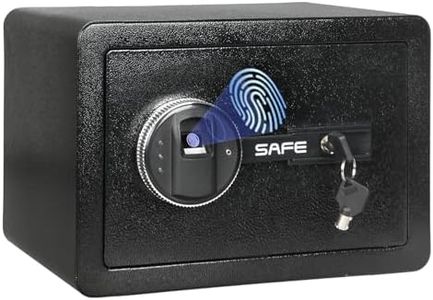
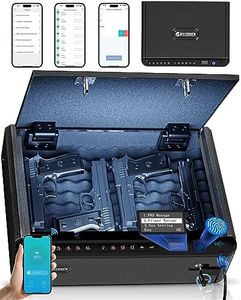
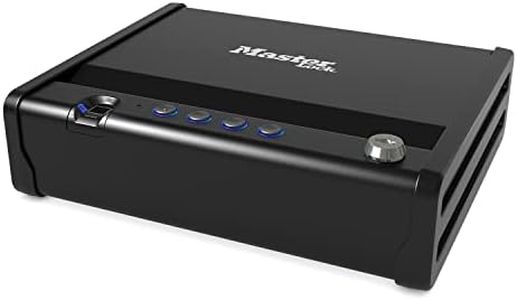
Buying Guide for the Best Fingerprint Gun Safes
Choosing a fingerprint gun safe is a great way to store your firearms securely while allowing quick and easy access. The main purpose of these safes is to balance safety—keeping guns away from children or unauthorized users—with convenience, so you can get to your firearm quickly when needed. When shopping for a fingerprint gun safe, it’s essential to look beyond just the marketing claims and understand the core features that impact security, speed, and everyday usability. By learning about the most important specifications, you'll be better equipped to match a safe to your unique situation and needs.Fingerprint Sensor QualityThe fingerprint sensor is the technology that reads your fingerprint and unlocks the safe. High-quality sensors can read prints quickly and accurately, even if your finger is a bit dirty or wet. Entry-level sensors may be slower or require multiple tries, which could be frustrating in urgent situations. Some safes use optical sensors (basic but less accurate) while others offer capacitive or semiconductor sensors which are faster and more reliable. If you value quick access, especially in emergencies, prioritize models known for fast, accurate scanning. Consider if family members or trusted others also need access, as sensor quality will affect consistent readings for all users.
Storage CapacityThis refers to how many firearms (and possibly other valuables) the safe can hold. Some safes are designed for just one handgun, ideal for bedside or quick-access storage, while others can store multiple guns and extra items like magazines or important documents. Think about what you want to store in the safe now and in the near future. If you only have one gun and want a compact option, choose a smaller model. If you plan to store more firearms or accessories, look for a safe with larger or adjustable capacity. Pick the size that fits your current needs but also gives a bit of extra room if you expect your storage needs to grow.
Locking Mechanism & Backup AccessWhile the fingerprint sensor is the main access point, it's important for the safe to have alternative ways to open it in case the sensor fails. This usually means a backup key, PIN code, or both. Some safes even include backup power options. Consider how important it is for you to have immediate access in the event of a power outage or system error. If reliability is a top concern, make sure the safe has easy-to-use secondary access methods so you're never locked out.
Construction and Build QualityThis specification covers the thickness and strength of the safe’s material, as well as overall durability. Safes made from thicker steel and with solid locking bolts offer more protection against physical attacks or prying attempts. Thinner or lightweight models are easier to hide or move but offer less security. Assess where you plan to install the safe and how much protection you desire from theft or tampering. For higher security, look for robust construction; for more portability or discreet placement, lighter options may suffice.
Mounting and Placement OptionsThink about where and how you want to secure your safe. Some safes come with hardware for mounting to walls, floors, or furniture, which makes it harder for someone to steal the whole safe. Others are portable and designed to be moved. If your priority is theft prevention, select a model with strong mounting options. If you need portability—for example, to move your safe between locations—consider a lighter safe but be aware of the security trade-offs.
Battery Life and Power SupplyMost fingerprint safes are powered by batteries. Battery life can range from several months to over a year depending on usage and battery type. Some safes can alert you when their battery is low. Decide how often you're willing to check and replace batteries. If you want a low-maintenance safe, choose one with longer battery life or external power supply capability. Consider battery accessibility too—easy changes make upkeep less of a hassle.
Fingerprint Storage CapacityThis indicates how many different fingerprints the safe can store. It matters if you want multiple people to have access, or if you want to store prints from more than one finger (which can be helpful in case of injury or a dirty finger). Entry-level models may only store a few prints, while higher-end models can store dozens. Match the fingerprint storage to the number of users and backup fingers you want to register for flexible access.