We Use CookiesWe use cookies to enhance the security, performance,
functionality and for analytical and promotional activities. By continuing to browse this site you
are agreeing to our privacy policy
10 Best Fishing Paddle Board
From leading brands and best sellers available on the web.By clicking on a link to a third party's website, log data is shared with that third party.
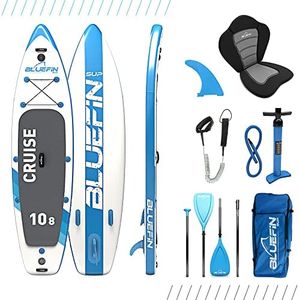
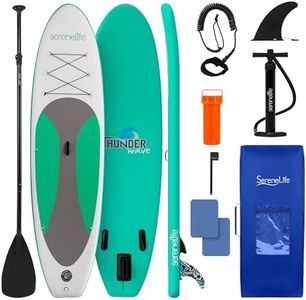
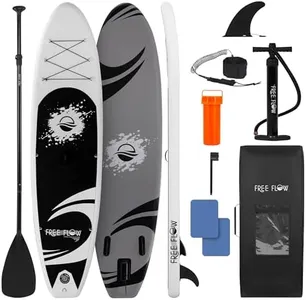
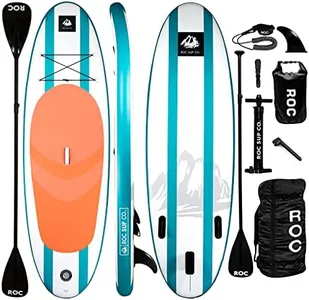
Related Products

Buying Guide for the Best Fishing Paddle Board
When choosing a fishing paddle board, it's important to think about where and how you’ll use it. Are you planning to fish on calm lakes, rivers, or in coastal waters? Do you need to travel long distances, or will you mainly stay near your launch point? Consider how much gear you want to bring and how much storage space you’ll need. Your experience level, preferred fishing style, and how you'll transport and store the board also play a big role. Focusing on a few key features will make it easier to find the paddle board that matches your needs and gives you a fun, safe fishing experience.Board LengthBoard length refers to how long the paddle board is from end to end. This is important because longer boards generally track straighter and are faster, while shorter boards are easier to maneuver but slower. If you’ll be covering long distances or want stability when casting, a longer board (typically 11 feet or longer) is a good choice. If you’ll be fishing in tighter spaces or want to prioritize turning and control, a shorter board (around 10 feet or under) may be better. Think about where you’ll fish most often and how much space you’ll have to move around.
WidthWidth is how wide the paddle board is at its widest point. This matters because wider boards offer more stability, which is especially useful for fishing when you might be moving or standing still for long periods. Boards that are 32 inches or wider are considered very stable and great for anglers, while narrower boards are less stable but can move faster and cut through water more easily. Pick a width based on your comfort level—if you’re new to paddle boards or plan to stand up and cast a lot, go wider. If you’re experienced and okay with a bit less stability for more speed, a narrower board might work.
Weight CapacityWeight capacity tells you the maximum total load (usually including your bodyweight and all gear) the paddle board can safely hold. This spec is essential because overloaded boards sit lower in the water, making them less stable and harder to paddle. Fishing often means extra gear like tackle boxes, bait, and perhaps coolers. Choose a board with a weight limit that’s comfortably above your combined weight and all equipment. If you’re near the upper limit, consider a board with a higher capacity for safety and usability.
Stability FeaturesSome paddle boards include features like a flat deck, non-slip pads, or reinforced rails specifically for stability. These are important for fishing because they help prevent slipping and make it easier to balance, especially when reeling in a catch or moving around. Look for boards that highlight their stability features if you want extra security on the water. Your need for these extras depends on how you fish—if you move around a lot or fish standing up, prioritize stability-specific features.
Attachment Points and StorageMany fishing paddle boards have built-in bungee cords, D-rings, or mounts for attaching coolers, rod holders, and tackle. This is important for keeping gear organized and within easy reach. If you prefer to bring lots of equipment or like having everything secured, look for boards with several attachment points and deck storage areas. Think about your fishing style: minimalist anglers might not need as many features, while gadget lovers will benefit from more attachment options.
Portability (Weight and Construction)Paddle board weight and whether it’s inflatable or rigid affect how easy it is to transport, store, and handle. Lightweight inflatable models are easier to carry in the trunk of a car or backpack, but may feel slightly less solid. Hard boards typically offer better performance on the water but can be bulkier and heavier to move. Choose a model that matches your storage options and how far you’ll need to carry it—if space and transport are concerns, go for portable and lighter designs.