10 Best Flexible Concrete Crack Fillers
From leading brands and best sellers available on the web.By clicking on a link to a third party's website, log data is shared with that third party.
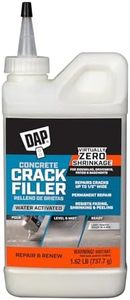
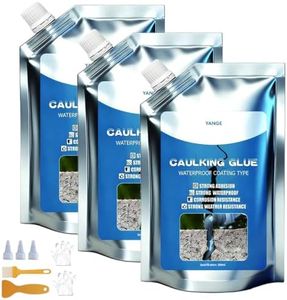
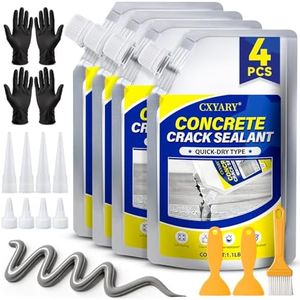
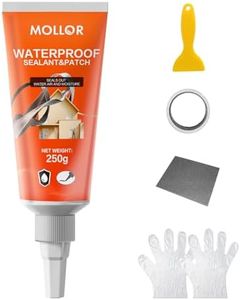
Related Products
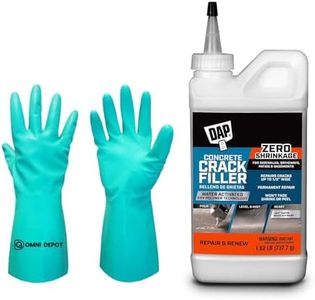
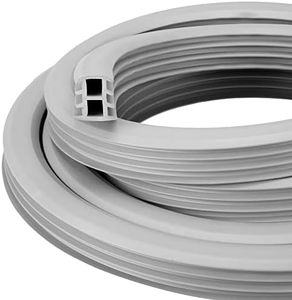
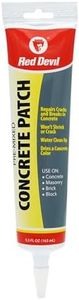
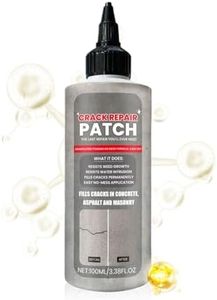
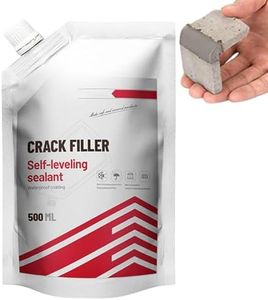

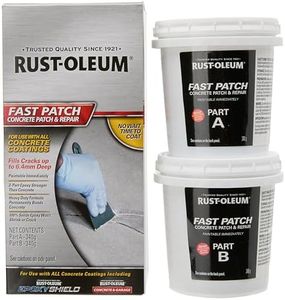

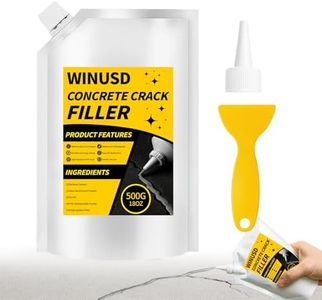
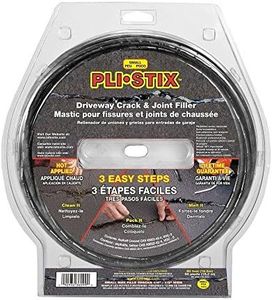
Buying Guide for the Best Flexible Concrete Crack Fillers
Choosing a flexible concrete crack filler is all about ensuring that unwanted cracks in concrete surfaces—like driveways, patios, and sidewalks—are repaired in a way that keeps out moisture, prevents deterioration, and allows the filled area to expand and contract along with temperature changes. The key to finding the right product is understanding how your specific situation (such as crack size, location, and exposure to the elements) matches up with the features that different fillers offer. By learning what matters most, you can purchase something that gives lasting results and avoids frequent reapplication.Flexibility and ElasticityFlexibility or elasticity in a crack filler refers to its ability to stretch and move with the surrounding concrete as temperatures and loads change. This is important because concrete naturally expands in heat and contracts in cold, causing cracks to widen or narrow. Fillers with high flexibility are best for areas with significant temperature fluctuations or where cracks may grow or shift. For small, stable cracks in shaded spots, lower flexibility might be enough, but for driveways or places that experience freeze-thaw or heavy use, always look for products specifically labeled as 'highly flexible' or 'elastic'.
Application MethodConcrete crack fillers come in formats like pourable liquids, squeezable tubes, or cartridges that fit caulking guns. The application method affects ease of use and which kinds of cracks you can cover. Pourable types are ideal for filling narrow surface cracks since they flow easily into the gap, while tube or cartridge fillers are better for vertical surfaces and deeper or wider cracks because they can be directed more precisely. If you're fixing flat, hairline cracks, a simple pourable filler is usually best. For bigger or oddly shaped gaps, or for projects on walls, you might prefer a tube or cartridge.
Cure TimeCure time describes how long a crack filler takes to fully set and become durable. This matters because you usually need to avoid heavy traffic or exposure to water until curing is complete. Short cure times are convenient if you need to use the surface soon, while longer cure times are common for more heavy-duty fillers that bond exceptionally well. If you need quick repairs in walking paths or driveways, choose a fast-curing product. For repairs in out-of-the-way spots, longer curing products may provide more lasting results.
Adhesion StrengthAdhesion strength measures how well the filler sticks to concrete and stays in place despite usage, weather, and temperature changes. Good adhesion is crucial for water resistance and durability. Some fillers are formulated for high adhesion to ensure the repair doesn't peel off or break free. If you're repairing high-traffic or exposed areas, prioritize adhesives labeled as 'strong' or 'high bonding'. For sheltered, low-impact locations, standard adhesion usually suffices.
Color and FinishCrack fillers are available in different colors, with gray being most common to blend with typical concrete. Some can be painted over after curing if an exact match is needed. This matters for aesthetic reasons—if patch visibility matters, choose a color close to your concrete or one labeled 'paintable'. For less visible or purely functional repairs, this factor is less critical.
Weather ResistanceWeather resistance refers to how well the filler withstands exposure to elements like rain, snow, sunlight, and freeze-thaw cycles. This is essential for outdoor repairs, as a weather-resistant filler won’t crack, shrink, or wash out easily. For outdoor or exposed areas, ensure the filler is rated for freeze-thaw resistance or labeled 'weatherproof'. For indoor or covered areas, basic moisture resistance is usually enough.
Crack Width CompatibilityDifferent fillers are designed to work best within certain crack widths—some are formulated for very fine (hairline) cracks, while others are meant for larger gaps. This is important because using the wrong thickness can lead to poor bonding or uneven repairs. Before buying, measure your cracks. For fine lines, look for fillers that specify compatibility with small or hairline cracks. For bigger gaps, opt for products that mention filling up to half an inch or more.