10 Best Flexible Solar Panels
From leading brands and best sellers available on the web.By clicking on a link to a third party's website, log data is shared with that third party.


Related Products
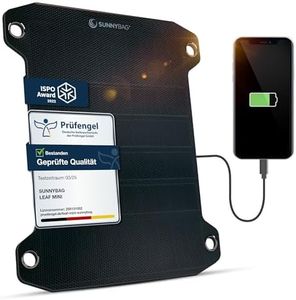
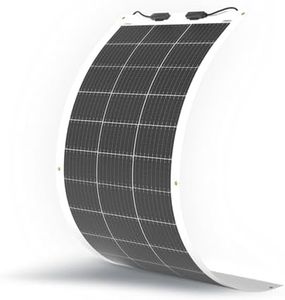
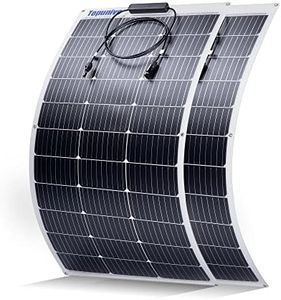
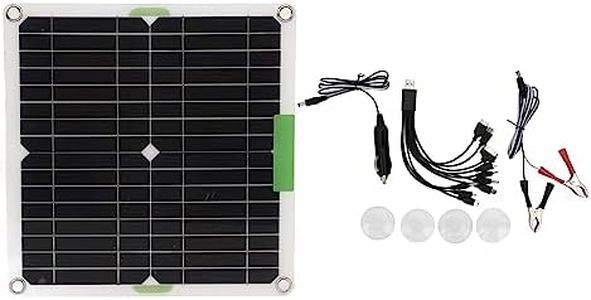
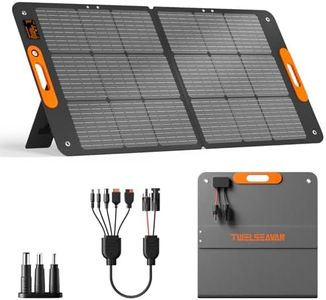

Buying Guide for the Best Flexible Solar Panels
Choosing flexible solar panels can be an exciting step toward harnessing renewable energy whether you’re outfitting an RV, boat, or unconventional surface. Flexible panels are distinct from rigid panels in that they can bend gently to fit curved surfaces and are typically lighter and easier to install. When shopping, consider not just the basic power output but how the panel will handle the demands of your particular application and environment. Think about where and how you will mount the panels, as well as what devices or appliances you intend to power.Power Output (Wattage)Power output, measured in watts, tells you how much electricity the panel can generate under ideal conditions. This is crucial because it directly relates to how many electronic devices or batteries you can charge. Flexible solar panels generally come in a range from around 20W up to 200W or more. For light tasks like charging phones or small lights, lower wattages may be enough. For running multiple devices, fans, or even small appliances, aim for higher wattage panels. Think about your daily energy use, add up the watts your devices require, and select a panel or panels that offer a bit more than that for reliability.
Flexibility & Bend RadiusFlexibility relates to how much the panel can curve without damage, often described by its minimum bend radius. This is important when you plan to install the panels on non-flat surfaces like camper vans, boats, or tents. Panels with a small minimum bend radius can curve around tighter surfaces. If your installation area is only slightly curved or mostly flat, high flexibility isn’t as crucial; however, if it’s highly contoured, look for panels with greater bendability. Always check the manufacturer's specifications and compare them to your surface’s shape.
Durability & Build MaterialThe materials used in both the cells and the coating affect the panel’s durability. Durable materials resist cracking, water ingress, and UV damage, which is vital if the panel will be exposed to the elements. Panels are typically made with monocrystalline or polycrystalline cells sandwiched between layers of plastic (like ETFE or PET). ETFE tends to be tougher and more weather-resistant than PET. If you need panels for outdoor, long-term use or for harsh environments (like marine settings), prioritize more durable materials for longer lifespan.
Weight & ThicknessWeight and thickness determine how easy the panel is to handle and install. Lighter and thinner panels are easier to affix to roofs, awnings, or even backpacks, and are less likely to add strain to delicate surfaces. Most flexible panels are already much lighter than rigid ones, but there are variations. If portability or mounting on sensitive structures is vital, go for the lightest and thinnest option that still meets your power needs.
Waterproof & Weather ResistanceMost flexible solar panels are designed to be at least water-resistant, but the level varies. This spec is important if your panels will be frequently exposed to rain, snow, or salty conditions (near the sea). Look for terms like 'IP67' or higher for water and dust resistance if you expect harsh weather. For occasional outside use, basic water resistance is usually fine, but for constant outdoor installation, higher weatherproofing ensures longevity.
EfficiencyEfficiency describes how much sunlight the panel can turn into usable electricity. Higher efficiency panels produce more power in a smaller area, which is useful if space is limited. Flexible panels typically have lower efficiency than rigid panels, but new technologies are narrowing the gap. If you have limited installation space (like on a van roof), investing in more efficient panels might allow you to maximize your energy production.
Ease of InstallationThis refers to how simple it is to secure the panels in place. Some panels come with adhesives, eyelets, or pre-installed connectors, making installation straightforward. If you expect to move the panels often, look for lightweight panels with simple mounting options. If the panel is likely to remain in one place, durable mounting features might be more important.