10 Best Full Brim Hard Hats
From leading brands and best sellers available on the web.By clicking on a link to a third party's website, log data is shared with that third party.
Related Products
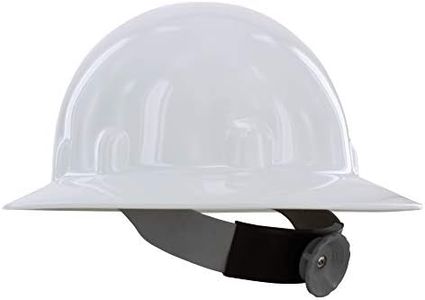
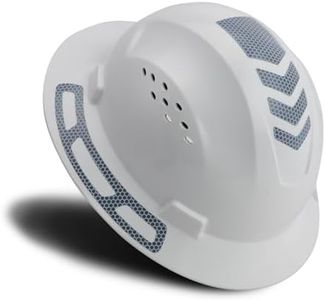
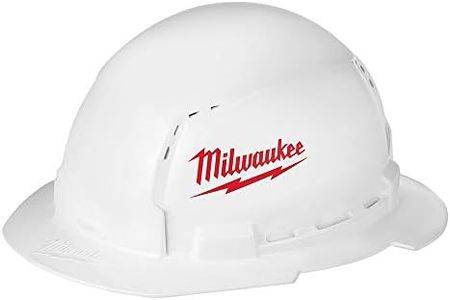
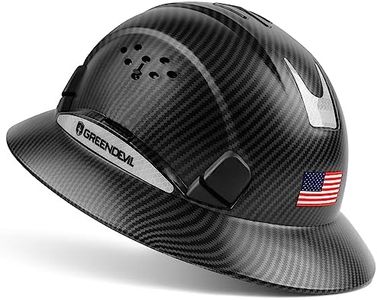
Buying Guide for the Best Full Brim Hard Hats
When choosing a full-brim hard hat, it's important to think about your specific work environment and the kind of protection you need. Full-brim hard hats are designed to not only protect the top of your head from impacts, but also to offer additional shielding around the sides, face, neck, and ears from hazards like falling debris, sun, and rain. The right hard hat will improve your safety, comfort, and longevity on the job. To find the best fit, consider what hazards you face most often, how long you wear the hat, and your comfort preferences.MaterialThe material of a hard hat affects its weight, durability, and resistance to different hazards. Common materials include high-density polyethylene (HDPE), fiberglass, and thermoplastic blends. HDPE is lightweight and suitable for most jobs, while fiberglass is heavier but offers better resistance to high heat and chemicals. If you work in environments with high temperatures, electricity, or chemicals, go for materials with high resistance, but if you prioritize comfort for all-day wear, lightweight materials may be better.
Suspension SystemThe suspension system is the internal framework that holds the hat on your head and absorbs shocks. There are typically 4-point, 6-point, or even 8-point suspensions. A higher number means better distribution of impact forces, which increases comfort and protection. If you expect strong impacts or wear the hat for long hours, choose a suspension system with more points for stability and reduced strain, whereas lighter jobs can get by with fewer points.
Fit and AdjustabilityFit and adjustability are crucial for comfort and safety. Hard hats usually have ratchet or pin-lock sizing systems. Ratchet systems are easier to adjust, even while wearing gloves, and are better for personalized fit when sharing hats or if your head size changes due to hair or headwear. Pin-lock is lighter but less convenient. Choose a system that matches how often you need to adjust your hat and how secure you need it to feel on your head.
Electrical RatingFull-brim hard hats can have different electrical ratings, such as Class G (general), Class E (electrical), or Class C (conductive). Class G provides limited electrical protection, Class E is designed for high-voltage environments, and Class C has no electrical protection. If you work around live wires or electricity, always choose a hat with the appropriate rating for your worksite’s requirements. For strictly mechanical risks, Class C may be lighter and cooler.
VentilationVentilation refers to holes or slots in the hat that allow air to flow over your head, helping to keep you cool. Vented hard hats are more comfortable in hot weather, but may not be suitable where there are electrical hazards, as vents can conduct electricity. Pick a vented hard hat if you work outdoors in the heat and don’t need electrical insulation, otherwise select a non-vented type for workplaces where you need protection from electric shock.
Brim Size and CoverageThe size and shape of the brim affect how much shade and protection you get from sun, rain, and falling debris. Wider brims give you better coverage for your face, neck, and ears, which is important if you spend a lot of time outdoors or in places with overhead hazards. Consider a hat with a wider brim if sun exposure or water runoff is a concern, but note that larger brims may be heavier and could get in the way in tight spaces.
Accessory CompatibilityAccessory compatibility means whether you can easily attach add-ons like face shields, ear muffs, or chin straps to your hard hat. Some jobs require extra protection for noise, flying objects, or secure fitting. If you need these features, make sure the hard hat is designed with slots or mounts to attach the necessary accessories easily. If your work is simple and doesn’t need extra protection, this may not be a priority.