10 Best Golf Sets For Beginners
From leading brands and best sellers available on the web.By clicking on a link to a third party's website, log data is shared with that third party.
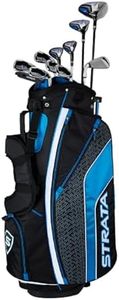
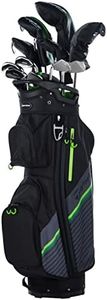
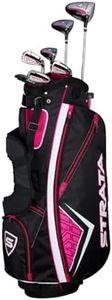
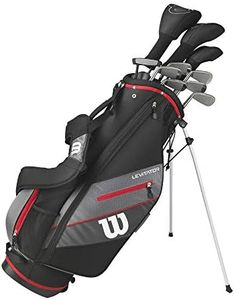
Related Products
Up to 26% off

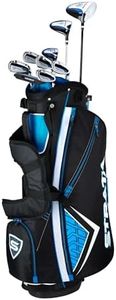
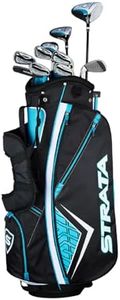
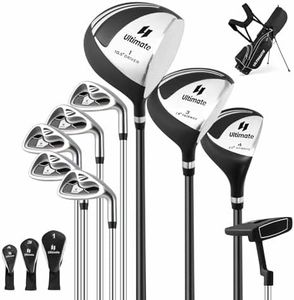
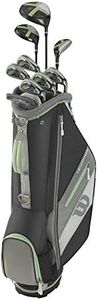
Buying Guide for the Best Golf Sets For Beginners
Choosing the right golf set as a beginner is a great first step toward enjoying and improving at the game. The ideal set should match your skill level, help build confidence, and not be overwhelming to use. Instead of focusing on having all the clubs a pro might carry, look for a golf set that sets you up with the essentials and offers forgiving, easy-to-hit clubs. It’s important to understand the key specs and features in order to make a choice that best fits your playing style, physical build, and golf goals.Club CompositionClub composition refers to the types and number of clubs included in the set. Beginners generally benefit from sets that include the basic types: driver, fairway woods, hybrid, irons, a pitching wedge, and a putter. These clubs are chosen because they are the most versatile and easiest to use for someone new to the game. Some sets will have more clubs, while others offer fewer to keep things simple. If you're just starting out, it's often better to stick with a basic set of 8-10 clubs so you can focus on learning good swing habits without feeling overwhelmed by too many choices.
Club ForgivenessForgiveness in clubs refers to how well the club helps reduce the effects of poor contact—meaning off-center hits are less punishing. Beginner sets are designed to be highly forgiving, which helps you hit straighter and longer shots even if you don’t hit the exact sweet spot. Clubs in beginner sets typically have larger clubheads and more perimeter weighting. If you're new, prioritize maximum forgiveness, as it makes learning more enjoyable and helps you improve faster.
Shaft FlexShaft flex describes how much the club shaft bends during a swing. For beginners, shafts are often made more flexible (labeled as 'regular' or even 'light' flex) to help get the ball airborne more easily. Choosing the right flex depends on your swing speed: most beginners do well with a regular flex, while those who swing the club very slowly might benefit from a 'senior' or 'flexible' shaft. If you’re unsure, regular flex is a safe starting point for most new golfers.
Club LengthThe length of the clubs should fit your height and posture. Standard length clubs are designed for average height golfers (generally 5’7” to 6’1”), but if you are significantly taller or shorter, you may need clubs adjusted accordingly. Having clubs that are the right length helps promote good swing mechanics and comfort. If possible, try swinging a club before buying the set or consult a simple length chart to get clubs that fit your body.
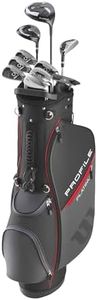
Bag and AccessoriesAlmost every beginner set comes with a golf bag and sometimes a few basic accessories like headcovers or tees. The bag can be a stand bag (for carrying) or a cart bag (for using on a golf cart). Consider how you'll use your clubs—if you plan to walk the course, a lightweight stand bag with comfortable straps will be helpful. The accessories are nice extras but shouldn’t be the main reason for picking a set. Focus on club quality and fit first.
Left- or Right-HandednessGolf clubs are made for either right-handed or left-handed players. Right-handed clubs are much more common, but if you are left-handed, make sure the set specifies it is for left-handers. Picking clubs that match your dominant hand is crucial for proper form, comfort, and results.
Weight and BalanceThe weight and balance of the clubs affect how they feel during your swing. Beginner clubs are typically designed to be lighter and have more weight distributed around the clubhead to make swings easier and more stable. If a club feels too heavy or too light when you try it, it could be harder to control, so pay attention to how they feel in your hands and during practice swings.